Some of the best things in a garage don’t belong there for very long. This is about those borrowed tools: a 10 mil, a neighbor’s torque wrench, a loaner code reader that has diagnosed three check-engine lights and one bruised ego. (It’s not the gas cap… or is it?)
That’s the good stuff.
We learn early that self-reliance means ownership. Buy your own, keep your own, want for nothing.
But the best things in life are the small acts of trust between people who know each other well enough to knock on the door without rehearsing the request.
Borrowed Tools: Trust is infrastructure.
Not the kind of glamorous infrastructure people take pictures of.
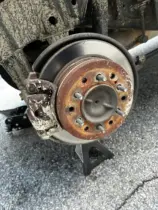
Just the invisible system that gets somebody’s brakes done on a Thursday night, so the kids get to school Friday morning without the family having to eat ketchup soup for a week.
A neighborhood with borrowed tools is a neighborhood with fewer emergencies.
The tool matters, sure.
The torque wrench keeps wheels on and the shiny side up.
The code reader tells you whether the truck is annoyed or actually wounded.
But the real machinery is the little agreement underneath it all: I trust you with this. You bring it back. Next time, maybe I’m the one knocking on your door asking you to pump the pedal while I crack the bleeder.
That is a far better system than twenty households each buying the same rarely used thing, letting it rust in a drawer, and pretending this is the peak form of civilized living.
You do not need a formal lending library to start. In fact, please don’t. The minute somebody says, “we should make a spreadsheet,” half the magic packs its bags and leaves town.
None of us needs to own every tool, and all of us need help sometimes.
Borrowed Tools: Start small.
Make a loop. One friend. One sibling. One decent neighbor. Trade the boring useful stuff first. The things people actually need on an ordinary bad day. Keep it to boring, useful stuff:
torque wrench
code reader
trim tools
compressor
jack
scanner
Put one rule on it all: return it clean and intact.
If something broke, say so.
If you lost the 10mm, congratulations, you’ve participated in the tradition.
A tiny loop works because it stays human-sized.
And that, really, is the point. Not the wrench, the socket, or even the money saved, though those help.
The point is learning, in a small, repeatable way, a life where capability gets shared around.
Sometimes the strongest thing a neighborhood can build is the habit of sharing what keeps the neighborhood moving.
Berry Mountain – Weiser State Forest — Greenland Tract, Central Pennsylvania Date/Time on Trail: July 22, 2025, roughly 2–4 p.m.
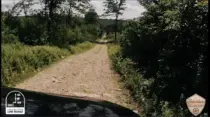
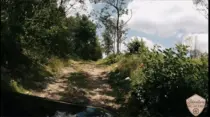
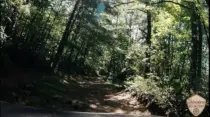
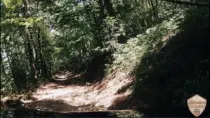
I pointed the FJ at the spine of Berry Mountain and did the slow climb that my task list keeps trying to talk me out of.
The ridge runs above the Wiconisco Valley, a long, stony shrug of earth with rattlers, a few steep pitches, and the kind of views that make you forget about the rat race.
I wasn’t blazing new trails. I was spending quality time with the kids and learning a lesson in forest management. My gear list doesn’t need to expand as much as my mind does.
A short way into the mostly groomed gravel forest road a deer gave us a few frames of natural beauty before disappearing into the foliage. White tail on full display as she bounded back into the thickets. It was a good reminder that in working forests, we’re loud guests on four tires.
Where We Are: Berry Mountain
Berry Mountain sits in the Weiser State Forest’s Greenland Tract, in the northeast of Dauphin County, with access via Radar Road and Berry Mountain Road. Those are the two names you’ll see on DCNR maps and campsite listings for this tract.
It’s classic ridge-and-valley country: rocky, narrow in spots, and worth every careful foot of elevation you earn.
If you’re used to State Parks, which are all manicured and laden with trail markers, state forests might surprise you. These are working woods under the Pennsylvania Department of Conservation and Natural Resources (DCNR).
They’re managed for many things at once: clean water, habitat, timber, and places like this where you and I crawl along a ridge in low gear for no reason that makes sense on paper.
A Forest with Two Seals
Pennsylvania’s 2.2-million-acre state forest system is dual certified. Audited to both FSC (Forest Stewardship Council) and SFI (Sustainable Forestry Initiative) standards.
That’s not a PR line; it means outside experts look at how these forests are managed and publish their findings.
FSC emphasizes things like independent audits and chain-of-custody. That meanstracking wood from forest to mill to product.
SFI leans heavily on on-the-ground safeguards like water quality, biodiversity, and conservation values.
Pennsylvania carries both seals, and Weiser is part of that system.
In plain language: when you see a timber sale in a state forest, it’s not a free-for-all. There are plans, buffers, and oversight. And if an audit finds gaps, corrective actions follow.
The Commonwealth’s publicly posted 2024 audit summaries exist for exactly this reason: so the public can check the checker.
I think about that when I pass a culvert that’s actually built right, or when a trail stays a trail and doesn’t dissolve into a trench.
Someone planned, paid for, and inspected that. That’s what dual certification is purchasing for us.
Berry Mountain: The Name on the Map
This state forest is named for Conrad Weiser, and if you grew up anywhere near Berks or Dauphin County, his name is on signs you’ve driven past a hundred times.
Weiser was an 18th-century German immigrant who served as an interpreter and diplomatic go-between during decades when Pennsylvania’s future was being negotiated, sometimes literally, in council houses and courtrooms.
The PHMC (Pennsylvania Historical & Museum Commission) and DCNR both summarize him the same way: a bridge-builder who helped shape Pennsylvania’s Indian policy.
As a teenager, Weiser spent the winter of 1712–1713 among the Mohawk tribe, learning language, protocol, and the careful cadence of council. Skills that made him indispensable later.
By the 1720s he’d settled near present-day Womelsdorf in the Tulpehocken Valley. You can still visit the Conrad Weiser Homestead to get a sense of his home ground.
If you’ve heard of the Treaty of Lancaster (1744), you’ve seen Weiser’s name in the minutes as interpreter—standing at the hinge between colonial officials and Haudenosaunee leaders.
The minutes read like a slow-burn play: greetings, speeches heavy with metaphor, long pauses, and the crucial work of getting words right so war doesn’t start by accident.
It’s fitting that an entire state forest bears the name of someone whose primary tool was listening.
The Ridge, Today
My window for this ride was a hot Tuesday afternoon, July 22, 2025.
I did what you do here: I aired down modestly, eased into the grades, and picked lines that prioritized traction and sight lines over drama.
Ridge roads are honest: they don’t reward speed so much as careful thought.
The FJ, 18 years into its tour of duty, did what old tools do: worked without fanfare and reminded me that confidence at five miles an hour beats panic at fifteen.
There’s more than one section on this trail that tilts you left or right at an angle that has you make eye contact with your passengers. Today, those passengers were my kids, so I played that “Dad has this one” smile in the rearview.
Then after we leveled out, I said “Phew, were you as nervous as I was back there?!”
Stewardship, On Purpose
This forest feels like it’s being cared for, because it is.
I don’t love everything the DCNR does, but their model is pragmatic: harvest where it makes sense, protect where it matters, and keep the whole system healthy enough to handle droughts, pests, and people like us who believe a good day can be measured by dust and engaged lockers.
Pennsylvania emphasizes exactly those values in its materials, and the dual-certification framework is one of the ways the Bureau of Forestry holds itself to them.
It’s not perfect, nothing involving budgets and humans is, but transparency and third-party oversight beat hand-waving.
That brings me to the uncomfortable part: these roads, gates, bridges, culverts, maps, and audits don’t fund themselves.
We already know this, but it’s worth saying out loud. If we use the forest, we owe the forest. Sometimes that’s a purchase: a permit, a donation to a local conservancy, buying certified wood because it helps keep this entire accountability apparatus solvent. Sometimes it’s time: volunteering on a trail day, packing out more than you brought in, or writing a polite email when you see a washed-out section that needs attention instead of foraging your own bypass.
The grand old idea, that public goods are actually good and belong to the public, starts on days like this, on ridge roads with deer that won’t pick a lane.
A Thin Thread to the Past
Driving Berry Mountain with co-signed by Conrad Weiser, it’s hard not to think about translation:
Weiser translated words; the DCNR translates policy into lanes that hold after a storm.
The audits translate promises into documented outcomes.
The dual-certified labels are a kind of translation for the rest of us: proof that somebody checked the math.
The fact that we can move through this landscape, quietly, slowly, imperfectly, owes a lot to people whose work you don’t notice when it’s done right.
I didn’t see another truck for most of the afternoon. Just the deer, some birds singing their sultry songs, and a blue sky dotted with fluffy white clouds.
I took a last look at the valley as we climbed back from our turn around mid-way through the tough stuff and rolled back down the ridge, trying to make as little noise as an old off-road truck can make.
If You Go
Location: Berry Mountain, Weiser State Forest Greenland Tract (access via Radar Road and Berry Mountain Road). Check DCNR maps before you go; access can be variable by season and condition.
Land Manager: Pennsylvania DCNR Bureau of Forestry — part of the 2.2-million-acre, FSC + SFI dual-certified state forest system.
Good Steward Tips: Tread Lightly principles:
Stay on designated roads
Respect seasonal closures
Pack it out
Consider donating to local stewardship groups
History Stops: Conrad Weiser Homestead (Womelsdorf) for context and perspective before or after your ride. It’s hard to be careless in the woods after you’ve spent an hour with the story of a man who built peace out of paragraphs.
Sources & Further Reading
Weiser State Forest overview and dual-certification note (2.2M acres; FSC + SFI). Pennsylvania Government
Greenland Tract map and Weiser maps index; access via Radar Road / Berry Mountain Road reflected in campsite directions.