Some of the best things in a garage don’t belong there for very long. This is about those borrowed tools: a 10 mil, a neighbor’s torque wrench, a loaner code reader that has diagnosed three check-engine lights and one bruised ego. (It’s not the gas cap… or is it?)
That’s the good stuff.
We learn early that self-reliance means ownership. Buy your own, keep your own, want for nothing.
But the best things in life are the small acts of trust between people who know each other well enough to knock on the door without rehearsing the request.
Borrowed Tools: Trust is infrastructure.
Not the kind of glamorous infrastructure people take pictures of.
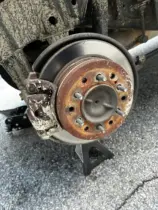
Just the invisible system that gets somebody’s brakes done on a Thursday night, so the kids get to school Friday morning without the family having to eat ketchup soup for a week.
A neighborhood with borrowed tools is a neighborhood with fewer emergencies.
The tool matters, sure.
The torque wrench keeps wheels on and the shiny side up.
The code reader tells you whether the truck is annoyed or actually wounded.
But the real machinery is the little agreement underneath it all: I trust you with this. You bring it back. Next time, maybe I’m the one knocking on your door asking you to pump the pedal while I crack the bleeder.
That is a far better system than twenty households each buying the same rarely used thing, letting it rust in a drawer, and pretending this is the peak form of civilized living.
You do not need a formal lending library to start. In fact, please don’t. The minute somebody says, “we should make a spreadsheet,” half the magic packs its bags and leaves town.
None of us needs to own every tool, and all of us need help sometimes.
Borrowed Tools: Start small.
Make a loop. One friend. One sibling. One decent neighbor. Trade the boring useful stuff first. The things people actually need on an ordinary bad day. Keep it to boring, useful stuff:
torque wrench
code reader
trim tools
compressor
jack
scanner
Put one rule on it all: return it clean and intact.
If something broke, say so.
If you lost the 10mm, congratulations, you’ve participated in the tradition.
A tiny loop works because it stays human-sized.
And that, really, is the point. Not the wrench, the socket, or even the money saved, though those help.
The point is learning, in a small, repeatable way, a life where capability gets shared around.
Sometimes the strongest thing a neighborhood can build is the habit of sharing what keeps the neighborhood moving.
Weekday routines dictate that the Cruiser pulls dad duty. Some mornings, when I turn the key and the loose ground wire I still have to track down makes the speakers buzz a certain way, a memory surfaces. I feel the need to hear the songs I listened to when I started driving myself to school.
I didn’t grow up in a scene with glamorous clubs or legendary squats. I grew up with mixtapes, boomboxes, and whatever punk albums I could con out of Columbia House for a penny.
This isn’t a trail report or a stream recap.
This one’s about the soundtrack that shaped how I think about community and about the kind of person I want to be when someone around me stalls or crashes out.
I’m gonna make the subtext so loud it distorts.
What I thought punk was supposed to be
When I was a kid, the media spun punks as teens with a particular fashion sense and drug problems.
Spikes. Leather. Chains. Jackets painted with logos you don’t recognize. Somewhere in there, a safety pin through something that probably shouldn’t have metal through it.
In the grainy square of 80s MTV and letterboxed movies, a punk was the living form of directionless aggression. Their music was forks in a blender set to visuals of sledgehammers smashing the Venus de Milo.
Punk rock became the soundtrack of angry people who like to break things.
That’s not what I found.
Yeah, punk rock sounds like a connecting rod smacking your engine block at 160 beats per minute.
It was built that way on purpose: short, fast, loud. A deliberate rebellion against the overproduced stadium rock of the ‘70s.
Bands in New York and London stripped music down to the studs and played the songs like they were trying to outrun the law.
But under all that volume is something subtle and nuanced: a culture ensconced in mutual aid, individual freedom, and looking out for the people next to you, especially the ones who don’t fit anywhere else.
Nobody told me that part. I had to live it to learn it.
The first time the floor moved
I was probably about five. My sister, who is nine years older, would listen to the Ramones at top volume, morning, noon, and night.
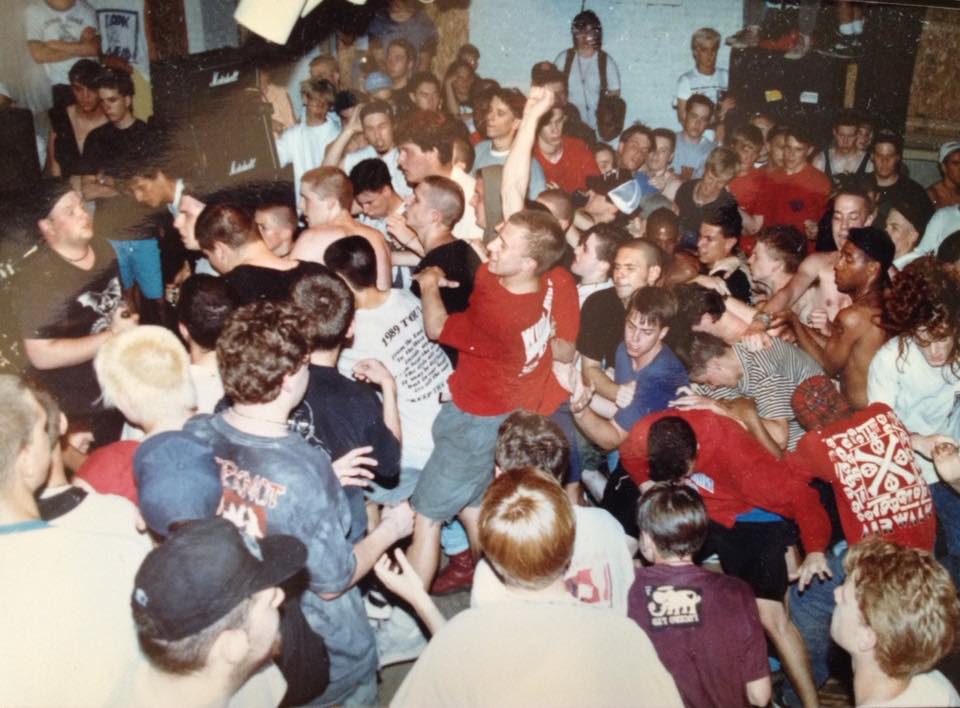
Unisound, Reading PA, late 80s/early 90s. A packed punk show where the main rule of the pit still applies: if someone goes down, you pick them up. Photo courtesy of the “We’re all friends at Unisound” Facebook group. Photo by Anne Spina.
This went on for years. It would be interspersed with other artists, but none stuck with me quite like they did.
Fast forward a few years to the first time I stepped into a real show. I half-expected a riot.
What I got instead was a living diagram of how I wish the world worked.
The music hit and the floor turned into a storm of boots and elbows. People slammed into each other, bounced off, dove back in. From the edge, it looked violent.
From the inside, it felt like organized chaos with one solid rule:
If someone goes down, you pick them up.
That isn’t just folklore.
Ask around and you’ll hear the same thing: in a healthy pit, the main rule is to look out for each other. If someone falls, you get them on their feet. If someone looks scared or hurt, you make space or help them out to the edge.
Never leave people on the ground.
You don’t let creeps use the chaos as cover.
Don’t gatekeep the dance floor.
It’s rowdy, but it’s rowdy on purpose.
That was my first real lesson in aggressive kindness: you can be loud, sweaty, and furious at the world, and still treat the stranger next to you like someone worth protecting.
I didn’t have the right words for it yet, but the message landed.
Punk is for everyone. Full stop.
There’s a line I read years later that finally put words to the feeling: if there’s one core ethos to DIY punk, it’s that punk is for everybody. Anyone can sing, anyone can play, anyone can be part of it.
As an awkward kid who barely limped out of high school, that was huge. I was bored with the schoolwork; didn’t care about grades.
I didn’t think anyone thought like I did.
I definitely didn’t have a five-year plan.
But I did have a summer job that I used the money from to buy a bass guitar and a tiny amp.
It was an old Aria with a tweaked neck and a sunburst pattern. I stuck a middle finger sticker to the back and learned how to read tablature.
I’d memorize how to play my favorite songs and get to know the bands in the process.
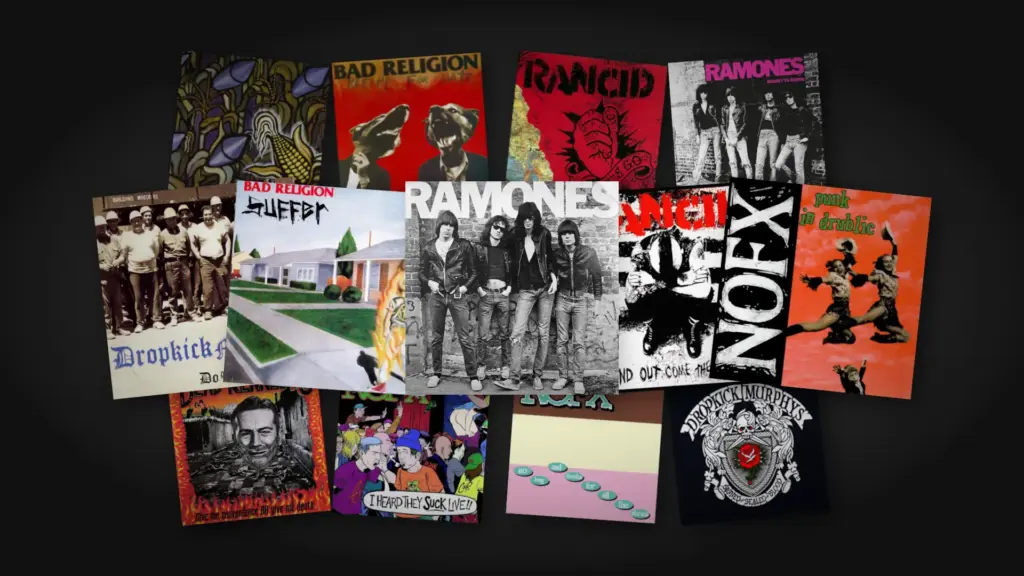
Collage of 13 album covers. T-B, L-R: Against the Grain, Bad Religion. Recipe for Hate, Bad Religion. Let’s Go, Rancid. Rocket to Russia, Ramones. Do or Die, Dropkick Murphys. Suffer, Bad Religion. Ramones, Ramones. …And Out Come the Wolves, Rancid. Punk in Drublic, NOFX. Give Me Convenience or Give Me Death, Dead Kennedys. I Heard They Suck Live!!, NOFX. So Long and Thanks for all the Shoes, NOFX. Signed and Sealed in Blood, Dropkick Murphys.
The Bands That Raised Me
The Ramones were proof that you could take three chords, zero subtlety, and a sense of humor and accidentally help kickstart an entire genre.
Rancid took that energy, dragged it through working-class streets and ska basements, and wrote anthems about friends on the edge, union organizers, and cities that chew you up.
Dropkick Murphys made working-class solidarity catchy enough to shout along with. They’ve backed unions, raised money for workers’ rights, and made a point of putting their money where their lyrics are.
Bad Religion was the first band that made me realize punk could come with footnotes. Greg Graffin screaming about science and society on stage, then quietly holding a PhD in zoology and lecturing at UCLA and Cornell, screws with your idea of who gets to be “smart.”
NOFX were the smartass older cousin who showed up with a skateboard, a hangover, and a stack of life lessons hidden under bad jokes. They’ve spent four decades cranking out hooky, melodic hardcore and skate punk, stayed off major labels on purpose, and still somehow became one of the most successful independent punk bands ever. Punk in Drublic turned gold while they were busy telling MTV and the big labels to get lost.
Dead Kennedys were the band that yanked punk’s anger out of the basement and pointed it straight at mayors, presidents, and the whole polished hypocrisy machine. Surf-y riffs, razor-sharp satire, and Jello Biafra’s unhinged sermon-of-a-vocal made songs like “Holiday in Cambodia” and “California Über Alles” feel less like tracks and more like political cartoons set to 200 BPM. They were DIY to the bone, releasing records on their own Alternative Tentacles label and ending up in real-life obscenity trials and censorship battles along the way. That last point quietly taught me that “speak truth to power” isn’t a metaphor: it’s a thing that can actually get you hauled into court, and you do it anyway.
This isn’t even close to an exhaustive list. But all these bands shoved a series of lessons into my skull: being “punk” had less to do with what you wore and more to do with who you showed up for.
Punk is FOR Everyone.
No, I’m not repeating myself.
Black, white, gay, straight, bi, trans, questioning, asexual… whatever. If you were there in good faith, you belonged. If you were trying to harm or control other people, you can go find a curb to chew.
Punk rock isn’t meant to exclude anyone. It’s soft, gooey solidarity wrapped in armor. It hardens you for the realities of the world but cajoles you into still caring about the outcome and the actual human beings.
It explicitly excludes exclusivity.
What does “aggressive kindness” actually mean?
Somewhere along the way, online or in a comment thread, I ran across the phrase “aggressive kindness is very punk,” and it felt like somebody had finally named the thing I’d been feeling for years.
Another person, in a totally different corner of the internet, put it like this: being aggressively kind is way more punk than just being angry all the time.
That’s it. That’s the whole thesis.
It’s a kindness that isn’t soft.
It doesn’t mean “nice” in the way bosses use the word when they want you to shut up about your pay.
Aggressive kindness is:
Calling out the creep in the pit.
Making sure the kid at their first show gets pulled up, not shoved out.
Using your voice to defend someone who’s getting piled on, even when they’re not in the room.
Welcoming the new person at camp, on trail, or in chat like they’re already part of the crew.
It’s hospitality with teeth. Compassion with Doc Martens primed to kick down oppressive systems.
In my head, though, it’s simpler: it’s pit etiquette turned into a golden rule.
Somebody goes down? Pick them up.
If somebody’s getting crushed, make space.
If someone is just trying to exist as themselves and the world is shoving back, you plant your feet and stand in the way.
Oppression is the enemy. Allowing others to live their lives doesn’t harm you.
Buddhism, back roads, and the loud part of compassion
At some point, I started reading Buddhist stuff for the same reason punk clicked: life is suffering, yeah, but what you do with that fact matters.
Compassion, or in Buddhist terms, lovingkindness, shows up there as this patient, quiet thing. Sit with your mind. Breathe. Notice. Don’t make things worse.
Punk taught me the loud version. Make things better.
Both paths are trying to answer the same question: how do you move through a broken world without becoming another sharp edge that cuts people?
There’s a saying: “East Coast people are kind but not nice. West Coast people are nice but not kind.” Growing up an hour outside Philly had its influence on my world view, too.
The second most-famous religious sect in this weird little intersection of Native America and Europe called Pennsylvania was the Quakers. Their plain speech is definitely in the mix of my personal philosophy and might be the most punk thing of all: say true things clearly and live like you mean them.
That’s what I hear in the best punk records. Strip away the distortion and it’s somebody yelling a very old idea:
“These people matter. You matter. We should treat each other like it.”
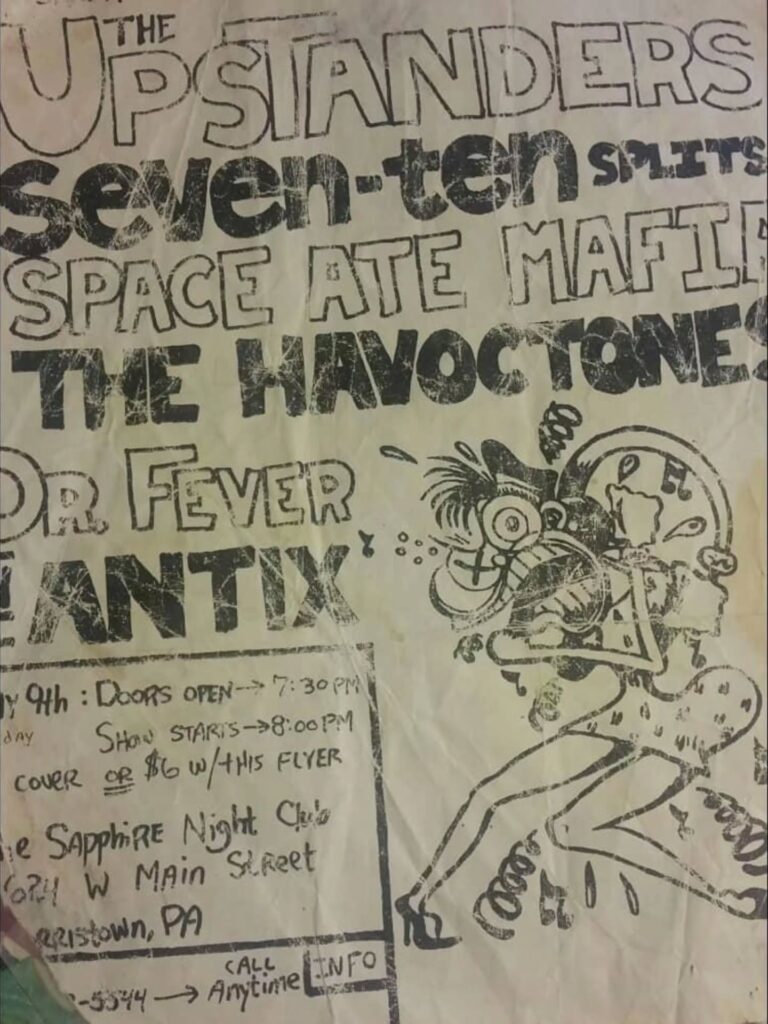
Xerox punk time machine from the Sapphire Night Club in Norristown, PA — The Upstanders, Seven-Ten Splits, Space Ate Mafia, The Havoctones, Dr. Fever, and Antix. My first band, The Real Live Psychics, played our first show in that same room around ’96/’97; a good friend of mine played guitar for Seven-Ten Splits, and the Havoctones were on our bill too. Flyer via @phillyhardcorehistory, art credit @jank322.
How this shows up in Adventure Adjacent
So, what does any of this have to do with my old FJ Cruiser, live streams, and forest roads?
Honestly: everything.
When I pull the FJ off pavement and creep up some rutted forest road, the same ethic applies. These places are shared. The gates and culverts and campsites exist because communities came together, planned them, and built them.
The least I can do is drive in a way that doesn’t make life harder for the next person who comes along. And if I can improve it on the way through, I do it.
Trail etiquette isn’t that different from pit etiquette:
Stay in the lane so you don’t bruise the scenery around you.
Don’t endanger people around you.
If somebody’s in trouble, you stop and help.
Same story with the streams. Most days I’m just a tired guy hauling digital freight, but underneath jokes, questions, and coffee is a simple goal: build a little corner of the internet where people feel safe to be themselves.
That means:
Moderating like a bouncer who loves the dance floor, not like a cop.
Welcoming the quiet lurker, whether or not they say hi.
Respecting boundaries without making it weird.
Shutting down bigotry when it shows up, even if it’s “just a joke.”
Aggressive kindness while streaming looks like “Hey, you’re welcome here” and “Hey, knock that off” occupying the same breath.
It’s the same kind of thing I try to bring to the Field Notes.
When I write about trails, maintenance, or the quiet joy of taking the long way home, there’s always a little subtext whispering: we owe each other more care than this system wants us to give.
The punkest thing I can do at this age
Nobody would catch my old ass if I decided to dive off a stage. My mosh pit is a chat window or a comment section. My uniform is more “tired nerd with a torque wrench” than “studs and liberty spikes.”
But the bands that raised me are still just beneath the tinnitus when I’m tightening lugs on the shoulder for somebody who didn’t plan on learning how to change a tire that day.
They’re there when I’m writing another too-long blog post about some gravel road most people will never be within a hundred miles of.
They’re there when I mute a bigot in chat before they get to ruin somebody else’s night.
Punk taught me that belonging isn’t something you hoard. It’s something you hand out at the door.
So that’s the aim now:
To be the old kid in the back of the room who knows the lyrics, knows where the exits are, and is stubbornly, aggressively kind to anyone who walks in looking for a place to stand.
If I thought I was going to die tomorrow, I should plant a tree, nevertheless to-day.
Stephen Girard
Who Was Stephen Girard?
Girard is a Pennsylvania-sized paradox.
He stayed in Philadelphia during the 1793 yellow fever outbreak and helped run the Bush Hill hospital with Peter Helm. (Clio, Hidden City Philadelphia)
Direct action before the term existed. No committee, just work that needed doing.
Thousands died, but the place functioned because neighbors chose duty over comfort.
Two decades later he did something only a handful of humans could do.
He underwrote as much as 95 percent of a crucial federal loan when U.S. credit collapsed during the War of 1812. (Encyclopedia Britannica, Girard College)
If you ever wondered whether one person can change the arc of a story, there is your answer in ledgers and loan payments.
Trader. Slaver.
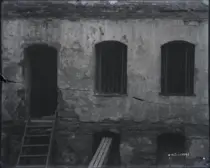
Girard slave pens, Louisiana, 1894. Exterior of stone holding cells linked to Philadelphia financier Stephen Girard. Photograph by W. N. Jennings. Courtesy of the Library Company of Philadelphia.
But his story isn’t clean.
Girard’s fortune was built inside systems that exploited people. He owned enslaved people in Pennsylvania and Louisiana. The Library Company preserves an 1894 photograph labeled ‘Girard Slave Pens’ from a Louisiana property. (Teachers Institute of Philadelphia, Library Company of Philadelphia)
Grim architecture that outlived him.
Legacies are forests. Some trees give shade. Many grew from poisoned soil.
His will created Girard College. That’s a residential school endowed for “poor, white, male orphans”; desegregated in 1968 after prolonged legal fights; girls admitted in 1984.
It took years of organizing and multiple court battles before the color line fell, and girls were admitted much later. (National Archives, Girard College)
A public gift with locks on the door that Philadelphians spent generations battering down.
Where Do We Go From Here?
So… what do we do with a legacy like that?
Off-roaders inherit our own contradictions.
We love wild places. We also drive to them.
We celebrate freedom, then post a trail that cannot survive fame.
The answer isn’t guilt. It’s responsibility. Horizontal habits don’t need committees.
Stewardship in Practice
Consent and care are key.
Pack a spare trash bag and a shovel because strangers will need both. Bury what needs burying the right way or pack it out.
If a gate is closed, the conversation ends. The commons is only common if we act like we share it.
Invest in collective capabilities. Teach a friend to air down and air up. Show your kid how to spot a line without shouting. Lend the cross wrench and show them how it’s done.
The point of competence is not superiority. It is liberation for the next person who learns it.
Define Your Dash
Family history folks have a phrase I love: “Define your dash.” (FamilySearch)
Everything between the dates is yours to write, and the time between is so much more limited than we can possibly realize.
Maybe your dash will never buy a bank or endow a school. Good.
You have Tuesday nights in the garage and parking lots where somebody needs a jump.
You have small creeks that need one more bag of trash packed out.
You have a voice at the land use meeting when a place you love risks being priced, paved, or parceled out of public use.
Spreadsheets Can’t Define Your Dash
If tomorrow were your last, plant something today.
A sapling in your yard. A habit in your crew. A path of least damage across a wet section you could have chopped to pieces.
History says legacies are mixed, even for people with statues. Our job is to stack the deck.
Leave more shade than exhaust.
Leave more skills than stories.
Leave places and people better than we found them. That’s how we define our dash and earn whatever future parks its wheels in our ruts.
Trail Code
Air down before dirt; skip waterlogged segments that will rut the trail.
Yield to uphill traffic; keep speeds down near camps and overlooks.
Pack out more than you packed in; bring a contractor bag on every trip.
No geotags for fragile spots; share locations responsibly, person-to-person.
Camp on durable ground; kill generators at quiet hours.
Volunteer days > hot takes; sign up for a trail workday each season.
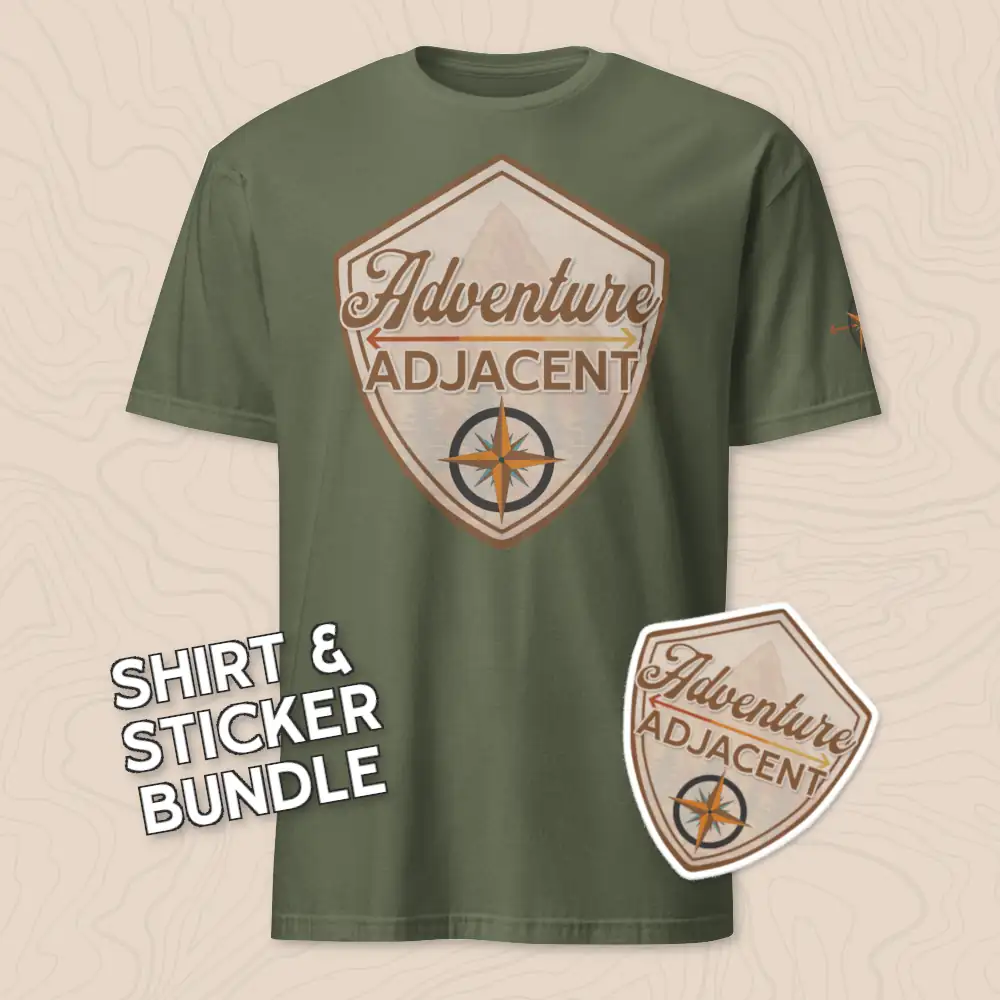
Help the wheels keep rolling, and show your love of affordable adventure with clothing designed by yours truly!
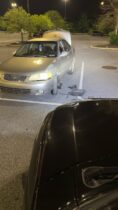
She limped into the lot in a tired gold Sentra, front tire punching its timecard early, leaving the bead to give the bumper a kiss goodnight.
The humid summer night smelled like hot ATF and regret.
I swung the Cruiser around. Window down: “Need a hand?”
She nodded, grateful, the way people are when they expected the world to look away and it didn’t. She shuffled toward McDonald’s to sit while I popped her trunk and got to work.
It Wasn’t a Trail, But It Was Still a Recovery
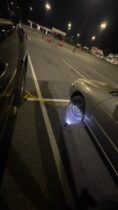
This is why I carry gear. Not for a reel. Not for the someday trail heroics. For nights like this, under buzzing parking light lots, with a stranger who just wants to get home.
Spare was intact. Jack present. No lug wrench, which is why a cross wrench lives in my rig.
Her scissor jack wanted the factory tool to spin it, so I used a 13/16 socket and my Makita.
Lugs loose. Wheel off. Donut on.
The compressor hummed and the little tire swelled like a bee sting before antihistamine.
No drama. No mud. Just a quiet win between a cart corral and the smell of fries.
I closed her trunk and handed back the keys, and the thought that wouldn’t leave me alone was this:
Capability matters because it converts to care.
Tools are cool. Mutual aid is cooler.
The Part With More Opinions Than Lug Nuts
We’re taught to outsource everything. Dial the auto club, wait for a truck, stand by the phone.
That’s tidy for a spreadsheet, but it breeds helplessness in the wild where you actually live.
A neighborhood used to be a warranty. Now it’s a parking app and a service tier.
I’m not anti-Triple A. Been a member for as long as I could drive.
I am pro-you, pro-me, pro-we-keep-us-safe.
Ten minutes with a cross wrench beats an hour on hold.
The supply chain is you, with a headlamp and a socket set.
The safety net is us, showing up without asking for permission or giving a customer number (“Which of these 18 digits did you need again?”).
The luxury isn’t leather. It’s competence and enough kindness to share it.
The TLDR:
Your gear should be used. The compressor, cross wrench, and headlamp are not decor. They’re tickets to being useful on ordinary nights.
Skills are a commons. Change one tire and you can teach three people. That is how capacity multiplies.
Check your spare. Spares seep air in the dark. Read the pressure printed on the sidewall and keep it there. A flat spare is dead weight.
Small aid is still aid. You will not fix the world from a parking lot. But you can fix someone else’s day, week, or month.
How To Change A Tire Safely
If you came for the steps, here’s the no-drama version of how to change a tire.
Get safe and seen. Pull out of traffic. Hazards on. Parking brake set. If you have them, toss a couple of wheel chocks or beefy rocks behind the tires that stay on the ground.
Find the jack point. Check the owner’s manual or look for reinforced pinch welds or frame pads near the flat. Avoid soft bodywork.
Crack the lug nuts first. Before lifting, loosen each lug a quarter turn in a star pattern. You want the tire on the ground for leverage.
Lift the vehicle. Position the jack on the correct point and raise the tire just off the pavement.
Remove the wheel. Take the lugs the rest of the way off, keep them somewhere clean, and pull the wheel straight toward you.
Mount the spare. Line up the holes, slide it on, and spin the lugs on finger tight in a star pattern.
Lower and snug. Bring the vehicle back to the ground. Tighten the lugs in a star pattern until they are good and firm. Use a torque wrench if you have one and the spec from the manual.
Air it. Inflate the spare to the pressure written on its sidewall, or the pressure on the driver’s door jamb sticker. If it’s a compact spare, follow the speed and distance limits printed on it. No exceptions for good or bad behavior.
Stow and recheck. Tools away, flat in the trunk, recheck lug tightness after a few miles.
Safety note: A jack lifts. It does not support. Never crawl under a car supported only by a jack. Especially the cheap junk most manufacturers include.
After a little resuscitation, the spare is awake
How to Change a Tire: What You Should Have
Cross lug wrench.
Compact compressor.
Tire plug kit.
A jack you trust (bottle or low-profile floor jack if you have space).
Headlamp or work light.
Gloves and a kneeling pad.
Wheel chocks.
A spare with the correct pressure printed on its sidewall.
The Quiet Point
Adventure Adjacent isn’t just trails and pretty vistas. It’s the tiny civic moments where capability turns into kindness.
Check your gear. Check your spare. And when someone limps into a parking lot at 10 pm, be the person who stops.
Help the wheels keep rolling, and show your love of affordable adventure with clothing designed by yours truly!