We need to talk about the National Park Service. What it does. What it costs. And what gets lost when an administration decides public goods are soft targets.
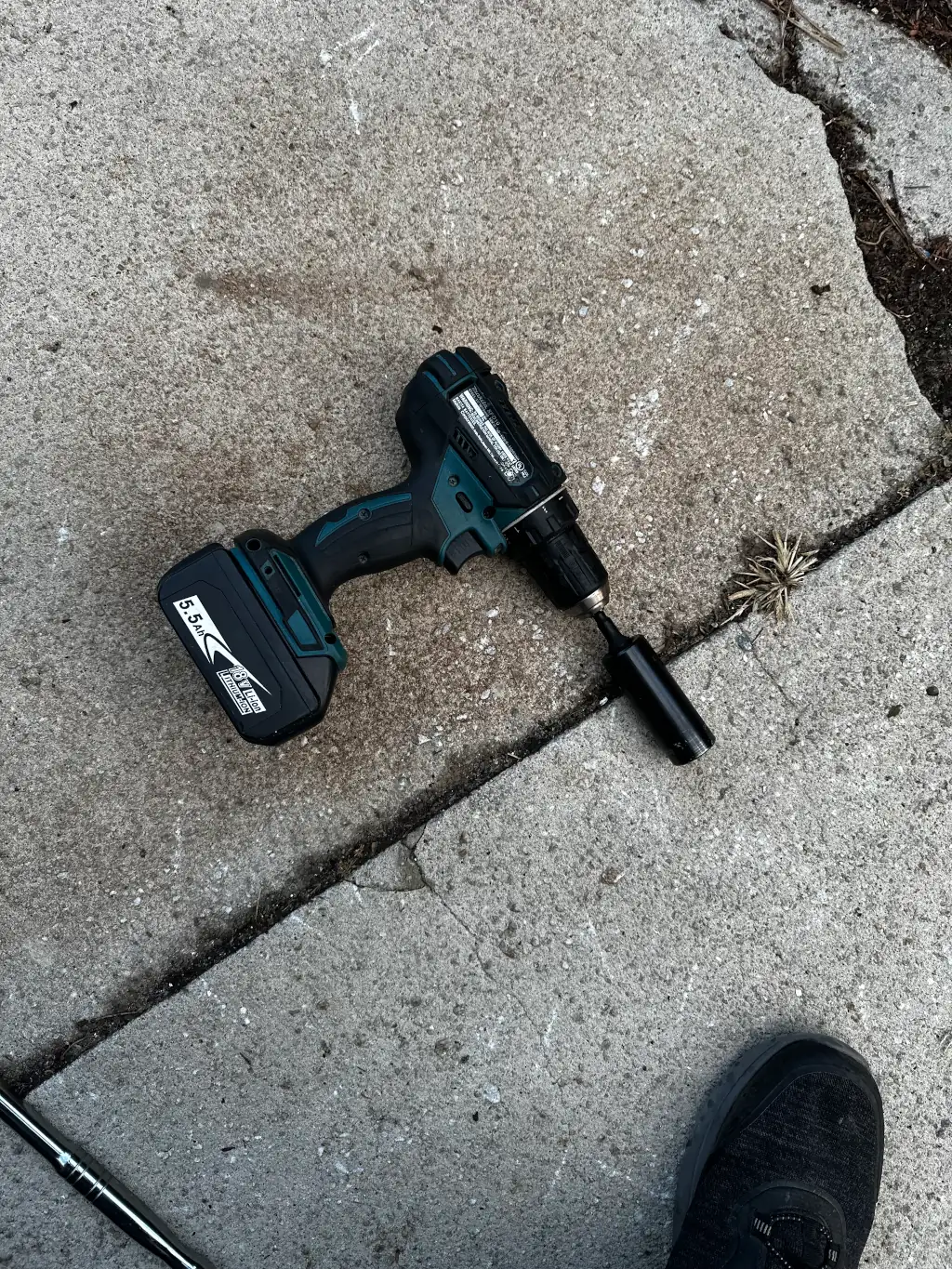
Some of the best things in a garage don’t belong there for very long. This is about borrowed tools and how sharing builds a safer community. #WeKeepUsSafe
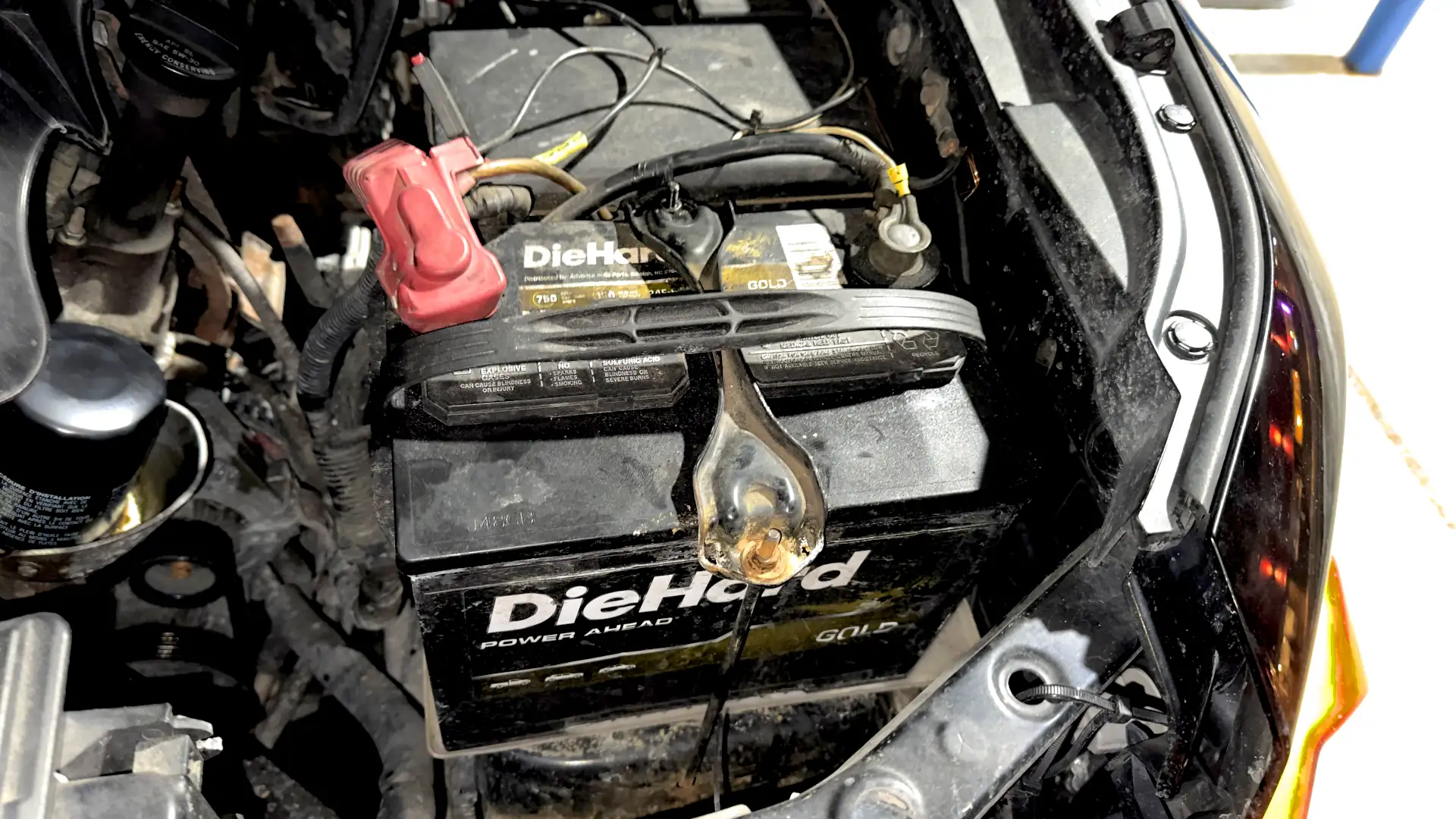
Battery hold downs failed and my FJ Cruiser’s battery tipped toward the radiator. A quick “wiggle check” at the pump can prevent costly electrical damage.
Follow the trail crew social feed on your favorite social media, linked to the right.
If you’d prefer to just lurk, you’re welcome to see what’s happening on the most active Adventure Adjacent social media right here on the site at this link: Trail Crew Social Feed.
The National Park Service isn’t glamorous, but some of the most American places we have run on very unglamorous things:
Payroll
Vault toilets
Trail crews
Historians
Biologists
Seasonal workers
Maintenance shops
The person who answers a confused visitor’s question with a map in one hand and a pocket full of patience.
That matters, because when people say the Trump administration is trying to defund the National Park Service, they’re not usually talking about a mustache twirling supervillain. They’re talking about a long, bureaucratic squeeze:
Hiring freezes
Attrition
Proposed budget cuts
Directives to shrink the federal workforce
It’s all snore-inducing, CSPAN drone until the visitor center door is locked, the trail bridge stays busted, and the interpretive program quietly disappears from the schedule.
What Would You Say You Do Here, National Park Service?
A lot of people hear “national parks” and picture Yellowstone, Yosemite, and maybe a bison blocking traffic.
The real thing is much larger and much more interesting. The National Park Service manages 433 units covering more than 85 million acres across all 50 states and several territories. That includes national parks, monuments, battlefields, historic sites, seashores, recreation areas, rivers, trails, and more. Its governing mission, written into the 1916 Organic Act, is to conserve scenery, wildlife, and natural and historic objects while providing for public enjoyment in a way that leaves them unimpaired for future generations.
That last sentence is heavy like a Chevy.
The Job is Bigger Than a Postcard
In the budget documents themselves, Park Service operations are broken into:
Resource stewardship
Visitor services
Park protection
Facility operations and maintenance
Park support
In plain English, that means scientists, archivists, law enforcement rangers, fee staff, trail crews, custodians, mechanics, planners, historians, and the people trying to keep a century-old stone staircase, a Civil War battlefield, and a backcountry wastewater system all functioning in the same week.
The agency also works with communities around the country through programs tied to historic preservation, the National Register of Historic Places, National Historic Landmarks, trails, rivers, and close-to-home recreation. So, when the budget knife comes out, it’s not aimed at only the biggest parks out west.
Those visitors spent an estimated $29.0 billion in gateway regions, supporting 340,100 jobs and $56.3 billion in national economic output. That’s hotel housekeeping in Moab. That’s a diner near Shenandoah. The gas station outside Acadia. The mechanic, the guide, the grocery store, the coffee shop, and a whole pile of towns that are not interested in becoming collateral damage in somebody’s ideological war on public institutions, crony capitalism, and personal enrichment.
Follow the Money: Why the National Park Service is Getting Cut
The Trump administration’s FY 2026 budget request proposed cutting the Park Service’s core Operation of the National Park System account from about $2.894 billion to $1.994 billion.
It also proposed dropping National Recreation and Preservation from about $89.6 million to $12.0 million, the Historic Preservation Fund from about $168.9 million to $11.0 million, and Construction from about $172.3 million to $99.5 million. Those aren’t trimming the fat, they’re feeding the NPS to the chipper-shredder.
The Newest Numbers are Harsher for the National Park Service
In the White House’s FY 2027 budget materials released in April 2026, the administration proposed cutting the Park Service’s operations account from an estimated $2.9 billion in 2026 to $2.143 billion in 2027.
The same documents show National Recreation and Preservation falling from $92 million to $6 million, and the Historic Preservation Fund falling from $181 million to $11 million.
The employment tables project direct civilian full-time equivalent staffing dropping from 11,488 in 2026 to 8,984 in 2027. Congress still has to act on those requests, but the administration’s direction of travel is not exactly subtle.
There’s one thing worth pointing out, because honesty matters more than a tidy villain speech: The administration’s 2026 budget also proposed reauthorizing the National Parks and Public Land Legacy Restoration Fund for another five years. That fund, created by the Great American Outdoors Act, is aimed at deferred maintenance.
So, the story is not that every single park-related line item moved in the same direction. It’s stranger than that. The administration proposed keeping a major maintenance tool alive while also proposing deep cuts to day-to-day operations, preservation programs, and staffing. A park can get a repaired road and still lose the people who interpret the trail, clean the campground restroom, catalog the archive, or keep the visitor center open six days a week instead of four. Infrastructure matters. So do caretakers.
Stripping the Copper from the Walls
Outside the Park Service fence line, the broader public-lands fight is already leaning on the same philosophy.
In March 2025, Interior and HUD announced a joint task force to identify federal land suitable for housing development and streamline land transfers.
In June 2025, the Senate Energy and Natural Resources Committee released a proposal for mandatory disposal of a slice of BLM and Forest Service land for housing, calling it central to “President Trump’s housing and public lands agenda.”
The National Park Service is not a luxury line in a federal spreadsheet. It’s one of the few institutions in American life that still tries to hold beauty, history, grief, science, leisure, and public access in the same pair of hands.
It manages battlefields where the country tore itself open. It manages shorelines, deserts, trails, ancient dwellings, memorials, and odd little places that would never survive a strict profit-and-loss test. The National Park Service keeps a piece of the national memory from being paved, privatized, or forgotten.
So yes, we need to talk about the National Park Service.
We need to talk about what it does, what it costs, and what gets lost when an administration decides public goods are soft targets.
In the next posts, I want to get more specific. The budget fight. The push to dispose of public land. The founding story. The famous parks everybody knows and the quieter sites they don’t. Because, if you’re going to defend something, you should know what it is before the auctioneer starts clearing his throat.
Some of the best things in a garage don’t belong there for very long. This is about those borrowed tools: a 10 mil, a neighbor’s torque wrench, a loaner code reader that has diagnosed three check-engine lights and one bruised ego. (It’s not the gas cap… or is it?)
That’s the good stuff.
We learn early that self-reliance means ownership. Buy your own, keep your own, want for nothing.
But the best things in life are the small acts of trust between people who know each other well enough to knock on the door without rehearsing the request.
Borrowed Tools: Trust is infrastructure.
Not the kind of glamorous infrastructure people take pictures of.
Just the invisible system that gets somebody’s brakes done on a Thursday night, so the kids get to school Friday morning without the family having to eat ketchup soup for a week.
A neighborhood with borrowed tools is a neighborhood with fewer emergencies.
The tool matters, sure.
The torque wrench keeps wheels on and the shiny side up.
The code reader tells you whether the truck is annoyed or actually wounded.
But the real machinery is the little agreement underneath it all: I trust you with this. You bring it back. Next time, maybe I’m the one knocking on your door asking you to pump the pedal while I crack the bleeder.
That is a far better system than twenty households each buying the same rarely used thing, letting it rust in a drawer, and pretending this is the peak form of civilized living.
You do not need a formal lending library to start. In fact, please don’t. The minute somebody says, “we should make a spreadsheet,” half the magic packs its bags and leaves town.
None of us needs to own every tool, and all of us need help sometimes.
Borrowed Tools: Start small.
Make a loop. One friend. One sibling. One decent neighbor. Trade the boring useful stuff first. The things people actually need on an ordinary bad day. Keep it to boring, useful stuff:
torque wrench
code reader
trim tools
compressor
jack
scanner
Put one rule on it all: return it clean and intact.
If something broke, say so.
If you lost the 10mm, congratulations, you’ve participated in the tradition.
A tiny loop works because it stays human-sized.
And that, really, is the point. Not the wrench, the socket, or even the money saved, though those help.
The point is learning, in a small, repeatable way, a life where capability gets shared around.
Sometimes the strongest thing a neighborhood can build is the habit of sharing what keeps the neighborhood moving.
I opened my inbox, saw the Trail Guide acceptance, and immediately did the same thing I do when I hear an unfamiliar rattle in the Cruiser. I got excited, then I got suspicious, then I started looking for the part where I’m about to learn something the hard way.
So, I dove in like I always do. I opened two browser tabs: one for onboarding, one for research.
New Trail Guide? Sign up for Circle.
Circle.so, for anyone who hasn’t encountered it yet, is basically a private clubhouse for people who are all trying to do the same thing without stepping on each other’s bumpers. I posted my little Trail Guide bio and an intro in the “Start Here” forum.
Folks chimed in from Colorado Springs, northern Georgia, all over. It felt like walking into a new shop where everyone already knows where the 10mm is kept.
Now the program rule is simple: I need to map and submit one trail within 30 days to stay in.
I love deadlines that are close enough to feel like a dare.
What is onX, exactly?
If you’ve been living under a rock, onX is one of the largest offroad mapping apps in the world.
It started in Missoula, Montana, and built its reputation on one core promise: help people know where they stand. Literally, in the land-ownership sense, and later in the “how do I not get lost out here” sense. They’ve grown into a suite of outdoors navigation apps, with different flavors for different kinds of dirt (hunting, off-road, backcountry, fishing).
They’re also not a scrappy little garage project anymore.
onX has raised significant funding and has taken outside investment over the years, including a Series B round led by Summit Partners in 2022 and a strategic investment announced with growth equity firm TCV in 2025.
None of that is automatically “good” or “bad.” It just means the stakes are different now. Growth changes incentives. Incentives change products. Products change behavior. Behavior changes trails.
That last part is why I’m taking the Trail Guide thing seriously.
So, what’s the Trail Guide program?
On the off-road side, onX has two big buckets of trail information:
Community reporting, where regular users can submit trail reports or flag issues.
“Guided Trails,” which onX says are scouted and documented by their Trail Guides with photos, descriptions, and difficulty ratings.
That second bucket is what I just got accepted into.
The stated goal is pretty wholesome: inspire people to get outside, equip them to off-road responsibly, and help protect trails for the future.
A Trail Guide is a human being who turns “I drove a road” into “here’s what you need to know before you do.”
The genuinely good stuff
I’ve used onX long enough to know why people like it.
MVUM access in one place.
onX Offroad highlights US Forest Service (USFS) Motor Vehicle Use Maps (MVUMs) as part of the product, which matters because MVUMs are where “it’s a road” becomes “it’s a road you’re allowed to be on.”
Offline maps that don’t turn into a blank panic screen.
The app emphasizes offline access to trail descriptions, land boundaries, and layers once you’ve saved your map areas. That’s a big deal when your signal disappears faster than your confidence.
Dispersed camping, with an official backbone.
onX Offroad advertises USFS-verified dispersed camping data integrated into a map layer for National Forest land. That’s the kind of thing that can keep people from “accidentally” camping where they shouldn’t.
If mapping tools can reduce the amount of wandering, guessing, and “we didn’t know,” they can reduce damage.
That’s the optimistic version of the story, and I still believe it.
The stuff worth squinting at
Here’s the part where I talk myself down from pure hype.
1) Maps don’t just describe places, they change them
This isn’t unique to onX. It’s the “digital guidebook” problem.
When an app makes a route easier to find, it also makes it easier to overuse. That’s been a big conversation in the hunting world with onX in particular: access is good, but crowding and pressure are real, and the data people generate becomes valuable in ways most users don’t think about when they drop a pin.
Off-road trails have the same vulnerability. Traffic concentrates impact. Impact triggers closures. Closures punish the people who were trying to do it right.
So, if I’m going to contribute to a system that helps people find places, my job is also to help people not wreck them.
That means being picky about what gets highlighted, how it’s described, and what warnings get attached.
2) Accuracy is a moving target
Maps get outdated. Gates move. Storms re-write roads. A trail that was fine last month can be a liability today.
And if you spend five minutes in any off-road forum, you’ll find people who love onX and people who don’t trust it at all.
Some of those complaints are about closures and trail details being wrong or inconsistent.
That user feedback is a signal: the real world changes faster than any dataset.
Trail Guides are one attempt to narrow that gap. A vetted write-up beats a mystery line on a map. That’s part of why I wanted in.
3) The data question is not paranoia, it’s realism
onX has been unusually direct about some of this. They publish a page about “Volunteered Geographic Information” (VGI) and explain that, with permission, they collect GPS coordinates frequently while the app is open in the foreground, and use that to improve knowledge like trail networks, gate locations, and open/close dates.
They also provide privacy documentation, including a “Do Not Sell My Personal Information” page that says they don’t disclose personal data for money, but may share limited data in ways that could count as “sale” or “sharing” under some state privacy laws, including for targeted advertising.
Again, not a scandal. Just reality.
If you use modern apps, you are in a relationship with a data pipeline. It’s smart to know what you’re agreeing to.
Trail Guide: Where I land on it
I’m not joining because I think onX is perfect. I’m joining because maps are already shaping where people go, and I’d rather be part of the force that makes usage better for everyone now AND in the future.
My personal rules for this, at least right now:
Is the trail status questionable? I’m treating “maybe” as “no” until it’s confirmed.
If there’s a gate, a sign, or a closure notice, that becomes first-class information, not a footnote.
Is the route legal but fragile? It’s getting marked accurately in my description.
If I’m unsure, I’ll ask the people who actually manage the land.
That’s how stewardship works.
The 30-day assignment
So, here’s what happens next: I need to map and submit one trail within the next 30 days to stay in the program.
I’m going to pick something representative of the Pennsylvania and Mid-Atlantic reality I actually drive:
Not a rock-crawling flex photo. Not a viral viewpoint.
A real route with real details that help people drive it legally and leave it in the same, or better, condition than they found it.
If you’ve got a favorite forest road in PA that you think deserves a careful, responsible write-up (or one that desperately needs updated info), hit me up.
I’ve added battery hold downs to my list of regular checks, because a few days after I flushed the power steering, I pulled into a gas station and did my little ritual:
Pop the hood. Fluids. Belts. Anything leaking? Smoking?
Anything that looks like it is about to become an unplanned story on this site?
That’s when I saw it.
Battery Hold Downs: Fantastic Failures, Shocking Surprises
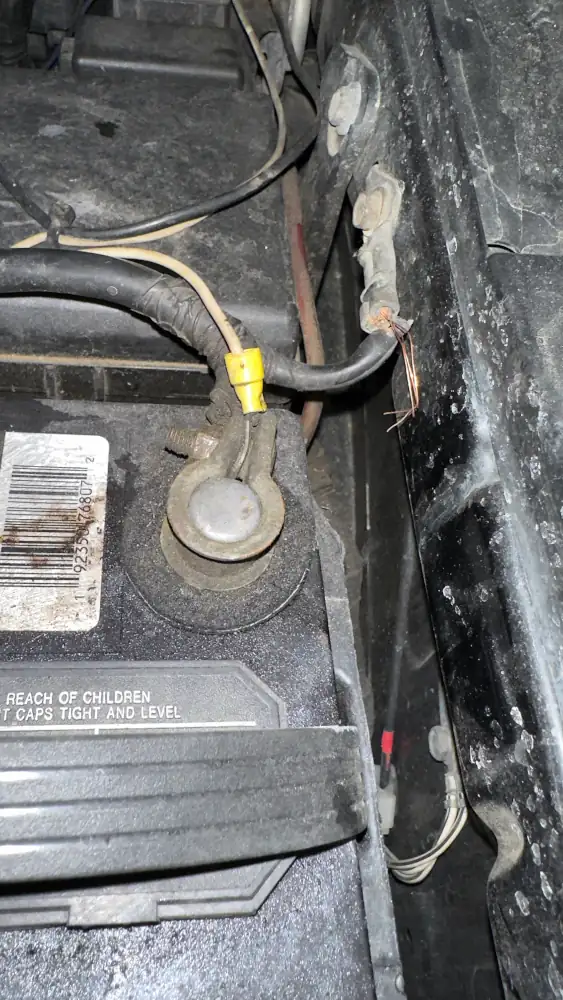
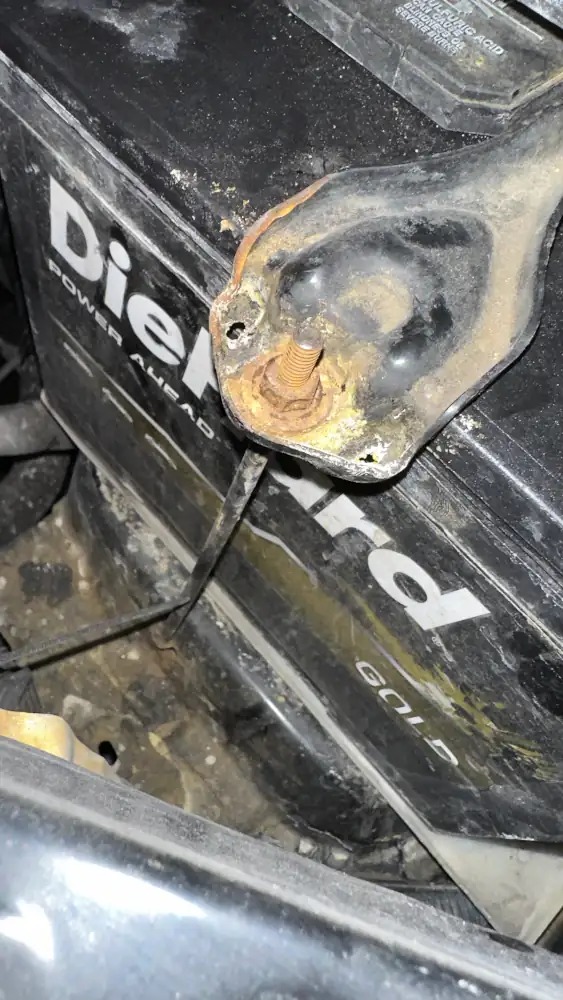
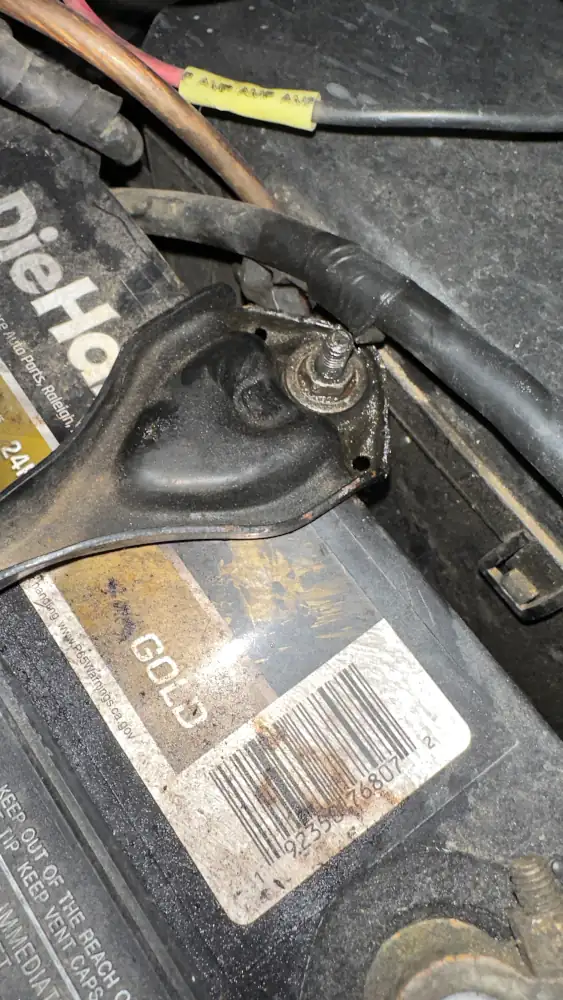
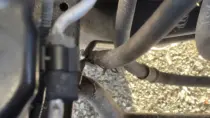
My battery was tipped off its tray. I caught it kissing the radiator. Only the positive and negative cables were keeping it in the engine bay.
Not dramatic enough to strand me. Just… wrong.
I stared at it for a second, doing the mental math of how long it might have been like that. The power steering flush was January 11. This gas stop was January 20. Somewhere in that window, the battery hold downs got loose enough for gravity and my… spirited driving to start writing its own version of the maintenance log.
What broke?
The only obvious casualty was a thick ground wire that ran to the fender. Snapped right at the lug, copper strands splayed like a bad haircut.
Everything else looked intact. No sparks, smoke, or melted insulation. Most surprising of all: No warning lights, weird idle, or glitchy radio.
The Cruiser had been quietly tolerating my neglect.
Here’s the part that’s uncomfortable to admit: I try to be the guy who does maintenance. I carry tools. I write how-to posts because I’m trying to be more intentional in the future.
And I still missed a basic, boring, foundational thing: making sure the battery was actually secured.
A loose battery is not just a nuisance. As you can see, it can tug on cables, damage connections, and in the worst cases, battery movement can create a short circuit that can cause a fire. Especially if the positive terminal ends up contacting something it shouldn’t.
So, yeah, I got lucky.
How I fixed the Battery Hold Downs
I was really fortunate. None of the hardware got scattered. I just grabbed the battery, put it back on its tray, and tightened everything down.
Took some photos, made a plan to repair the ground properly, and then I did the thing I always do after a close call: I replayed it in my head. Not to spiral, but to find the lesson.
I’ve had to learn the hard way that “be perfect next time,” isn’t a lesson. That’s a fantasy.
The real lesson was mindfulness. Not the incense kind. The under-the-hood kind.
Mindfulness is being present to notice the boring stuff before it becomes expensive stuff.
It’s doing the 30-second check because you respect what the machine is doing for you. Toyota used the same designs on FJ as the 4Runner for almost twenty years.
“Old” doesn’t mean “bad.” Sometimes old means:
Forgiving
Reliable
Overbuilt
Old means it will keep running even when you accidentally sabotage it a little. But forgiveness isn’t permission for neglect.
There’s also a quieter, more human angle to this: the world trains us to rush. To skip checks. To treat maintenance as optional until something breaks, and then to blame ourselves for not having more time, more money, more energy.
Just more everything.
I’m trying to do the opposite. Not perfectly. Just consistently.
So if you want the practical takeaway, here it is: Add quiet, thoughtful moments to your routine. Even if it’s 30 seconds of skipped scrolling while you pump.
Mindfulness makes everything better. A quick wiggle on your battery hold downs while you wait for the DinoJuice™ is a smart habit. And it’s the kind of habit that prevents dumb problems from multiplying.
The 60-second battery hold downs check
Grab the battery and try to move it. If it shifts, your battery hold downs aren’t doing their job.
Look at the cables. If the battery moved, the cables took the stress.
Scan for rubbing and pinch points. Vibration plus time equals mystery failures.
Check the battery hold downs hardware. Rust, missing pieces, stripped threads, all of it matters.
Do not “temporary fix” this with bungees. Hold downs exist for a reason.
I didn’t catch this one in my garage. I caught it under fluorescent lights, standing at a pump, heart thudding and blood pressure spiking in public. Which is, honestly, a pretty classic way for lessons to play out.
Anyway, check your battery, stay grounded.
Help the wheels keep rolling, and show your love of affordable adventure with clothing designed by yours truly!
I’ve never done this before. But a power steering fluid flush is an easy maintenance item that can save big dollars down the road.
Honestly, I had no idea how old the power steering fluid was when I came home with the Cruiser. When I was checking fluids during one fuel up, someone leaned in and told me it smelled gross. One of the many drawbacks of not being able to smell.
I got a rare warm day in January a couple weeks ago. I decided to take care of a slightly past due oil change and tire rotation, and tackle this new task at the same time.
It was easy. Right up until I realized I did not have the one dumb thing that makes this job clean: a little spare tubing or a cap for the return port on the reservoir.
Cue the spill.
Into the catch pan.
I scrambled, stuck my finger over the hole, and cursed myself for not having the little things.
Then I discovered the most accidental tool in Toyota engineering: the dipstick attached to the reservoir cap is almost the perfect size to plug the return opening. It is not elegant, but neither is mopping ATF off your sway bar and skid plate.
Is Doing a Power Steering Fluid Flush Worth it?
Old, cooked ATF stops being a nice slippery hydraulic helper and starts acting like a tired, gritty pulp fiction detective, finding every potential weak spot in your power steering system and trying to exploit it.
If you never do a power steering fluid flush, this is what it could cost you:
What I learned (besides “buy spare hose and keep it in the bin”)
You can do a clean return-line flush with basic tools, but the difference between “clean” and “crime scene” is one cheap cap or a short length of scrap hose, plugged. Even an old screw in the end of the hose is better than nothing.
Having a new return line and fresh clamps on hand is smart. Mine survived and is holding tight, but I would rather replace aging rubber on my schedule than on the shoulder.
Turning the steering wheel engine-off moves fluid through the rack, but it does not spin the pump. I started the engine for short 2 to 3 second bursts to cycle the pump without running the reservoir too low.
Two quarts of fresh fluid was enough to get the old stuff out.
A Note on Safety and Sanity When Doing a Power Steering Fluid Flush
I’m sharing what I did on my own truck. Use your judgment, follow your service manual, and know your limits. Keep hands and tools away from belts and fans, support the vehicle safely if you lift it, and do not let the pump run dry.
If you see foaming, whining, or the fluid turning into a strawberry milkshake situation, stop and bleed the system properly before you call it “done.”
Just the Specs – Power Steering Fluid Flush
Item
Spec
Vehicle
2007 Toyota FJ Cruiser
Toyota spec for power steering fluid
Automatic transmission fluid (ATF) DEXRON II or III
What I used
Valvoline DEX/MERC ATF (DEXRON III / MERCON), about 2 quarts total for the flush, I had a third on-hand, just in case
What “normal” looks like after
No foam, no groan, smooth assist, level in the HOT or COLD range depending on temp
Step-by-Step: Power Steering Fluid Flush (the driveway version)
Tools and supplies
Catch bottle or drain jug (clear is best)
Rags, gloves, funnel
Pliers for hose clamps
A short length of hose to extend the return line into your jug (helpful, but not necessary)
Something to plug the reservoir return port (a proper cap, a spare hose with a bolt in it, or in my case, the reservoir cap dipstick hack)
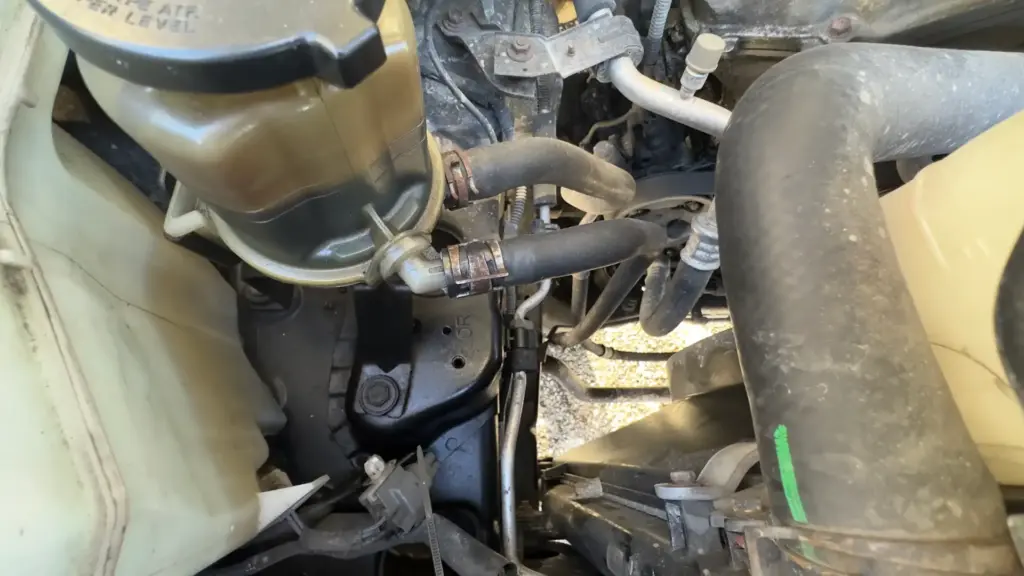
Undo the top hose on the reservoir.
1) Get set up
Park level, set the parking brake, and chock a rear wheel.
If you can, lift the front end so the tires are off the ground. Turning lock-to-lock is easier and you’re not grinding the tread across your driveway.
2) Identify the return line
This is the bottom side of the return hose, you’re undoing the top side.
On the power steering reservoir, remove the return hose and aim it into your catch jug. If you need to extend it, slip on a length of clear hose and clamp it.
Plug the open return port on the reservoir so it does not spit fluid everywhere while you work.
3) Start flushing
Fill the reservoir with fresh ATF.
With the engine off, turn the steering wheel slowly from lock to lock a few times. Keep an eye on the reservoir level and keep topping it up.
Top it ALL the way up, particularly for the next step, because that pump works QUICKLY.
4) Cycle the pump carefully
Once I wanted to move fluid through the pump itself, I started the engine for short 2 to 3 second bursts, then shut it off and topped the reservoir again.
When I say 2-3 second bursts, I mean I started it and shut it down before the idle settled.
Repeat until the fluid coming out of the return line looks consistently clean.
5) Button it back up
Reattach the return hose to the reservoir with the clamp seated correctly.
Fill to the appropriate range on the dipstick/reservoir for fluid temperature.
The World’s Worst Egg Nog.
6) Bleed and verify
With the engine idling, turn the wheel to just shy of full lock and hold for 2 to 3 seconds, then go to the other side and hold for 2 to 3 seconds. Repeat several times.
Check for foaming or emulsification, and recheck level after a few minutes.
If you get foaming, don’t freak out.
As long as the pump isn’t whining, you’re okay.
Walk away for 10-15 minutes with the cap off, then repeat the process above.
7) Clean up like your dog is gonna be licking the pavement
Dispose of used ATF properly at a recycling center or auto parts store that accepts waste fluids.
Cavitation Caveat
What is pump cavitation? When the pump sucks air instead of fluid, it complains loudly and turns your “quick job” into foam and regret. Don’t let the pump run dry when you’re doing a power steering fluid flush.
How to avoid cavitation
Don’t run the reservoir dry.
DON’T RUN THE RESERVOIR DRY.
How to correct cavitation
Okay, so you ran it dry.
If you hear whining or see a ton of foam in the reservoir, stop the engine ASAP.
Top off the reservoir (engine off).
If it’s not already, jack it up, put it on stands.
Engine OFF: slowly turn the wheels lock to lock several times.
Do this slow and steady. It helps push the air up toward the reservoir.
Lower the vehicle. Put the return hose back on.
Start the engine and let it idle for a few minutes.
Engine IDLING: turn to full lock and hold 2-3 seconds, then go to the other full lock and hold 2-3 seconds.
Repeat this several times. Keep the holds short.
Shut it down and check the reservoir.
Look for foaming or emulsification. If it’s still foamy, repeat the bleed steps.
If you have to bleed it twice because it keeps foaming, stop and inspect for leaks.
Toyota specifically calls out checking for fluid leakage if you’re stuck doing multiple bleeds due to foaming. Loose clamps on the return line are the usual suspect after a flush.
If it still whines after all that
Stop and troubleshoot before you cook the pump.
Recheck fluid level.
Look for seepage at the return hose connection and clamps.
Make sure the hose isn’t cracked or collapsing.
If it keeps pulling air, it will keep making foam, and you’ll keep chasing your tail.
A power steering fluid flush isn’t rocket science. Follow these steps, be cautious, and you can save yourself hundreds or thousands of dollars in repairs.
Help the wheels keep rolling, and show your love of affordable adventure with clothing designed by yours truly!
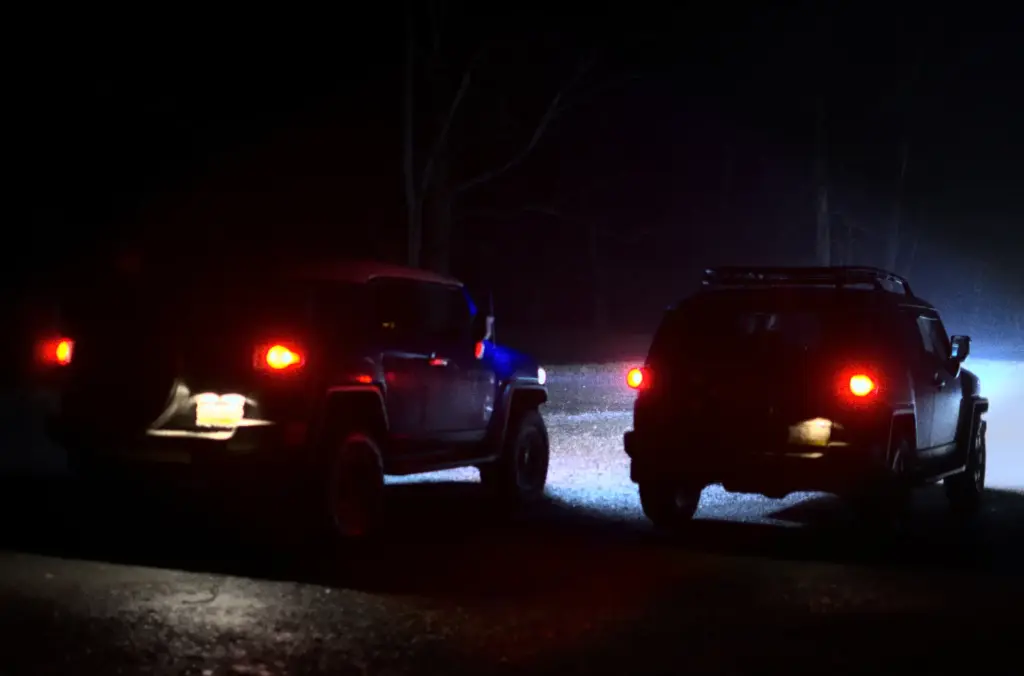
Saturday night, the Cruiser and I took an unplanned break on the shoulder because my registration was expired. Not “I forgot by a week.” Expired-expired. It’s time to get this adventure back on track.
There’s a particular kind of shame that only exists under flashing lights. Sitting in a truck you maintain obsessively, while realizing you did not maintain the paperwork that allows the truck to legally be a truck. Capability is great right up until bureaucracy taps the glass.
Anyway. Hi.
If you’ve noticed a quiet stretch here, you’re not imagining it. I’ve been head-down, trying to get real work done on the video backlog and build a rhythm for the next few months of Adventure Adjacent.
Where I’ve been
The short version: I’ve been making progress, just not the kind that turns into a post, video, or anything public-facing.
I’ve been working, editing, planning, rebuilding my workflow, and doing the unglamorous stuff that makes all the other stuff possible. The upside is the pipeline is real now, not a stack of clips whispering accusations from a hard drive.
The downside is: it looks like I fell off the planet.
Also, I hit the point where streaming felt like dessert when I hadn’t eaten dinner yet. So game streams are paused until Monday, January 26. That’s the line in the sand. If you’re a stream regular, thank you for your patience. If you’re new here, welcome to the part where the sausage is made and occasionally dropped on the floor.
Next steps to Getting Back on Track
The part my brain needs in plain text
Here’s what’s happening next, in the order it needs to happen:
Fishing Creek Revisited: I’m writing the outline for the voiceover script this week, and I’m finally settling on a real title instead of “Fishing Creek Revisited FINAL FINAL v7.”
Alternator swap video: this is next on the editing bench. It’s straightforward, useful, and it deserves to exist as something other than “that folder I keep meaning to open.”
Power steering fluid flush write-up: I did the flush in a rush and didn’t film it, which means it’s getting turned into a proper Field Notes post. Not a how-to masterpiece, but a practical “here’s what I did, here’s what I’d do differently” for anyone else who’s staring at tired fluid and a busy calendar.
And yes, a little post about the registration. That is now on the list too. The reminder is written in all caps in the mental notebook. It’s next to where I keep my hate for bureaucracy and nowhere near the mail about renewal.
Accountability corner: the registration incident
I don’t love sharing that I got pulled over. But I also don’t love the version of adulthood where we pretend we’re all perfectly on top of everything.
I’m building this project around the idea that competence is a form of self-care. For the people riding with us, for the places we visit, for the rigs we depend on. Paperwork counts. Boring counts. The little stuff is the stuff.
So here’s the accountability part: I paid the state their money, while the cop was writing the ticket. I’ve set up recurring reminders so this doesn’t become a yearly tradition. The Cruiser, and my wallet, deserves better.
Side Quest: Mapcase
I’ve also been quietly working on something that looks like adventure software.
It’s early. Like “one working integration and a dream” early.
But the direction is clear: I want a tool that helps you make better calls out there. Weather, road conditions, trail conditions, alerts, the kind of context that keeps a fun drive from turning into a dumb story. When there’s something solid enough to show, I’ll bring you along for the ride.
For now, consider this a breadcrumb: there’s a small map-shaped project growing in the garage.
Back on Track: The weekly rhythm returns
The plan from here is simple: weekly blog posts. Why? The habit makes me show up, and showing up is how any of this becomes real.
If you’ve been here through the quiet stretch, thank you. If you’re also juggling a pile of half-finished things, consider this your friendly reminder that “back on track” usually starts with one unsexy task and a stubborn little decision to keep going.
Next post is one of the items above, no new side quests allowed. If you’re digging yourself out of a backlog too, tell me what you’re up to this week. I’ll cheer from the garage.
The fifth time I opened a Clipchamp project, and it asked me to relink media like we’d never met before, I had a very specific thought: “Ah! So, this is what it feels like to be billed twice for the same work.”
Same computer. Same me. Just older and less patient.
If you’ve never had the honor, Clipchamp’s version of “non-linear editing” can include a recurring ritual where you reopen a project and get told, again, that your video files are missing. So, you click through prompts and re-attach clips one by one like you’re doing digital paperwork for a job you didn’t apply for. Every session starts with admin. Every creative impulse gets put on hold until you’ve paid the toll.
I’m sure there’s a reason. There’s always a reason. But if the tool keeps demanding unpaid setup labor, the tool is the problem.
Clipchamp was more than annoying. It was a creativity-blocking subscription service.
We’ll ignore the constant reminders to sync to the cloud, despite that fact that I was working in OneDrive connected folders.
I can even ignore the constant “You paid for this library of content, but you probably shouldn’t use it for commercial purposes,” warnings.
But I can’t ignore when my editor forgets where my footage lives, you stop trusting your own workflow. It’s like closing the program made it forget how to link the files. It was a waste of energy proving your innocence to software that’s acting like a landlord who “never got the check.”
And then there was the day it got stuck on “Ready in a moment”
I rebooted. I tried the usual “update the thing” dance. Edge was updated. Clipchamp didn’t even have an update waiting. I started wondering if my own network was sabotaging me, like maybe AdGuard Home was quietly drop-kicking some required Microsoft domain into a pit.
Logging in on the Clipchamp web version was what finally nudged the desktop app back to life. That’s a sentence that feels like it should be fake, but here we are.
That was the moment the little voice in my head said: “You’re spending more time getting the editor to open than you are editing.”
It was more hostage situation than workflow.
DaVinci Resolve: walking into a cockpit on day one
Switching to DaVinci Resolve felt like trading a butter knife for a full mechanic’s toolbox, then immediately dropping a socket into the abyss behind the engine.
Resolve doesn’t hold your hand. It hands you options.
Pages. Nodes. Buses. Scopes. Panels that look like they were designed by someone who thinks “fun” means “spreadsheets.”
The first time I opened the Color page, I stared at it the way you stare at an unfamiliar fuse box label that says “AUX PWR 2” and you know, deep down, that if you touch the wrong thing, the word ‘Fuck’ won’t be a strong enough expletive.
But here’s the difference:
DaVinci Resolve may be complicated, but it’s not disrespectful.
It doesn’t make you reintroduce it to your media every time you open the project. It doesn’t pretend your footage vanished into the woods. It assumes you are a competent adult who put files somewhere on purpose.
Honestly? That alone felt like a feature.
The confusing bits that finally clicked in DaVinci Resolve
Most of what tripped me up wasn’t “hard,” exactly. It was “new language.”
1) Nodes and color work: “Why is this a spider web?”
At first, I was adjusting clips individually, one by one, because that’s what beginner brains do. One clip looks a little cold. Fix clip. Next clip looks too warm. Fix clip. Repeat until you realize you’ve hand-painted a picket fence with a toothbrush.
Then I discovered Groups. Groups were life savers.
I had started building a look on individual phone and action cam clips, and I didn’t want to throw that work away. I needed a way to take what I’d already built and make it apply consistently.
Resolve’s answer: copy the nodes and use Group grading so your “base look” lives in one place.
Once that clicked, everything got easier. Instead of chasing every clip like a gremlin, I had a starting point that made sense. I could do the broad strokes once, then do small per-clip fixes where they actually mattered.
2) LUT temptation (and the immediate regret)
DaVinci Resolve has Film Look LUTs. They take the hard edges off modern video footage in a way that scratches my itch for an “old documentary” look.
I tried them. I wanted them to be the magic button that makes clips look like a movie.
In practice, the film-look LUTs looked weird on my videos. The wrong kind of weird. Not “cinematic,” more like “why does the forest look like it was shot through a nostalgia filter designed for beach weddings?”
So, I backed away slowly and stuck with basic color and contrast work. It was a bit more work, but it’s turning out the way I want it to. The woods don’t need to cosplay as a Sundance drama. They’re already good.
3) Audio compression: I can do it… but can I do it everywhere?
I figured out how to add audio compressors, and immediately did the beginner thing: slapped a hard compressor on clips with an 18 dB threshold and called it progress.
Then reality showed up.
Doing it clip-by-clip is tedious, and it’s also the wrong mental model. The whole point of compression is consistency, and consistency doesn’t happen when every clip has its own personality.
Resolve’s answer lives in Fairlight: put compression on the track or on the bus so it affects everything in that lane.
One place to adjust, one set of ears to please. That was a big “ohhhh” moment.
4) Viewer size, multi-cam syncing, and the tyranny of tiny preview windows
I had continuous iPhone video and action cam footage to sync. I needed the viewer bigger than the tiny preview pane. I wanted it on a different monitor, full screen, because syncing multi-cam footage is hard enough without squinting like a Victorian watchmaker.
That sent me down the DaVinci Resolve rabbit hole of:
“What can I pop out?”
“What’s available in the free version?”
“Why is this harder than it should be?”
I found a workable approach, but I also learned a general truth: the free version is generous, but it still expects you to run into the sharp edges that make you want to pay.
If Clipchamp’s problem was buggy simplicity, Resolve’s problem is dignified complexity.
Pick your poison.
5) GPU confusion: “Why isn’t my video card doing more for DaVinci Resolve?”
At one point I noticed my GPU didn’t seem like it was doing much during playback, and I started poking at settings because I’m running an older rig. It’s a loyal workhorse, but it’s not exactly a thoroughbred race winner.
Resolve can be picky about decode/encode settings, render caches, and how it uses hardware acceleration.
Some of this is configuration.
Some of it is just the reality that modern codecs and multi-cam timelines are heavy. Either way, it was a reminder that video editing is a whole second hobby inside the hobby.
Which is rude, but also kind of fascinating.
Why I’m sticking with Resolve anyway
The friction is just Resolve being powerful and seemingly opaque when moving from a toy-like video editor. Clipchamp is great for shorts and fun videos. Drop some clips together, some transitions, maybe a GIF or two.
DaVinci Resolve gives me power but makes me earn it.
Clipchamp made me reattach files.
One of those frictions builds skill. The other is just wasting a commodity I can’t buy or build more of time.
There’s a bigger point hiding under all this: a lot of modern software is designed to be “easy” in the same way fast food is “easy.” It’s quick, it’s convenient, and it quietly assumes your time is disposable. If you hit a weird edge case, you’re on your own.
Resolve asks for effort up front, then pays you back in reliable capability.
And I like capability. I keep accidentally building my whole life around it.
Teaser: Fishing Creek Revisited (Working Title)
This is all happening because I’m cutting my first multi-angle, multi-camera trail video: Fishing Creek Revisited (working title), from an early August run on the Fishing Creek Nature Preserve trail.
This one is different for me.
Multiple cameras. Multiple angles. Actual intention behind how the footage tells the story, instead of just “here’s a clip of trees, now here’s another clip of trees, now here’s a third clip of trees where the sun did something rude to my exposure.”
The trail is familiar, but the edit isn’t. I think I used the multi-cam setup pretty well, and the process already has that feeling I chase in wrenching: the moment when confusion turns into competence, and you realize you just leveled up without anybody handing you a certificate.
I’m still new at this. I’m still learning. I’m still occasionally solving problems by hitting Backspace and hoping it looks intentional (sometimes it does).
But the video is coming. And it’s the first one that feels like the channel in my head, not just the footage on my SD cards.
DaVinci Resolve tips I wish I’d known on day one
If you’re doing any kind of consistent color work, learn Group grades early. Build your “base look” once, then do per-clip tweaks sparingly.
LUTs are optional. If a LUT makes your trail footage look like a dream sequence, trust your eyes and walk away.
In Fairlight, think track or bus processing for compression so you’re not chasing clip-by-clip settings.
For multi-cam syncing, give yourself a big viewer and a calm timeline. Squinting makes everything feel harder than it is.
If playback feels sluggish, don’t assume you’re doing it wrong. Sometimes you just need render cache, proxies, or a simpler timeline while you’re editing.
If you’ve made the same jump from “simple editor that fights you” to “serious editor that teaches you,” tell me what the hardest mental shift was. I collect those little lessons the way the Cruiser collects pinstripes: slowly, honestly, and with a lot of awkward learning in the middle.
Weekday routines dictate that the Cruiser pulls dad duty. Some mornings, when I turn the key and the loose ground wire I still have to track down makes the speakers buzz a certain way, a memory surfaces. I feel the need to hear the songs I listened to when I started driving myself to school.
I didn’t grow up in a scene with glamorous clubs or legendary squats. I grew up with mixtapes, boomboxes, and whatever punk albums I could con out of Columbia House for a penny.
This isn’t a trail report or a stream recap.
This one’s about the soundtrack that shaped how I think about community and about the kind of person I want to be when someone around me stalls or crashes out.
I’m gonna make the subtext so loud it distorts.
What I thought punk was supposed to be
When I was a kid, the media spun punks as teens with a particular fashion sense and drug problems.
Spikes. Leather. Chains. Jackets painted with logos you don’t recognize. Somewhere in there, a safety pin through something that probably shouldn’t have metal through it.
In the grainy square of 80s MTV and letterboxed movies, a punk was the living form of directionless aggression. Their music was forks in a blender set to visuals of sledgehammers smashing the Venus de Milo.
Punk rock became the soundtrack of angry people who like to break things.
That’s not what I found.
Yeah, punk rock sounds like a connecting rod smacking your engine block at 160 beats per minute.
It was built that way on purpose: short, fast, loud. A deliberate rebellion against the overproduced stadium rock of the ‘70s.
Bands in New York and London stripped music down to the studs and played the songs like they were trying to outrun the law.
But under all that volume is something subtle and nuanced: a culture ensconced in mutual aid, individual freedom, and looking out for the people next to you, especially the ones who don’t fit anywhere else.
Nobody told me that part. I had to live it to learn it.
The first time the floor moved
I was probably about five. My sister, who is nine years older, would listen to the Ramones at top volume, morning, noon, and night.
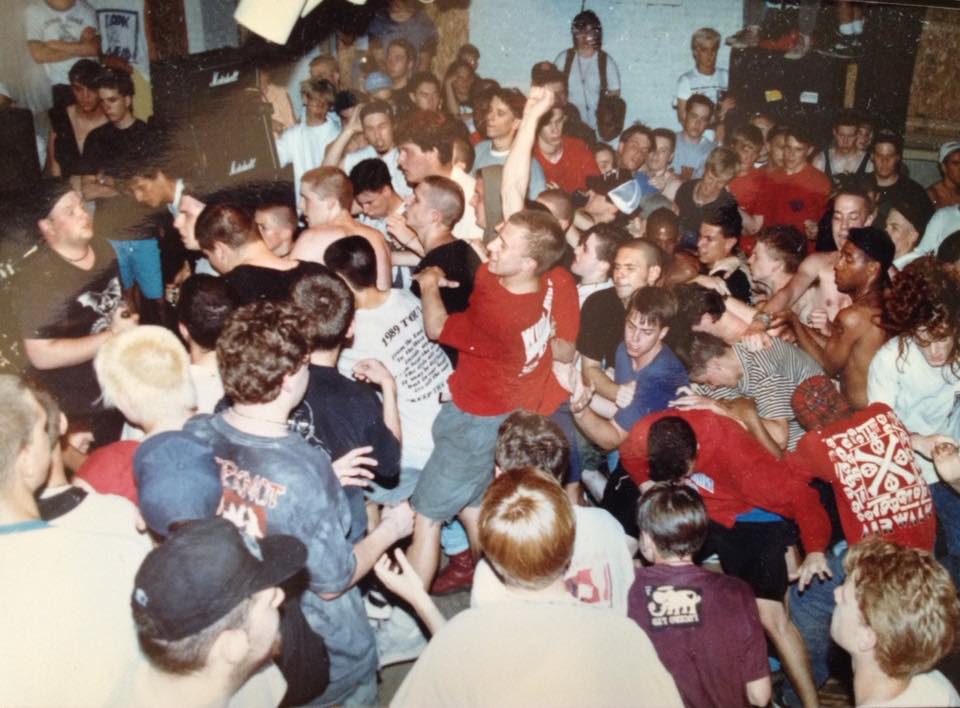
Unisound, Reading PA, late 80s/early 90s. A packed punk show where the main rule of the pit still applies: if someone goes down, you pick them up. Photo courtesy of the “We’re all friends at Unisound” Facebook group. Photo by Anne Spina.
This went on for years. It would be interspersed with other artists, but none stuck with me quite like they did.
Fast forward a few years to the first time I stepped into a real show. I half-expected a riot.
What I got instead was a living diagram of how I wish the world worked.
The music hit and the floor turned into a storm of boots and elbows. People slammed into each other, bounced off, dove back in. From the edge, it looked violent.
From the inside, it felt like organized chaos with one solid rule:
If someone goes down, you pick them up.
That isn’t just folklore.
Ask around and you’ll hear the same thing: in a healthy pit, the main rule is to look out for each other. If someone falls, you get them on their feet. If someone looks scared or hurt, you make space or help them out to the edge.
Never leave people on the ground.
You don’t let creeps use the chaos as cover.
Don’t gatekeep the dance floor.
It’s rowdy, but it’s rowdy on purpose.
That was my first real lesson in aggressive kindness: you can be loud, sweaty, and furious at the world, and still treat the stranger next to you like someone worth protecting.
I didn’t have the right words for it yet, but the message landed.
Punk is for everyone. Full stop.
There’s a line I read years later that finally put words to the feeling: if there’s one core ethos to DIY punk, it’s that punk is for everybody. Anyone can sing, anyone can play, anyone can be part of it.
As an awkward kid who barely limped out of high school, that was huge. I was bored with the schoolwork; didn’t care about grades.
I didn’t think anyone thought like I did.
I definitely didn’t have a five-year plan.
But I did have a summer job that I used the money from to buy a bass guitar and a tiny amp.
It was an old Aria with a tweaked neck and a sunburst pattern. I stuck a middle finger sticker to the back and learned how to read tablature.
I’d memorize how to play my favorite songs and get to know the bands in the process.
Collage of 13 album covers. T-B, L-R: Against the Grain, Bad Religion. Recipe for Hate, Bad Religion. Let’s Go, Rancid. Rocket to Russia, Ramones. Do or Die, Dropkick Murphys. Suffer, Bad Religion. Ramones, Ramones. …And Out Come the Wolves, Rancid. Punk in Drublic, NOFX. Give Me Convenience or Give Me Death, Dead Kennedys. I Heard They Suck Live!!, NOFX. So Long and Thanks for all the Shoes, NOFX. Signed and Sealed in Blood, Dropkick Murphys.
The Bands That Raised Me
The Ramones were proof that you could take three chords, zero subtlety, and a sense of humor and accidentally help kickstart an entire genre.
Rancid took that energy, dragged it through working-class streets and ska basements, and wrote anthems about friends on the edge, union organizers, and cities that chew you up.
Dropkick Murphys made working-class solidarity catchy enough to shout along with. They’ve backed unions, raised money for workers’ rights, and made a point of putting their money where their lyrics are.
Bad Religion was the first band that made me realize punk could come with footnotes. Greg Graffin screaming about science and society on stage, then quietly holding a PhD in zoology and lecturing at UCLA and Cornell, screws with your idea of who gets to be “smart.”
NOFX were the smartass older cousin who showed up with a skateboard, a hangover, and a stack of life lessons hidden under bad jokes. They’ve spent four decades cranking out hooky, melodic hardcore and skate punk, stayed off major labels on purpose, and still somehow became one of the most successful independent punk bands ever. Punk in Drublic turned gold while they were busy telling MTV and the big labels to get lost.
Dead Kennedys were the band that yanked punk’s anger out of the basement and pointed it straight at mayors, presidents, and the whole polished hypocrisy machine. Surf-y riffs, razor-sharp satire, and Jello Biafra’s unhinged sermon-of-a-vocal made songs like “Holiday in Cambodia” and “California Über Alles” feel less like tracks and more like political cartoons set to 200 BPM. They were DIY to the bone, releasing records on their own Alternative Tentacles label and ending up in real-life obscenity trials and censorship battles along the way. That last point quietly taught me that “speak truth to power” isn’t a metaphor: it’s a thing that can actually get you hauled into court, and you do it anyway.
This isn’t even close to an exhaustive list. But all these bands shoved a series of lessons into my skull: being “punk” had less to do with what you wore and more to do with who you showed up for.
Punk is FOR Everyone.
No, I’m not repeating myself.
Black, white, gay, straight, bi, trans, questioning, asexual… whatever. If you were there in good faith, you belonged. If you were trying to harm or control other people, you can go find a curb to chew.
Punk rock isn’t meant to exclude anyone. It’s soft, gooey solidarity wrapped in armor. It hardens you for the realities of the world but cajoles you into still caring about the outcome and the actual human beings.
It explicitly excludes exclusivity.
What does “aggressive kindness” actually mean?
Somewhere along the way, online or in a comment thread, I ran across the phrase “aggressive kindness is very punk,” and it felt like somebody had finally named the thing I’d been feeling for years.
Another person, in a totally different corner of the internet, put it like this: being aggressively kind is way more punk than just being angry all the time.
That’s it. That’s the whole thesis.
It’s a kindness that isn’t soft.
It doesn’t mean “nice” in the way bosses use the word when they want you to shut up about your pay.
Aggressive kindness is:
Calling out the creep in the pit.
Making sure the kid at their first show gets pulled up, not shoved out.
Using your voice to defend someone who’s getting piled on, even when they’re not in the room.
Welcoming the new person at camp, on trail, or in chat like they’re already part of the crew.
It’s hospitality with teeth. Compassion with Doc Martens primed to kick down oppressive systems.
In my head, though, it’s simpler: it’s pit etiquette turned into a golden rule.
Somebody goes down? Pick them up.
If somebody’s getting crushed, make space.
If someone is just trying to exist as themselves and the world is shoving back, you plant your feet and stand in the way.
Oppression is the enemy. Allowing others to live their lives doesn’t harm you.
Buddhism, back roads, and the loud part of compassion
At some point, I started reading Buddhist stuff for the same reason punk clicked: life is suffering, yeah, but what you do with that fact matters.
Compassion, or in Buddhist terms, lovingkindness, shows up there as this patient, quiet thing. Sit with your mind. Breathe. Notice. Don’t make things worse.
Punk taught me the loud version. Make things better.
Both paths are trying to answer the same question: how do you move through a broken world without becoming another sharp edge that cuts people?
There’s a saying: “East Coast people are kind but not nice. West Coast people are nice but not kind.” Growing up an hour outside Philly had its influence on my world view, too.
The second most-famous religious sect in this weird little intersection of Native America and Europe called Pennsylvania was the Quakers. Their plain speech is definitely in the mix of my personal philosophy and might be the most punk thing of all: say true things clearly and live like you mean them.
That’s what I hear in the best punk records. Strip away the distortion and it’s somebody yelling a very old idea:
“These people matter. You matter. We should treat each other like it.”
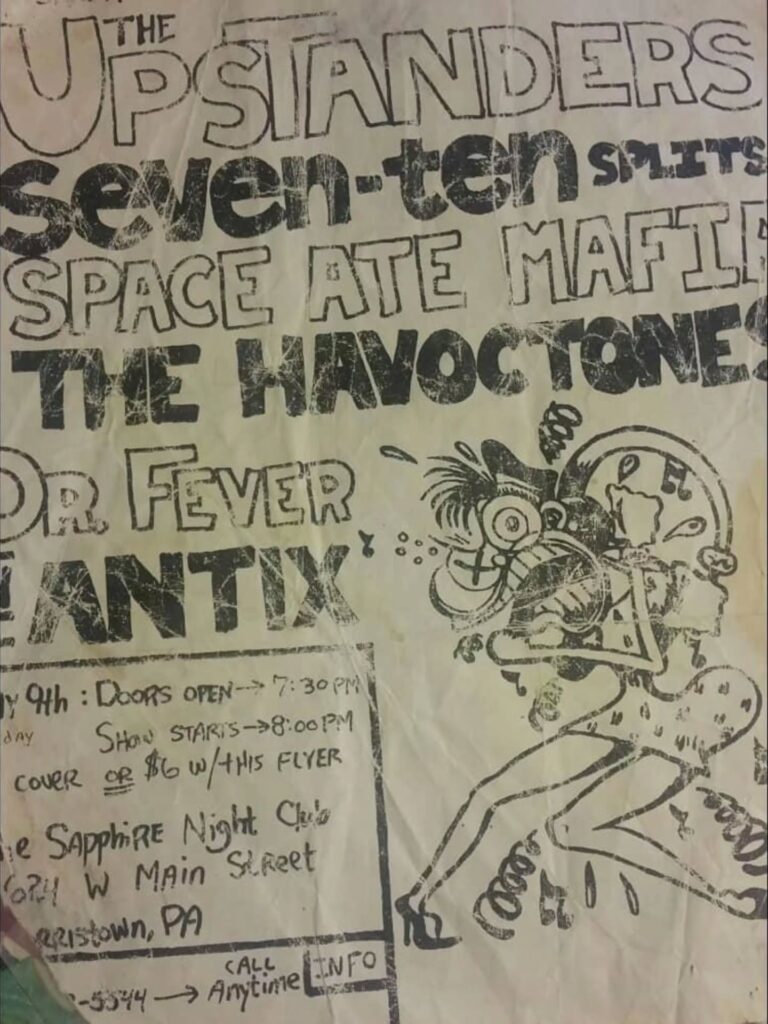
Xerox punk time machine from the Sapphire Night Club in Norristown, PA — The Upstanders, Seven-Ten Splits, Space Ate Mafia, The Havoctones, Dr. Fever, and Antix. My first band, The Real Live Psychics, played our first show in that same room around ’96/’97; a good friend of mine played guitar for Seven-Ten Splits, and the Havoctones were on our bill too. Flyer via @phillyhardcorehistory, art credit @jank322.
How this shows up in Adventure Adjacent
So, what does any of this have to do with my old FJ Cruiser, live streams, and forest roads?
Honestly: everything.
When I pull the FJ off pavement and creep up some rutted forest road, the same ethic applies. These places are shared. The gates and culverts and campsites exist because communities came together, planned them, and built them.
The least I can do is drive in a way that doesn’t make life harder for the next person who comes along. And if I can improve it on the way through, I do it.
Trail etiquette isn’t that different from pit etiquette:
Stay in the lane so you don’t bruise the scenery around you.
Don’t endanger people around you.
If somebody’s in trouble, you stop and help.
Same story with the streams. Most days I’m just a tired guy hauling digital freight, but underneath jokes, questions, and coffee is a simple goal: build a little corner of the internet where people feel safe to be themselves.
That means:
Moderating like a bouncer who loves the dance floor, not like a cop.
Welcoming the quiet lurker, whether or not they say hi.
Respecting boundaries without making it weird.
Shutting down bigotry when it shows up, even if it’s “just a joke.”
Aggressive kindness while streaming looks like “Hey, you’re welcome here” and “Hey, knock that off” occupying the same breath.
It’s the same kind of thing I try to bring to the Field Notes.
When I write about trails, maintenance, or the quiet joy of taking the long way home, there’s always a little subtext whispering: we owe each other more care than this system wants us to give.
The punkest thing I can do at this age
Nobody would catch my old ass if I decided to dive off a stage. My mosh pit is a chat window or a comment section. My uniform is more “tired nerd with a torque wrench” than “studs and liberty spikes.”
But the bands that raised me are still just beneath the tinnitus when I’m tightening lugs on the shoulder for somebody who didn’t plan on learning how to change a tire that day.
They’re there when I’m writing another too-long blog post about some gravel road most people will never be within a hundred miles of.
They’re there when I mute a bigot in chat before they get to ruin somebody else’s night.
Punk taught me that belonging isn’t something you hoard. It’s something you hand out at the door.
So that’s the aim now:
To be the old kid in the back of the room who knows the lyrics, knows where the exits are, and is stubbornly, aggressively kind to anyone who walks in looking for a place to stand.
Most days, the FJ sits in the driveway eagerly waiting for more miles while I try to make my task list shrink. The trail apps glare at me from my phone. The passenger side door speaker still cuts out, the next trail weekend isn’t scheduled, and the alternator-swap video footage is still sitting on a hard drive, untouched. But the part of my brain that wants a road does not care about my calendar. That’s where the live streams fit.
So I do what I can: fire up Euro Truck Simulator 2 or American Truck Simulator, make coffee, flip the “Starting Soon” scene, and roll a digital rig out onto a digital highway while chat slowly fills in with familiar names.
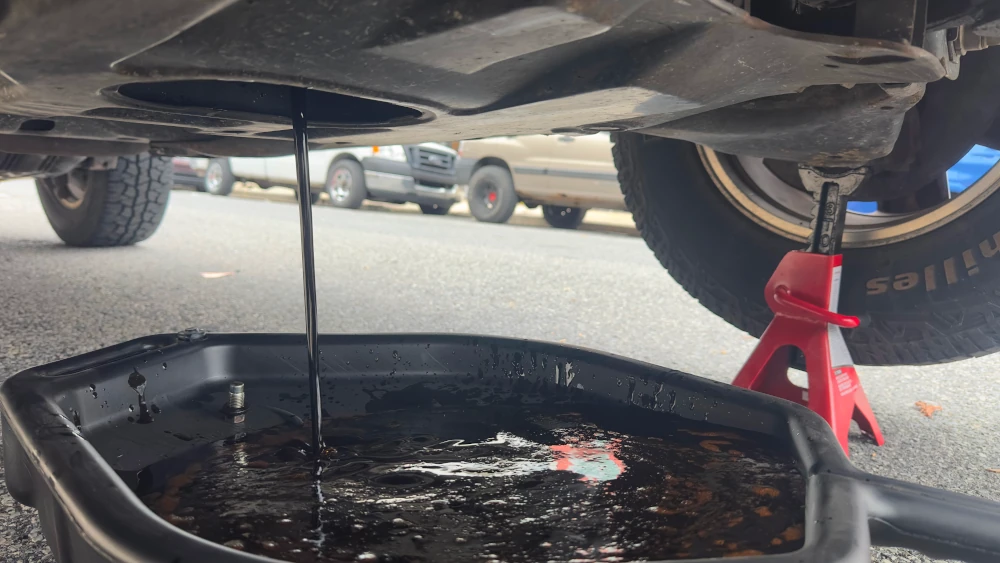
On paper that looks like “just” gaming. In practice it lives in the same mental neighborhood as kneeling under the Cruiser for an oil change, or threading along Fishing Creek on ice, or picking a line up Berry Mountain.
The streams are not a detour from Adventure Adjacent. They’re one of the many places the “adjacent” part does its best work.
Live Streams: Too cold to wrench, too busy to roam
There’s a seasonality to real-world adventure that no amount of optimism overrules.
Some days it’s literally too cold to wrench. Steel, concrete, and fingers all have temperature limits, and I’ve finally admitted that mine arrive sooner than the FJ’s. Other weeks I’m too busy to schedule trips or edit off-road videos. Client fires, family obligations, and the tasks required to keep this website, shop, and my little corner of the internet online all crowd the calendar.
But that itch for the road still shows up.
When the body cannot realistically go, the brain will accept a proxy.
Gaming became that proxy by accident. I started streaming American Truck Simulator, hauling freight across flyover states, because I wanted an excuse to hang out with people in the mornings and learn someplace new. Before long, those sessions turned into a very specific kind of self-care: a road my nervous system recognizes as rest.
There is a rhythm to it:
Pick up a load.
Merge.
Settle into a lane.
Talk to chat and my co-driver.
Try not to T-bone a harvester or collide with an ambulance at a flashing yellow.
Fail. Laugh. Keep going.
It’s not escapism in the “ignore everything” sense. It is time-boxed focus. Two or three hours where the only problems I have to solve are lane position, route choice, and “can I make this delivery before my fictional customer gets mad.”
After a week of real-world logistics, eBay and Shopify headaches, CSV psychosis, and code refactoring… fake logistics feel surprisingly medicinal.
Learning WHILE doing
The live streams are not just relaxation; they are the most consistent learning while doing practice I have.
I don’t mean that in a productivity-hustle way. I mean it literally: we learn things in real time while we drive.
When the in-game GPS sends us past Gothenburg, I ask my co-driver (hi, Miles) what the real Gothenburg is actually like. We end up talking about port cities, shipbuilding, and how many people live there, or about how Scandinavian countries treat public land and working forests differently than we do in Pennsylvania.
A stretch of Swedish E-road turns into a sidebar about why roundabouts work, how freight moves through a country, or what long-haul life looks like for real drivers who do this in all weather, without a pause button.
The games have a strange magic trick: they disguise geography, civics, and infrastructure as an excuse to listen to lo-fi music and make left turns.
The hunting streams work the same way. On my “Thanks for the Fowl” morning in theHunter: Call of the Wild, I started out chasing turkeys in Mississippi Acres and New England and end up talking about real turkey habitat, migratory patterns, public vs private lands, and the history of conservation in North America.
That conversation follows us back into how we behave on real trails and in real state forests when we finally get there.
Learning by doing is my default. Trying new joinery techniques or welding a driver’s seat mount back together can’t be learned without hands-on time. But sometimes my body needs to do one thing while my mind wanders.
The same muscles, different road
The more I live stream, the more I notice the overlap between “virtual miles” and “actual trail days.”
Real off-road trips taught me that capability needs to be wrapped in good judgment. That was the lesson when I turned around at the second icy creek crossing instead of pushing into rushing water. At night. On a trail with no cell-service, two days after buying the Cruiser.
Trucking streams rehearse that same muscle at lower stakes. Yeah, sometimes I make mistakes, but I’m not hurting anyone banging pixels together.
When fatigue (mine, not the avatar’s) sets in, I end the stream instead of pushing for “one more delivery” because I know that on real highways, that pushing for more fun turns self care into self harm. If the streams stop being fun, then what’s the point?
The patience that keeps me picking lines over Berry Mountain at two miles an hour instead of bashing diffs at ten is the same patience that keeps me under the truck chasing an electrical gremlin instead of chucking parts at a problem.
Patient diagnosis always wins over the parts cannon.
Self-care that still leaves tracks
I’ve shifted from doom-scrolling, arguing with strangers, and shouting into the void to streaming for this reason:
When we live stream, we build something, even if it’s small.
A few people get a cozy place to hang out before work.
Somebody learns about why civics and political science education matters (okay, it’s me, I’m somebody).
Someone else is comforted to hear that yes, it’s okay to be “too cold to wrench” and “too busy to schedule trips or edit off-road videos,” and they are not failing at being outdoorsy; they are just living in an economy that eats time for breakfast.
Streaming gives me something similar to that “small problem, solved together” feeling.
I try to foster the chat into being an emotional mutual aid. Folks can drop tips about keybindings, real trucker life, road etiquette, or just “hey, don’t forget to drink water.” They remind me to service the truck before it strands us. I talk through why I pick one route over another. Or why I back off the AI traffic that is clearly plotting my demise.
It’s a tiny commons of skills and care. One that spills over into the real world when we talk about changing tires, carrying first-aid kits, or the etiquette of helping on the side of the road.
Self-care, in this case, looks like scheduled time where the only expectation is that we show up, pay attention, and leave each other slightly better resourced than we were when we logged in.
Adventure. Adjacent and otherwise.
Adventure Adjacent has always been about more than the highlight reel.
Another essay wandered through a museum plaque and William Penn’s words about paying attention to your own life and surroundings. That one argued that you don’t need a plane ticket to widen your world. A back street, a mossy log, or a forgotten corner of your own zip code will do.
How live streams fit in here
The live streams are that same experiment, just routed through a server and a game engine.
Instead of a back road, we take a B-road in Scotland; rather than a Pennsylvania logging road, we haul lumber out of a digital Lapland; Instead of sitting quietly by a creek, we sit quietly in a virtual tree stand while I ramble about making change to leave legacies.
The technology stack that runs this site, that lets me post these field notes and schedule live streams, is another part of the same story. Somewhere between the virtual machine, the plugins, and the DNS records lives a very practical commitment: keep the lights on so these conversations have a place to land.
Adventure Adjacent is the Cruiser, the trails, the parking lot recoveries, the server maintenance, the essays, and the live streams.
Some days we are up to our elbows in real grease.
Some days we are up to our eyeballs in virtual snow on an E-road outside Oslo.
The through line is the same: curiosity, competence, and a quiet belief that we can leave people and places better than we found them, even if “place” today is a Twitch chat instead of a trailhead.
So if you see “Nordic Horizons” or turkeys in Mississippi on the schedule and think, “Wait, I thought this was an off-road channel, not a channel for live streams” know this:
The truck is still here. The trails are still waiting. The toolbox is still in the back.
We are just taking the long way around, keeping our skills warm and our communities close, until the weather, the workload, and the world lets us point our rigs at the horizon again.