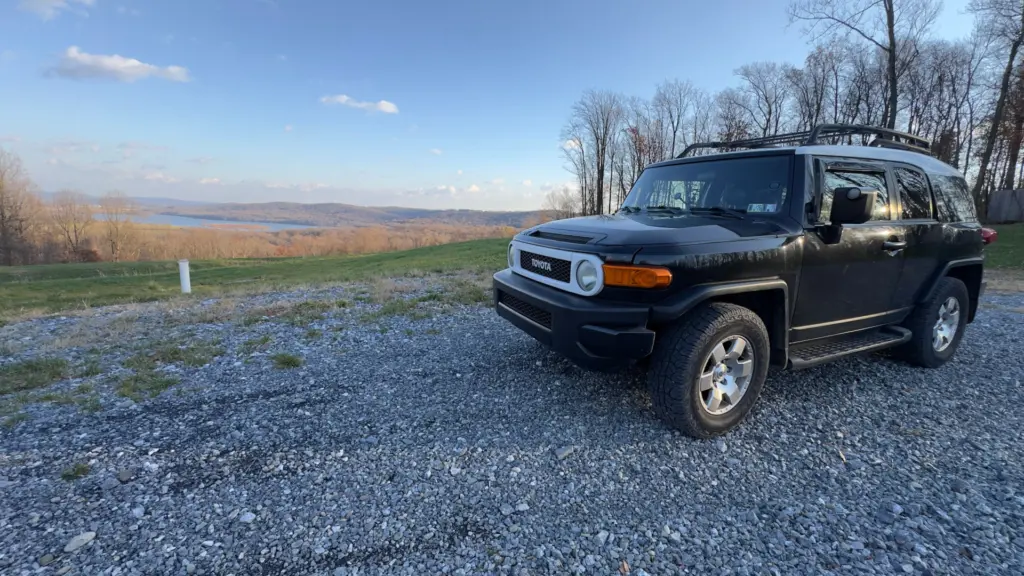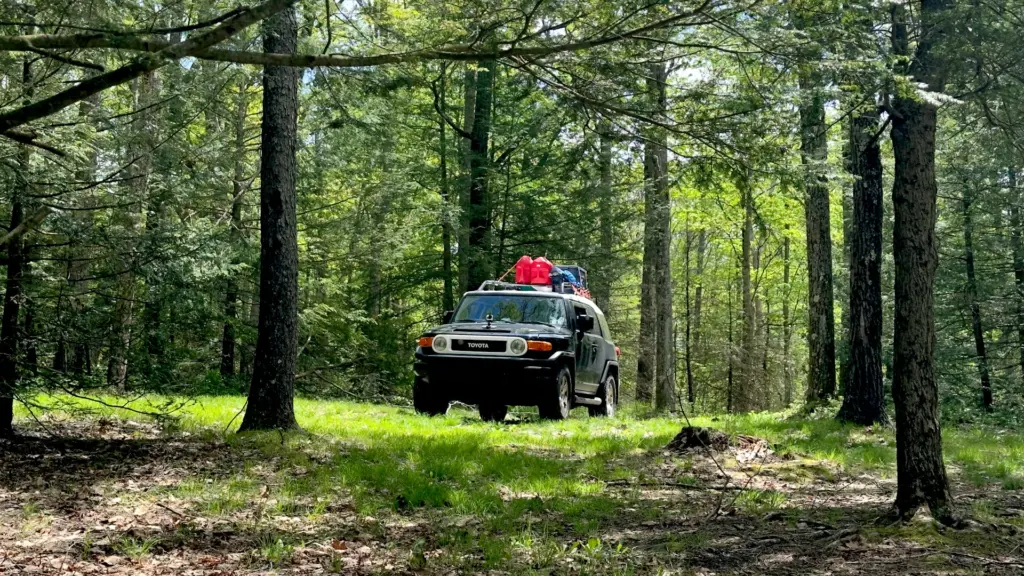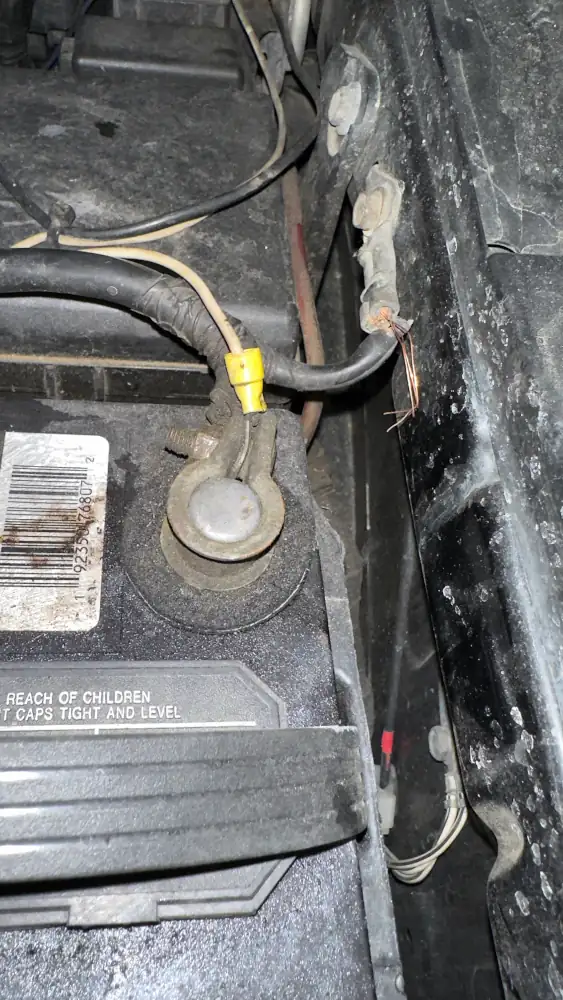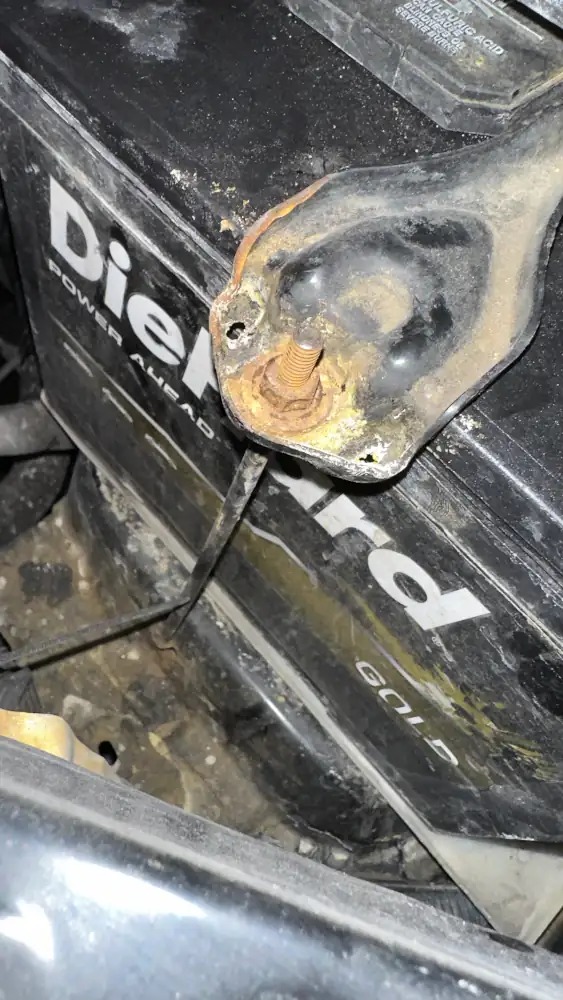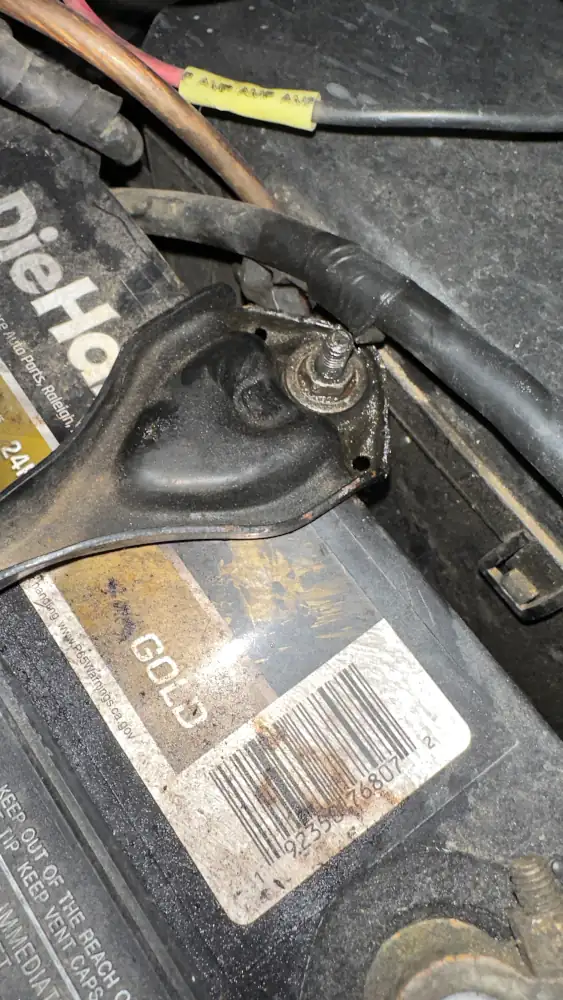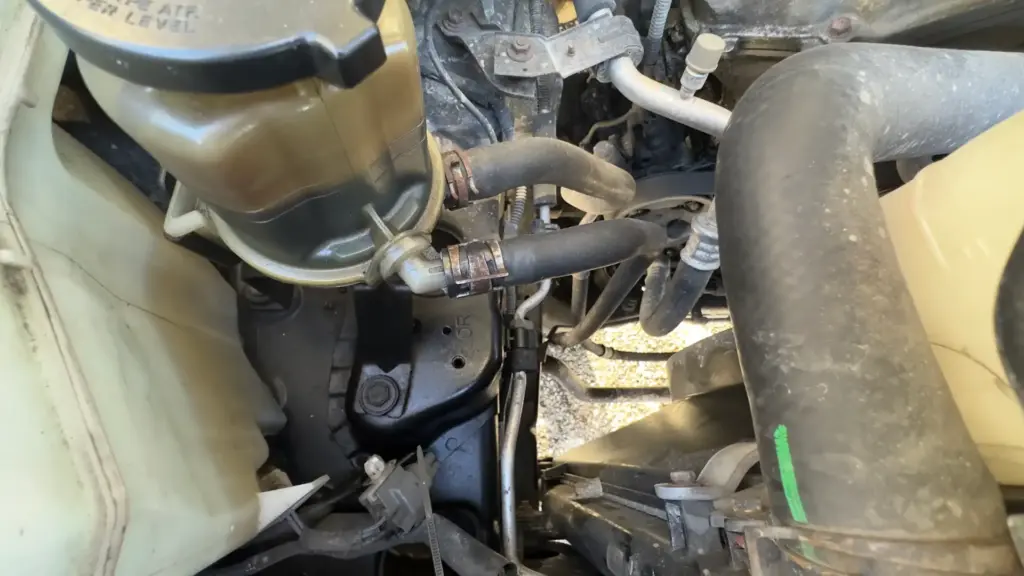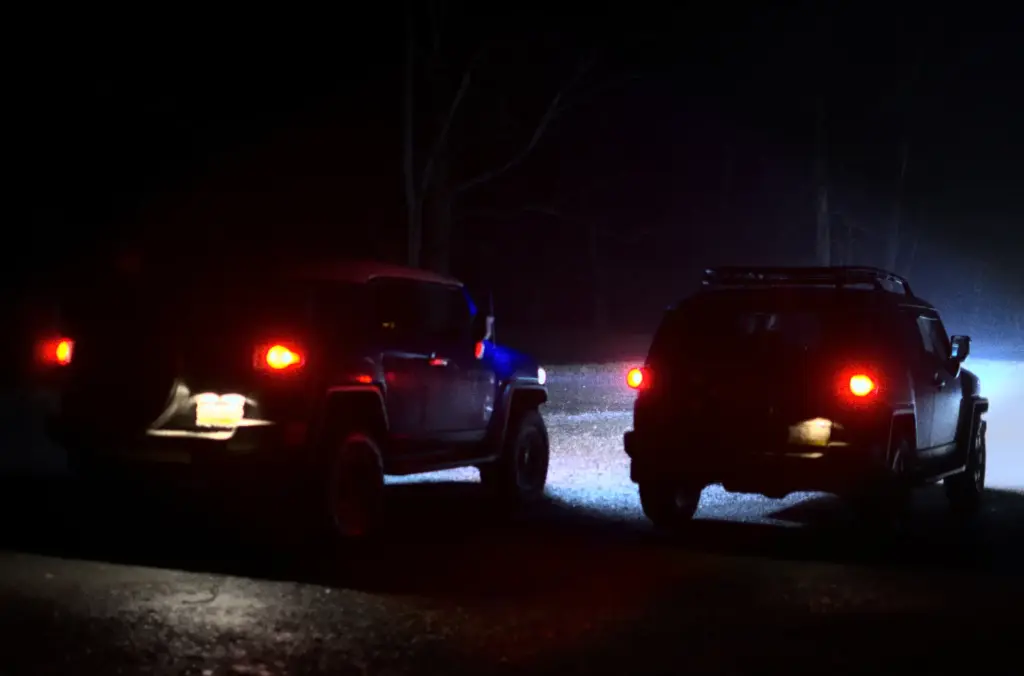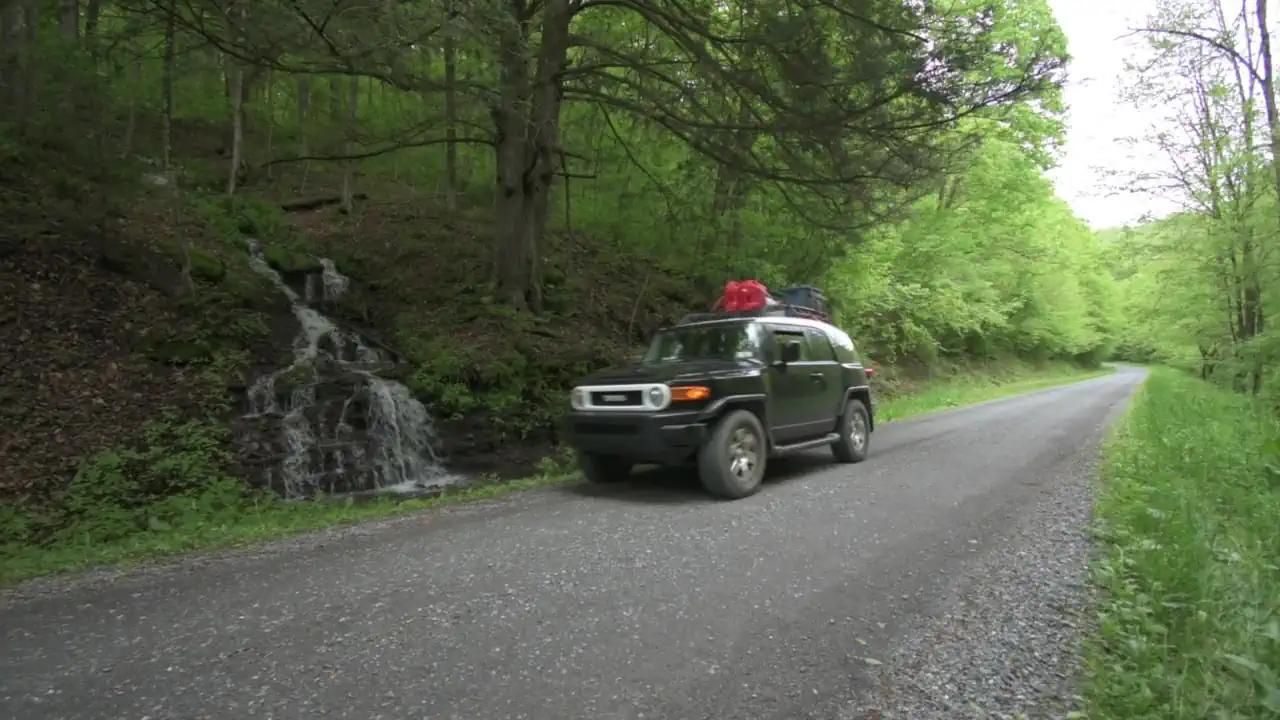
Saturday night, the Cruiser and I took an unplanned break on the shoulder because my registration was expired. Not “I forgot by a week.” Expired-expired. It’s time to get this adventure back on track.
There’s a particular kind of shame that only exists under flashing lights. Sitting in a truck you maintain obsessively, while realizing you did not maintain the paperwork that allows the truck to legally be a truck. Capability is great right up until bureaucracy taps the glass.
Anyway. Hi.
If you’ve noticed a quiet stretch here, you’re not imagining it. I’ve been head-down, trying to get real work done on the video backlog and build a rhythm for the next few months of Adventure Adjacent.
Where I’ve been
The short version: I’ve been making progress, just not the kind that turns into a post, video, or anything public-facing.
I’ve been working, editing, planning, rebuilding my workflow, and doing the unglamorous stuff that makes all the other stuff possible. The upside is the pipeline is real now, not a stack of clips whispering accusations from a hard drive.
The downside is: it looks like I fell off the planet.
Also, I hit the point where streaming felt like dessert when I hadn’t eaten dinner yet. So game streams are paused until Monday, January 26. That’s the line in the sand. If you’re a stream regular, thank you for your patience. If you’re new here, welcome to the part where the sausage is made and occasionally dropped on the floor.
Next steps to Getting Back on Track
The part my brain needs in plain text
Here’s what’s happening next, in the order it needs to happen:
Fishing Creek Revisited: I’m writing the outline for the voiceover script this week, and I’m finally settling on a real title instead of “Fishing Creek Revisited FINAL FINAL v7.”
Alternator swap video: this is next on the editing bench. It’s straightforward, useful, and it deserves to exist as something other than “that folder I keep meaning to open.”
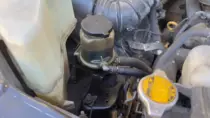
Power steering fluid flush write-up: I did the flush in a rush and didn’t film it, which means it’s getting turned into a proper Field Notes post. Not a how-to masterpiece, but a practical “here’s what I did, here’s what I’d do differently” for anyone else who’s staring at tired fluid and a busy calendar.
And yes, a little post about the registration. That is now on the list too. The reminder is written in all caps in the mental notebook. It’s next to where I keep my hate for bureaucracy and nowhere near the mail about renewal.
Accountability corner: the registration incident
I don’t love sharing that I got pulled over. But I also don’t love the version of adulthood where we pretend we’re all perfectly on top of everything.
I’m building this project around the idea that competence is a form of self-care. For the people riding with us, for the places we visit, for the rigs we depend on. Paperwork counts. Boring counts. The little stuff is the stuff.
So here’s the accountability part: I paid the state their money, while the cop was writing the ticket. I’ve set up recurring reminders so this doesn’t become a yearly tradition. The Cruiser, and my wallet, deserves better.
Side Quest: Mapcase
I’ve also been quietly working on something that looks like adventure software.
It’s early. Like “one working integration and a dream” early.
But the direction is clear: I want a tool that helps you make better calls out there. Weather, road conditions, trail conditions, alerts, the kind of context that keeps a fun drive from turning into a dumb story. When there’s something solid enough to show, I’ll bring you along for the ride.
For now, consider this a breadcrumb: there’s a small map-shaped project growing in the garage.
Back on Track: The weekly rhythm returns
The plan from here is simple: weekly blog posts. Why? The habit makes me show up, and showing up is how any of this becomes real.
If you’ve been here through the quiet stretch, thank you. If you’re also juggling a pile of half-finished things, consider this your friendly reminder that “back on track” usually starts with one unsexy task and a stubborn little decision to keep going.
Next post is one of the items above, no new side quests allowed. If you’re digging yourself out of a backlog too, tell me what you’re up to this week. I’ll cheer from the garage.
The fifth time I opened a Clipchamp project, and it asked me to relink media like we’d never met before, I had a very specific thought: “Ah! So, this is what it feels like to be billed twice for the same work.”
Same computer. Same me. Just older and less patient.
If you’ve never had the honor, Clipchamp’s version of “non-linear editing” can include a recurring ritual where you reopen a project and get told, again, that your video files are missing. So, you click through prompts and re-attach clips one by one like you’re doing digital paperwork for a job you didn’t apply for. Every session starts with admin. Every creative impulse gets put on hold until you’ve paid the toll.
I’m sure there’s a reason. There’s always a reason. But if the tool keeps demanding unpaid setup labor, the tool is the problem.
Clipchamp was more than annoying. It was a creativity-blocking subscription service.
We’ll ignore the constant reminders to sync to the cloud, despite that fact that I was working in OneDrive connected folders.
I can even ignore the constant “You paid for this library of content, but you probably shouldn’t use it for commercial purposes,” warnings.
But I can’t ignore when my editor forgets where my footage lives, you stop trusting your own workflow. It’s like closing the program made it forget how to link the files. It was a waste of energy proving your innocence to software that’s acting like a landlord who “never got the check.”
And then there was the day it got stuck on “Ready in a moment”
I rebooted. I tried the usual “update the thing” dance. Edge was updated. Clipchamp didn’t even have an update waiting. I started wondering if my own network was sabotaging me, like maybe AdGuard Home was quietly drop-kicking some required Microsoft domain into a pit.
Logging in on the Clipchamp web version was what finally nudged the desktop app back to life. That’s a sentence that feels like it should be fake, but here we are.
That was the moment the little voice in my head said: “You’re spending more time getting the editor to open than you are editing.”
It was more hostage situation than workflow.
DaVinci Resolve: walking into a cockpit on day one
Switching to DaVinci Resolve felt like trading a butter knife for a full mechanic’s toolbox, then immediately dropping a socket into the abyss behind the engine.
Resolve doesn’t hold your hand. It hands you options.
Pages. Nodes. Buses. Scopes. Panels that look like they were designed by someone who thinks “fun” means “spreadsheets.”
The first time I opened the Color page, I stared at it the way you stare at an unfamiliar fuse box label that says “AUX PWR 2” and you know, deep down, that if you touch the wrong thing, the word ‘Fuck’ won’t be a strong enough expletive.
But here’s the difference:
DaVinci Resolve may be complicated, but it’s not disrespectful.
It doesn’t make you reintroduce it to your media every time you open the project. It doesn’t pretend your footage vanished into the woods. It assumes you are a competent adult who put files somewhere on purpose.
Honestly? That alone felt like a feature.
The confusing bits that finally clicked in DaVinci Resolve
Most of what tripped me up wasn’t “hard,” exactly. It was “new language.”
1) Nodes and color work: “Why is this a spider web?”
At first, I was adjusting clips individually, one by one, because that’s what beginner brains do. One clip looks a little cold. Fix clip. Next clip looks too warm. Fix clip. Repeat until you realize you’ve hand-painted a picket fence with a toothbrush.
Then I discovered Groups. Groups were life savers.
I had started building a look on individual phone and action cam clips, and I didn’t want to throw that work away. I needed a way to take what I’d already built and make it apply consistently.
Resolve’s answer: copy the nodes and use Group grading so your “base look” lives in one place.
Once that clicked, everything got easier. Instead of chasing every clip like a gremlin, I had a starting point that made sense. I could do the broad strokes once, then do small per-clip fixes where they actually mattered.
2) LUT temptation (and the immediate regret)
DaVinci Resolve has Film Look LUTs. They take the hard edges off modern video footage in a way that scratches my itch for an “old documentary” look.
I tried them. I wanted them to be the magic button that makes clips look like a movie.
In practice, the film-look LUTs looked weird on my videos. The wrong kind of weird. Not “cinematic,” more like “why does the forest look like it was shot through a nostalgia filter designed for beach weddings?”
So, I backed away slowly and stuck with basic color and contrast work. It was a bit more work, but it’s turning out the way I want it to. The woods don’t need to cosplay as a Sundance drama. They’re already good.
3) Audio compression: I can do it… but can I do it everywhere?
I figured out how to add audio compressors, and immediately did the beginner thing: slapped a hard compressor on clips with an 18 dB threshold and called it progress.
Then reality showed up.
Doing it clip-by-clip is tedious, and it’s also the wrong mental model. The whole point of compression is consistency, and consistency doesn’t happen when every clip has its own personality.
Resolve’s answer lives in Fairlight: put compression on the track or on the bus so it affects everything in that lane.
One place to adjust, one set of ears to please. That was a big “ohhhh” moment.
4) Viewer size, multi-cam syncing, and the tyranny of tiny preview windows
I had continuous iPhone video and action cam footage to sync. I needed the viewer bigger than the tiny preview pane. I wanted it on a different monitor, full screen, because syncing multi-cam footage is hard enough without squinting like a Victorian watchmaker.
That sent me down the DaVinci Resolve rabbit hole of:
“What can I pop out?”
“What’s available in the free version?”
“Why is this harder than it should be?”
I found a workable approach, but I also learned a general truth: the free version is generous, but it still expects you to run into the sharp edges that make you want to pay.
If Clipchamp’s problem was buggy simplicity, Resolve’s problem is dignified complexity.
Pick your poison.
5) GPU confusion: “Why isn’t my video card doing more for DaVinci Resolve?”
At one point I noticed my GPU didn’t seem like it was doing much during playback, and I started poking at settings because I’m running an older rig. It’s a loyal workhorse, but it’s not exactly a thoroughbred race winner.
Resolve can be picky about decode/encode settings, render caches, and how it uses hardware acceleration.
Some of this is configuration.
Some of it is just the reality that modern codecs and multi-cam timelines are heavy. Either way, it was a reminder that video editing is a whole second hobby inside the hobby.
Which is rude, but also kind of fascinating.
Why I’m sticking with Resolve anyway
The friction is just Resolve being powerful and seemingly opaque when moving from a toy-like video editor. Clipchamp is great for shorts and fun videos. Drop some clips together, some transitions, maybe a GIF or two.
DaVinci Resolve gives me power but makes me earn it.
Clipchamp made me reattach files.
One of those frictions builds skill. The other is just wasting a commodity I can’t buy or build more of time.
There’s a bigger point hiding under all this: a lot of modern software is designed to be “easy” in the same way fast food is “easy.” It’s quick, it’s convenient, and it quietly assumes your time is disposable. If you hit a weird edge case, you’re on your own.
Resolve asks for effort up front, then pays you back in reliable capability.
And I like capability. I keep accidentally building my whole life around it.
Teaser: Fishing Creek Revisited (Working Title)
This is all happening because I’m cutting my first multi-angle, multi-camera trail video: Fishing Creek Revisited (working title), from an early August run on the Fishing Creek Nature Preserve trail.
This one is different for me.
Multiple cameras. Multiple angles. Actual intention behind how the footage tells the story, instead of just “here’s a clip of trees, now here’s another clip of trees, now here’s a third clip of trees where the sun did something rude to my exposure.”
The trail is familiar, but the edit isn’t. I think I used the multi-cam setup pretty well, and the process already has that feeling I chase in wrenching: the moment when confusion turns into competence, and you realize you just leveled up without anybody handing you a certificate.
I’m still new at this. I’m still learning. I’m still occasionally solving problems by hitting Backspace and hoping it looks intentional (sometimes it does).
But the video is coming. And it’s the first one that feels like the channel in my head, not just the footage on my SD cards.
DaVinci Resolve tips I wish I’d known on day one
If you’re doing any kind of consistent color work, learn Group grades early. Build your “base look” once, then do per-clip tweaks sparingly.
LUTs are optional. If a LUT makes your trail footage look like a dream sequence, trust your eyes and walk away.
In Fairlight, think track or bus processing for compression so you’re not chasing clip-by-clip settings.
For multi-cam syncing, give yourself a big viewer and a calm timeline. Squinting makes everything feel harder than it is.
If playback feels sluggish, don’t assume you’re doing it wrong. Sometimes you just need render cache, proxies, or a simpler timeline while you’re editing.
If you’ve made the same jump from “simple editor that fights you” to “serious editor that teaches you,” tell me what the hardest mental shift was. I collect those little lessons the way the Cruiser collects pinstripes: slowly, honestly, and with a lot of awkward learning in the middle.
Weekday routines dictate that the Cruiser pulls dad duty. Some mornings, when I turn the key and the loose ground wire I still have to track down makes the speakers buzz a certain way, a memory surfaces. I feel the need to hear the songs I listened to when I started driving myself to school.
I didn’t grow up in a scene with glamorous clubs or legendary squats. I grew up with mixtapes, boomboxes, and whatever punk albums I could con out of Columbia House for a penny.
This isn’t a trail report or a stream recap.
This one’s about the soundtrack that shaped how I think about community and about the kind of person I want to be when someone around me stalls or crashes out.
I’m gonna make the subtext so loud it distorts.
What I thought punk was supposed to be
When I was a kid, the media spun punks as teens with a particular fashion sense and drug problems.
Spikes. Leather. Chains. Jackets painted with logos you don’t recognize. Somewhere in there, a safety pin through something that probably shouldn’t have metal through it.
In the grainy square of 80s MTV and letterboxed movies, a punk was the living form of directionless aggression. Their music was forks in a blender set to visuals of sledgehammers smashing the Venus de Milo.
Punk rock became the soundtrack of angry people who like to break things.
That’s not what I found.
Yeah, punk rock sounds like a connecting rod smacking your engine block at 160 beats per minute.
It was built that way on purpose: short, fast, loud. A deliberate rebellion against the overproduced stadium rock of the ‘70s.
Bands in New York and London stripped music down to the studs and played the songs like they were trying to outrun the law.
But under all that volume is something subtle and nuanced: a culture ensconced in mutual aid, individual freedom, and looking out for the people next to you, especially the ones who don’t fit anywhere else.
Nobody told me that part. I had to live it to learn it.
The first time the floor moved
I was probably about five. My sister, who is nine years older, would listen to the Ramones at top volume, morning, noon, and night.
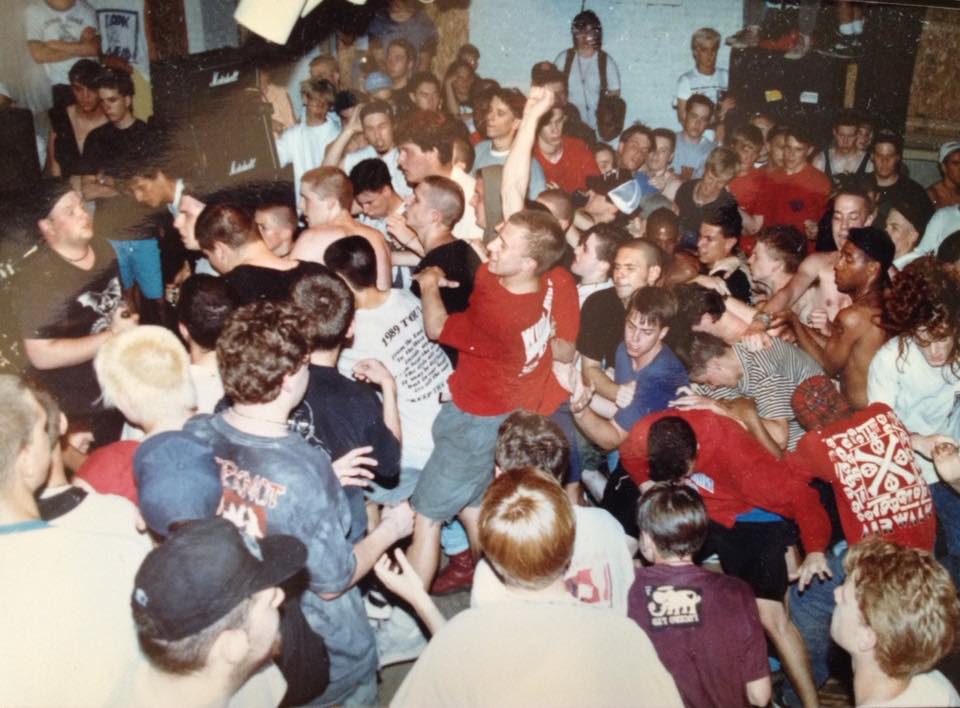
Unisound, Reading PA, late 80s/early 90s. A packed punk show where the main rule of the pit still applies: if someone goes down, you pick them up. Photo courtesy of the “We’re all friends at Unisound” Facebook group. Photo by Anne Spina.
This went on for years. It would be interspersed with other artists, but none stuck with me quite like they did.
Fast forward a few years to the first time I stepped into a real show. I half-expected a riot.
What I got instead was a living diagram of how I wish the world worked.
The music hit and the floor turned into a storm of boots and elbows. People slammed into each other, bounced off, dove back in. From the edge, it looked violent.
From the inside, it felt like organized chaos with one solid rule:
If someone goes down, you pick them up.
That isn’t just folklore.
Ask around and you’ll hear the same thing: in a healthy pit, the main rule is to look out for each other. If someone falls, you get them on their feet. If someone looks scared or hurt, you make space or help them out to the edge.
Never leave people on the ground.
You don’t let creeps use the chaos as cover.
Don’t gatekeep the dance floor.
It’s rowdy, but it’s rowdy on purpose.
That was my first real lesson in aggressive kindness: you can be loud, sweaty, and furious at the world, and still treat the stranger next to you like someone worth protecting.
I didn’t have the right words for it yet, but the message landed.
Punk is for everyone. Full stop.
There’s a line I read years later that finally put words to the feeling: if there’s one core ethos to DIY punk, it’s that punk is for everybody. Anyone can sing, anyone can play, anyone can be part of it.
As an awkward kid who barely limped out of high school, that was huge. I was bored with the schoolwork; didn’t care about grades.
I didn’t think anyone thought like I did.
I definitely didn’t have a five-year plan.
But I did have a summer job that I used the money from to buy a bass guitar and a tiny amp.
It was an old Aria with a tweaked neck and a sunburst pattern. I stuck a middle finger sticker to the back and learned how to read tablature.
I’d memorize how to play my favorite songs and get to know the bands in the process.
Collage of 13 album covers. T-B, L-R: Against the Grain, Bad Religion. Recipe for Hate, Bad Religion. Let’s Go, Rancid. Rocket to Russia, Ramones. Do or Die, Dropkick Murphys. Suffer, Bad Religion. Ramones, Ramones. …And Out Come the Wolves, Rancid. Punk in Drublic, NOFX. Give Me Convenience or Give Me Death, Dead Kennedys. I Heard They Suck Live!!, NOFX. So Long and Thanks for all the Shoes, NOFX. Signed and Sealed in Blood, Dropkick Murphys.
The Bands That Raised Me
The Ramones were proof that you could take three chords, zero subtlety, and a sense of humor and accidentally help kickstart an entire genre.
Rancid took that energy, dragged it through working-class streets and ska basements, and wrote anthems about friends on the edge, union organizers, and cities that chew you up.
Dropkick Murphys made working-class solidarity catchy enough to shout along with. They’ve backed unions, raised money for workers’ rights, and made a point of putting their money where their lyrics are.
Bad Religion was the first band that made me realize punk could come with footnotes. Greg Graffin screaming about science and society on stage, then quietly holding a PhD in zoology and lecturing at UCLA and Cornell, screws with your idea of who gets to be “smart.”
NOFX were the smartass older cousin who showed up with a skateboard, a hangover, and a stack of life lessons hidden under bad jokes. They’ve spent four decades cranking out hooky, melodic hardcore and skate punk, stayed off major labels on purpose, and still somehow became one of the most successful independent punk bands ever. Punk in Drublic turned gold while they were busy telling MTV and the big labels to get lost.
Dead Kennedys were the band that yanked punk’s anger out of the basement and pointed it straight at mayors, presidents, and the whole polished hypocrisy machine. Surf-y riffs, razor-sharp satire, and Jello Biafra’s unhinged sermon-of-a-vocal made songs like “Holiday in Cambodia” and “California Über Alles” feel less like tracks and more like political cartoons set to 200 BPM. They were DIY to the bone, releasing records on their own Alternative Tentacles label and ending up in real-life obscenity trials and censorship battles along the way. That last point quietly taught me that “speak truth to power” isn’t a metaphor: it’s a thing that can actually get you hauled into court, and you do it anyway.
This isn’t even close to an exhaustive list. But all these bands shoved a series of lessons into my skull: being “punk” had less to do with what you wore and more to do with who you showed up for.
Punk is FOR Everyone.
No, I’m not repeating myself.
Black, white, gay, straight, bi, trans, questioning, asexual… whatever. If you were there in good faith, you belonged. If you were trying to harm or control other people, you can go find a curb to chew.
Punk rock isn’t meant to exclude anyone. It’s soft, gooey solidarity wrapped in armor. It hardens you for the realities of the world but cajoles you into still caring about the outcome and the actual human beings.
It explicitly excludes exclusivity.
What does “aggressive kindness” actually mean?
Somewhere along the way, online or in a comment thread, I ran across the phrase “aggressive kindness is very punk,” and it felt like somebody had finally named the thing I’d been feeling for years.
Another person, in a totally different corner of the internet, put it like this: being aggressively kind is way more punk than just being angry all the time.
That’s it. That’s the whole thesis.
It’s a kindness that isn’t soft.
It doesn’t mean “nice” in the way bosses use the word when they want you to shut up about your pay.
Aggressive kindness is:
Calling out the creep in the pit.
Making sure the kid at their first show gets pulled up, not shoved out.
Using your voice to defend someone who’s getting piled on, even when they’re not in the room.
Welcoming the new person at camp, on trail, or in chat like they’re already part of the crew.
It’s hospitality with teeth. Compassion with Doc Martens primed to kick down oppressive systems.
In my head, though, it’s simpler: it’s pit etiquette turned into a golden rule.
Somebody goes down? Pick them up.
If somebody’s getting crushed, make space.
If someone is just trying to exist as themselves and the world is shoving back, you plant your feet and stand in the way.
Oppression is the enemy. Allowing others to live their lives doesn’t harm you.
Buddhism, back roads, and the loud part of compassion
At some point, I started reading Buddhist stuff for the same reason punk clicked: life is suffering, yeah, but what you do with that fact matters.
Compassion, or in Buddhist terms, lovingkindness, shows up there as this patient, quiet thing. Sit with your mind. Breathe. Notice. Don’t make things worse.
Punk taught me the loud version. Make things better.
Both paths are trying to answer the same question: how do you move through a broken world without becoming another sharp edge that cuts people?
There’s a saying: “East Coast people are kind but not nice. West Coast people are nice but not kind.” Growing up an hour outside Philly had its influence on my world view, too.
The second most-famous religious sect in this weird little intersection of Native America and Europe called Pennsylvania was the Quakers. Their plain speech is definitely in the mix of my personal philosophy and might be the most punk thing of all: say true things clearly and live like you mean them.
That’s what I hear in the best punk records. Strip away the distortion and it’s somebody yelling a very old idea:
“These people matter. You matter. We should treat each other like it.”
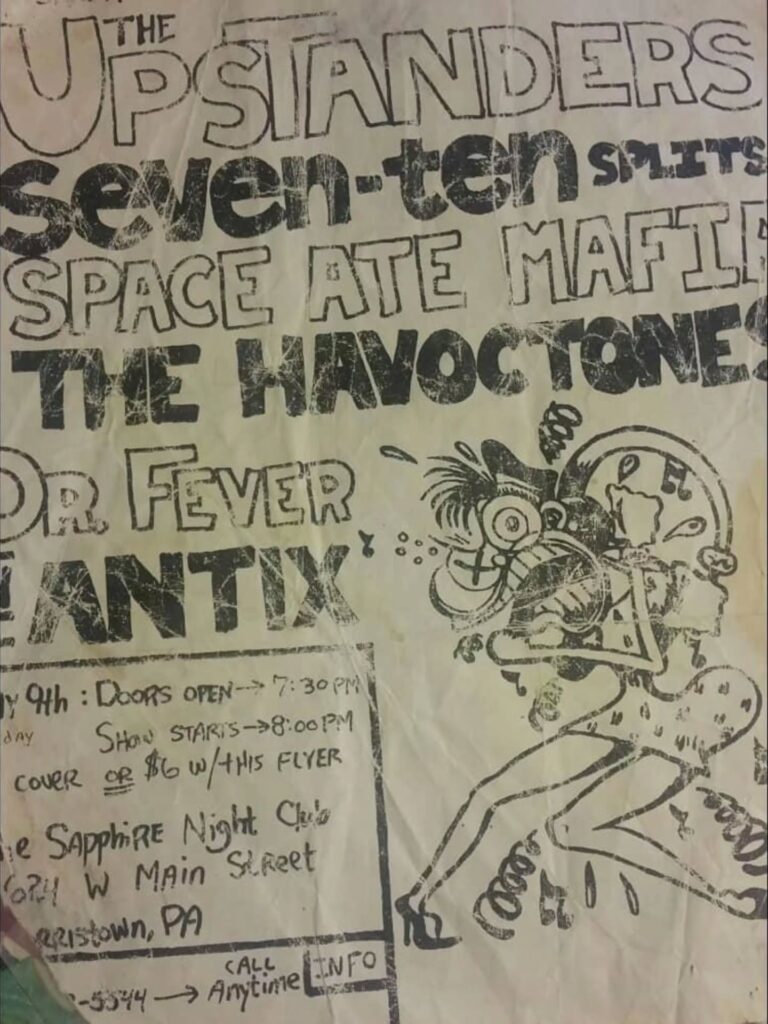
Xerox punk time machine from the Sapphire Night Club in Norristown, PA — The Upstanders, Seven-Ten Splits, Space Ate Mafia, The Havoctones, Dr. Fever, and Antix. My first band, The Real Live Psychics, played our first show in that same room around ’96/’97; a good friend of mine played guitar for Seven-Ten Splits, and the Havoctones were on our bill too. Flyer via @phillyhardcorehistory, art credit @jank322.
How this shows up in Adventure Adjacent
So, what does any of this have to do with my old FJ Cruiser, live streams, and forest roads?
Honestly: everything.
When I pull the FJ off pavement and creep up some rutted forest road, the same ethic applies. These places are shared. The gates and culverts and campsites exist because communities came together, planned them, and built them.
The least I can do is drive in a way that doesn’t make life harder for the next person who comes along. And if I can improve it on the way through, I do it.
Trail etiquette isn’t that different from pit etiquette:
Stay in the lane so you don’t bruise the scenery around you.
Don’t endanger people around you.
If somebody’s in trouble, you stop and help.
Same story with the streams. Most days I’m just a tired guy hauling digital freight, but underneath jokes, questions, and coffee is a simple goal: build a little corner of the internet where people feel safe to be themselves.
That means:
Moderating like a bouncer who loves the dance floor, not like a cop.
Welcoming the quiet lurker, whether or not they say hi.
Respecting boundaries without making it weird.
Shutting down bigotry when it shows up, even if it’s “just a joke.”
Aggressive kindness while streaming looks like “Hey, you’re welcome here” and “Hey, knock that off” occupying the same breath.
It’s the same kind of thing I try to bring to the Field Notes.
When I write about trails, maintenance, or the quiet joy of taking the long way home, there’s always a little subtext whispering: we owe each other more care than this system wants us to give.
The punkest thing I can do at this age
Nobody would catch my old ass if I decided to dive off a stage. My mosh pit is a chat window or a comment section. My uniform is more “tired nerd with a torque wrench” than “studs and liberty spikes.”
But the bands that raised me are still just beneath the tinnitus when I’m tightening lugs on the shoulder for somebody who didn’t plan on learning how to change a tire that day.
They’re there when I’m writing another too-long blog post about some gravel road most people will never be within a hundred miles of.
They’re there when I mute a bigot in chat before they get to ruin somebody else’s night.
Punk taught me that belonging isn’t something you hoard. It’s something you hand out at the door.
So that’s the aim now:
To be the old kid in the back of the room who knows the lyrics, knows where the exits are, and is stubbornly, aggressively kind to anyone who walks in looking for a place to stand.
Most days, the FJ sits in the driveway eagerly waiting for more miles while I try to make my task list shrink. The trail apps glare at me from my phone. The passenger side door speaker still cuts out, the next trail weekend isn’t scheduled, and the alternator-swap video footage is still sitting on a hard drive, untouched. But the part of my brain that wants a road does not care about my calendar. That’s where the live streams fit.
So I do what I can: fire up Euro Truck Simulator 2 or American Truck Simulator, make coffee, flip the “Starting Soon” scene, and roll a digital rig out onto a digital highway while chat slowly fills in with familiar names.
On paper that looks like “just” gaming. In practice it lives in the same mental neighborhood as kneeling under the Cruiser for an oil change, or threading along Fishing Creek on ice, or picking a line up Berry Mountain.
The streams are not a detour from Adventure Adjacent. They’re one of the many places the “adjacent” part does its best work.
Live Streams: Too cold to wrench, too busy to roam
There’s a seasonality to real-world adventure that no amount of optimism overrules.
Some days it’s literally too cold to wrench. Steel, concrete, and fingers all have temperature limits, and I’ve finally admitted that mine arrive sooner than the FJ’s. Other weeks I’m too busy to schedule trips or edit off-road videos. Client fires, family obligations, and the tasks required to keep this website, shop, and my little corner of the internet online all crowd the calendar.
But that itch for the road still shows up.
When the body cannot realistically go, the brain will accept a proxy.
Gaming became that proxy by accident. I started streaming American Truck Simulator, hauling freight across flyover states, because I wanted an excuse to hang out with people in the mornings and learn someplace new. Before long, those sessions turned into a very specific kind of self-care: a road my nervous system recognizes as rest.
There is a rhythm to it:
Pick up a load.
Merge.
Settle into a lane.
Talk to chat and my co-driver.
Try not to T-bone a harvester or collide with an ambulance at a flashing yellow.
Fail. Laugh. Keep going.
It’s not escapism in the “ignore everything” sense. It is time-boxed focus. Two or three hours where the only problems I have to solve are lane position, route choice, and “can I make this delivery before my fictional customer gets mad.”
After a week of real-world logistics, eBay and Shopify headaches, CSV psychosis, and code refactoring… fake logistics feel surprisingly medicinal.
Learning WHILE doing
The live streams are not just relaxation; they are the most consistent learning while doing practice I have.
I don’t mean that in a productivity-hustle way. I mean it literally: we learn things in real time while we drive.
When the in-game GPS sends us past Gothenburg, I ask my co-driver (hi, Miles) what the real Gothenburg is actually like. We end up talking about port cities, shipbuilding, and how many people live there, or about how Scandinavian countries treat public land and working forests differently than we do in Pennsylvania.
A stretch of Swedish E-road turns into a sidebar about why roundabouts work, how freight moves through a country, or what long-haul life looks like for real drivers who do this in all weather, without a pause button.
The games have a strange magic trick: they disguise geography, civics, and infrastructure as an excuse to listen to lo-fi music and make left turns.
The hunting streams work the same way. On my “Thanks for the Fowl” morning in theHunter: Call of the Wild, I started out chasing turkeys in Mississippi Acres and New England and end up talking about real turkey habitat, migratory patterns, public vs private lands, and the history of conservation in North America.
That conversation follows us back into how we behave on real trails and in real state forests when we finally get there.
Learning by doing is my default. Trying new joinery techniques or welding a driver’s seat mount back together can’t be learned without hands-on time. But sometimes my body needs to do one thing while my mind wanders.
The same muscles, different road
The more I live stream, the more I notice the overlap between “virtual miles” and “actual trail days.”
Real off-road trips taught me that capability needs to be wrapped in good judgment. That was the lesson when I turned around at the second icy creek crossing instead of pushing into rushing water. At night. On a trail with no cell-service, two days after buying the Cruiser.
Trucking streams rehearse that same muscle at lower stakes. Yeah, sometimes I make mistakes, but I’m not hurting anyone banging pixels together.
When fatigue (mine, not the avatar’s) sets in, I end the stream instead of pushing for “one more delivery” because I know that on real highways, that pushing for more fun turns self care into self harm. If the streams stop being fun, then what’s the point?
The patience that keeps me picking lines over Berry Mountain at two miles an hour instead of bashing diffs at ten is the same patience that keeps me under the truck chasing an electrical gremlin instead of chucking parts at a problem.
Patient diagnosis always wins over the parts cannon.
Self-care that still leaves tracks
I’ve shifted from doom-scrolling, arguing with strangers, and shouting into the void to streaming for this reason:
When we live stream, we build something, even if it’s small.
A few people get a cozy place to hang out before work.
Somebody learns about why civics and political science education matters (okay, it’s me, I’m somebody).
Someone else is comforted to hear that yes, it’s okay to be “too cold to wrench” and “too busy to schedule trips or edit off-road videos,” and they are not failing at being outdoorsy; they are just living in an economy that eats time for breakfast.
Streaming gives me something similar to that “small problem, solved together” feeling.
I try to foster the chat into being an emotional mutual aid. Folks can drop tips about keybindings, real trucker life, road etiquette, or just “hey, don’t forget to drink water.” They remind me to service the truck before it strands us. I talk through why I pick one route over another. Or why I back off the AI traffic that is clearly plotting my demise.
It’s a tiny commons of skills and care. One that spills over into the real world when we talk about changing tires, carrying first-aid kits, or the etiquette of helping on the side of the road.
Self-care, in this case, looks like scheduled time where the only expectation is that we show up, pay attention, and leave each other slightly better resourced than we were when we logged in.
Adventure. Adjacent and otherwise.
Adventure Adjacent has always been about more than the highlight reel.
Another essay wandered through a museum plaque and William Penn’s words about paying attention to your own life and surroundings. That one argued that you don’t need a plane ticket to widen your world. A back street, a mossy log, or a forgotten corner of your own zip code will do.
How live streams fit in here
The live streams are that same experiment, just routed through a server and a game engine.
Instead of a back road, we take a B-road in Scotland; rather than a Pennsylvania logging road, we haul lumber out of a digital Lapland; Instead of sitting quietly by a creek, we sit quietly in a virtual tree stand while I ramble about making change to leave legacies.
The technology stack that runs this site, that lets me post these field notes and schedule live streams, is another part of the same story. Somewhere between the virtual machine, the plugins, and the DNS records lives a very practical commitment: keep the lights on so these conversations have a place to land.
Adventure Adjacent is the Cruiser, the trails, the parking lot recoveries, the server maintenance, the essays, and the live streams.
Some days we are up to our elbows in real grease.
Some days we are up to our eyeballs in virtual snow on an E-road outside Oslo.
The through line is the same: curiosity, competence, and a quiet belief that we can leave people and places better than we found them, even if “place” today is a Twitch chat instead of a trailhead.
So if you see “Nordic Horizons” or turkeys in Mississippi on the schedule and think, “Wait, I thought this was an off-road channel, not a channel for live streams” know this:
The truck is still here. The trails are still waiting. The toolbox is still in the back.
We are just taking the long way around, keeping our skills warm and our communities close, until the weather, the workload, and the world lets us point our rigs at the horizon again.
A Virtual Road Trip from Lacq to Sardinia: When Real Life Gets Busy
There’s been a bit of quiet around here the last week or two, and not for lack of wanting to be out on a trail. My clients have had me stacked high with projects. Weekday work bleeding into weekends and sometimes the only “adventure” I have bandwidth for is the digital kind. And honestly? When the real-world price of gas means deciding between groceries and adventure, doing a virtual road trip by sliding into the driver’s seat of Euro Truck Simulator 2 feels like a refreshing break.
Virtual diesel still hurts the wallet, but at least it only threatens my pretend bank account.
So today’s Wildcard Wednesday became a virtual road trip from Lacq, France, down through Spain, across the Mediterranean, and into Sardinia. Not a bad stand-in for a real road when the schedule’s tight.
Starting the Virtual Road Trip in Lacq
If you’ve never heard of Lacq, (pronounced Lock) that’s fair.
It’s a tiny village in southern France that got thrust into industrial relevance in the 1950s when one of Europe’s largest natural gas fields was discovered beneath it.
It’s also the place where ChatGPT discovered that its name, sounds suspiciously like “Cat, I farted.” So, we started the stream with industrial history, linguistic accidents, and a robot sidekick who kept ignoring the word “mute.” Off to a strong start.
From Lacq, we cruised west past Toulouse, hopped onto the A61 southbound, and eased into the foothills of the Pyrenees. The kind of countryside that, if this were real, would justify stopping for a pastry every five kilometers.
Crossing Into Spain and Falling Into History
Once we crossed the border, the roads opened up and the conversation drifted toward the parts of Spain that don’t fit neatly on postcards.
We talked about:
The Spanish Civil War (1936–1939), a brutal conflict between the democratically oriented Republicans and the Franco-led Nationalists
The International Brigades: volunteers from around the world, including the Connolly Column from Ireland and Americans, inspired by Hemingway’s reporting
Why Spain sat out World War II after Franco’s victory (spoiler: the country was wrecked and exhausted)
Catalonia’s independence movement, which remains very much alive
It wasn’t planned, but that’s the charm of Wildcard Wednesday: a cozy ETS2 stream where delivering fuel oil turns into a history seminar because someone asked the right question at the right time.
Barcelona to Sardinia: Ferry Life
From Barcelona, we loaded onto a ferry bound for Porto Torres, the northern gateway to Sardinia.
And if you’ve ever looked at a map and wondered what that island above Sardinia is, it’s Corsica. A place shaped by centuries of Genoese rule before becoming French.
Sardinia itself has passed through Phoenician, Roman, Aragonese, and Savoyard hands before settling into modern Italy. The Mediterranean never met a coastline it didn’t want to trade, conquer, or borrow from.
After arrival, we pointed the truck south toward Cagliari, making it as far as a rest stop south of Sassari before real life tapped me on the shoulder and reminded me that work doesn’t do itself.
Streaming Schedule (and Why a Virtual Road Trip Matters)
If you want to join these live road rambles, I stream on:
🕗 Mondays, Wednesdays, Fridays – 8:30 a.m. to ~10:00 a.m. ET
Mondays are ETS2, Wednesdays are Wildcard, and Fridays are American Truck Simulator… …unless ETS2 is too much fun and steals Friday outright.
These virtual miles are keeping the spirit of Adventure Adjacent alive during the busy stretches. They give me space to tell stories, explore odd corners of history, and test how many truck stops I can accidentally enter wrong before someone in chat notices.
When Do Real Trails Return?
Soon.
The 3D, dirt-under-tires, “please don’t break the Cruiser” kind of adventures are coming in the next few weeks. I’ve got footage waiting, roads picked out, and a renewed appreciation for the real world after a few too many virtual fuel bills.
I’ve been head-down on work, projects, edits, and the usual life stuff. The cure I keep coming back to is simple: hop in the driver’s seat, pick a line, and share a quiet hour with good folks who like maps, miles, and learning by doing. So, live streams it is!
So, I’m adding live streaming to the mix.
It’s a low-friction way to hang out between big trail days and longer “Adventure” videos.
No rage, no gimmicks. Just calm runs, honest mistakes, and the small satisfactions that make this whole thing worth it.
Why Live Streams (and why now)?
Because the camera roll fills up faster than the edit queue.
Streaming lets me unwind after work, keep the storytelling muscle warm, and bring you along even on the nights when the “trail” is a delivery route through Southern California in American Truck Simulator.
It’s also a place for questions, route geekery, and those nerdy detours about tires, logging roads, and how to not wad up your rig or your save file.
What I’m streaming
Driving sims: American Truck Simulator (ATS), Euro Truck Simulator 2 (ETS2)
Mud & mayhem: Expeditions: A MudRunner Game
Slow-build comfort games: Banished, Ostriv (and other city/civ builders)
Hunting season stuff: theHunter: Call of the Wild, Way of the Hunter, maybe even some Call of the Wild: The Angler
The vibe is relaxed.
We’ll talk lines, maps, and choices. If I bungle a trailer back-in or pick a bad approach angle, we’ll have a laugh and try again!
Adventure videos aren’t going anywhere
Field trips, gear tinkering, and longer “Adventure” videos will still show up here.
I’ll simulcast to Twitch and YouTube when possible.
No fixed schedule yet; for now it’ll be evenings and the occasional weekend session (Eastern Time).
Turn on notifications so you get the “we’re rolling” ping.
How you can help (free and fast)
Follow/Subscribe on Twitch and YouTube.
Say hi in chat. Lurkers welcome; questions even more so.
Share a stream with one friend who digs maps, trucks, or chill builder games.
Drop route ideas and mod suggestions in the comments. I’ll queue them up.
What to expect in chat
Kindness, curiosity, and problem-solving.
The point isn’t to be perfect; it’s to get a little better at reading terrain (digital or otherwise), make a few friends, and carry that calm to the next trail day.
See you out there, sometimes on gravel, sometimes on a virtual interstate, always trying to choose the better line.
I took this photo at the State Museum of Pennsylvania back in February. It’s William Penn’s words:
“Consider how many millions of people come into and go out of the world, ignorant of themselves, and of the world they have lived in.”
It reads like a friendly nudge: “Hey, don’t miss the good stuff.”
I looked up the quote when I got home and in the very next lines of the same little book, Penn explained we’d never leave a grand palace without noticing the gardens and fountains; so why pass through life without noticing ourselves and our surroundings? (Quod Lib.)
He wasn’t scolding, he was reminding us to pay attention.
This journal entry is my small celebration of that idea.
You don’t need a plane ticket to widen your world. You don’t even need a full tank.
Just change your angle a few degrees and move a little slower.
Expand Your World… by Zooming in?
Years ago, I read a scene in Zen and the Art of Motorcycle Maintenance that I’ve never shaken.
A student is paralyzed by writing a five-hundred-word essay about the whole country.
Her teacher narrows the assignment: don’t start with the country, start with the town, no, the street. No! Start with one building! No, no, no! With a single brick. Better yet, the upper-left brick of the Opera House.
Suddenly the words come. Five thousand of them.
The problem wasn’t lack of content. It was too much distance and an overly broad perspective.
Many of us look at travel the same way. When we try to “see the world,” we freeze up under the weight of the entire globe.
Narrow your view.
Look at one curve of a creek, one street corner, one mossy log.
That’s your upper-left brick.
Hollow Highways vs Unprocessed Pavement
Interstates are marvels of engineering but terrible teachers.
They level the hills, straighten the curves, and pull service plazas over the landscape like fitted sheets (tidy but bland).
Highways are designed to remove friction. But the cookie cutter mile markers, interstate signs, and rest areas homogenize the otherwise unrefined and unprocessed localized scenery that tells you where you actually are and who lives there.
On highways, billboards and exit numbers change, but you don’t.
They shave time off the ETA, but the currency exchanged is exploration for that quick arrival.
Back roads give you rough edges to shape into core memories. A ranch house with a homemade patio. A planter made of old BF Goodrich tires.
Those tell you more about a place than any mile marker.
The color someone paints a door or the way they stack firewood reveals their priorities.
And when the surface turns rough, and we tiptoe in low range, the world swells with detail.
Mushrooms lace a downed maple. A roadside spring burbles out of a stone face. A hawk drops off a telephone pole and toward an open lake, re-emerging with a fish in its talons.
You didn’t know any of this was there, because you’re usually on pavement, half a mile away and pushing the upper bounds of the speed limit.
Moving slowly isn’t just safer for tires and oil pans. It’s training for mindful seeing.
Penn was a Quaker, the founder of Pennsylvania, and he tried to build a place where ordinary people could live with unusual freedoms for the time: religious tolerance, representative government, and a very public experiment in getting along.
He called it a “holy experiment,” and his Frame of Government sketched out ideas that echoed far beyond his colony. (Encyclopedia Britannica)
Quakers prized plain speech, saying things directly, without fancy words.
And they famously used “thee” and “thou” long after those pronouns fell out of everyday English. It was their commitment to treat everyone equally.
That habit of directness and equality shaped the culture that grew here. (Quaker.org)
So, when Penn writes “ignorant,” he isn’t sneering.
In his Fruits of Solitude, the passage continues: “if we’d never tour Windsor Castle without noticing the gardens and fountains, why do so many people pass through life without noticing their own bodies, minds, and the world they’re in?”
It’s a lament for missed wonder.
Expand Your World, on a budget
Booked tickets and stamped passports aren’t a requirement when you can discover the world for less than the cost of lunch.
Pick a square mile you think you know. A park you drive by all the time but haven’t visited, the neighborhood behind your grocery store, wherever. Give yourself an hour to walk it like a tourist. Read every little sign. Try to notice which trees were planted and which came from the magic of nature. Count how many kinds of mailboxes you see.
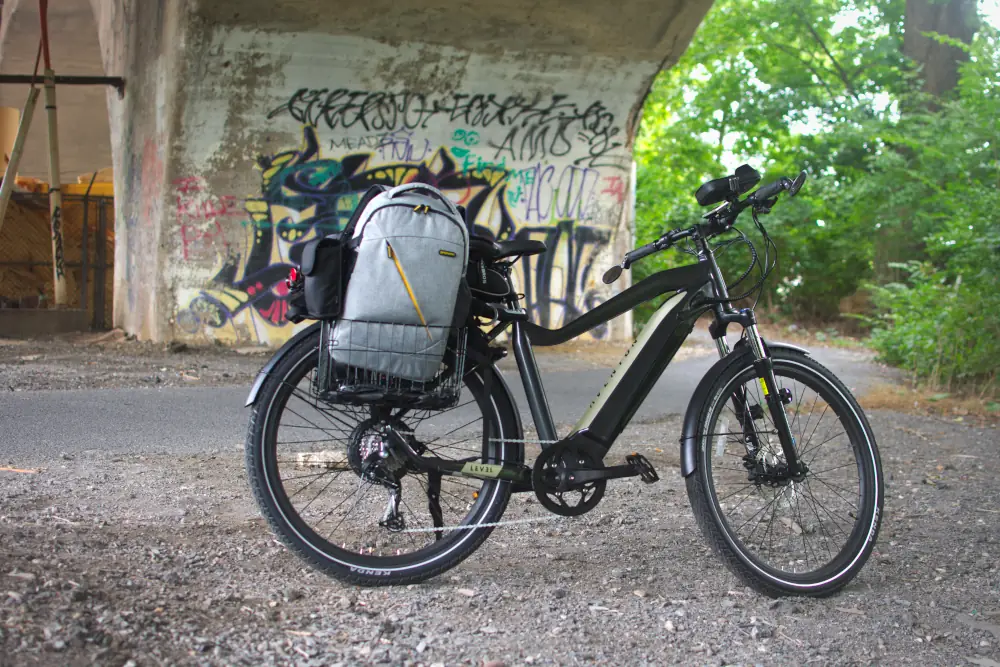
Ride a bike where you usually drive. The slope you never noticed in a car becomes a hill with personality. The smell of fresh baked bread wafts from the deli you’ve blurred past since 2012.
Trade one route a week for the long way. Stop at the farm stand you always promise you’ll stop at “next time” and ask the person behind the counter what’s growing weirdly well this year.
Go mushroom watching. (Unless you already know mushrooms, don’t eat anything, please.) Collect them with your camera or a notebook. You’ll start to see patterns where each variety lives, on a stump, a fallen log, in disturbed soil, at the foot of oaks.
Borrow the old county atlas from your library and trace one thin gray line that you’ve never taken. Chances are it follows a creek, and creeks are always worth your time.
The trick isn’t distance, it’s attention.
What the FJ keeps teaching me
My FJ is happiest in 35 zones and on forest roads. Slow going rewards you with exactly the small, clear truths Penn and Pirsig pointed toward.
The truck’s whole personality is an argument for patience: choose a line, roll on the throttle, feel the tires communicate.
You can hear different birds with the windows down at five miles an hour than you ever catch at fifty-five.
The biggest thing I’ve realized is:
I didn’t need the truck to make me see the world differently.
The world is there whether I’m in the seat of a Land Rover, Jeep, Toyota, or Schwinn.
The FJ is fun, I plan to keep it around as long as possible, but, in hindsight, I didn’t really need this to get out and go slow.
You might enjoy your purchases, but curiosity outlasts gear.
See More. Get More.
Slow travel pays off in human details too.
Highways connect cities. Back roads connect porches.
If you want to understand how people actually live, pay attention to their small choices around their homes.
When you see a Little Free Library topped with a tin rooster, you’re seeing affection expressed in wood screws and weatherproof paint.
When you find the neighborhood where every stoop has a bucket of sidewalk chalk, you can bet those blocks hum with scooters and laughter after the last school bell.
The more we see of the human condition (the real ways people solve small problems, decorate their homes, and protect their peace) the broader our understanding of people’s everyday realities becomes.
It shows us that the “other side of town” is mostly just “our side of town” with different snacks and, maybe, a better porch swing.
Micro-pilgrimages
I’ve come to think of these little outings as micro-pilgrimages.
It’s not about praying or religion though. They don’t require sacred sites; they require sacred attention.
Drive to the State Museum, stand in front of a quote, bask in it once, twice, a dozen times until it lands.
Walk the same loop you always walk but carry a notebook this time and sketch the shape of one leaf you can’t name.
Visit a historic marker you’ve ignored because it sits in a strange spot next to a tire shop. Then read the details linked to that marker and let the past sit with you for a minute.
Penn’s “holy experiment” didn’t become a museum caption overnight; it was written in real time by friends and strangers arguing about how to live. (Encyclopedia of Greater Philadelphia)
If you want to add a pinch of structure, borrow a tool from Pirsig’s teacher: give yourself one ridiculously narrow prompt each time you go out:
Photograph only mailboxes today.
Write one paragraph about the way water moves on the trail after last night’s rain.
Find three colors of lichen.
Learn about lichen’s role in the local ecosystem
Focusing on the “upper-left brick” has a way of opening the entire wall. (Terebess)
A quick nod to the past that made this present
Penn’s experiment wasn’t perfect. No experiment run by actual humans is.
But the ideas he pressed into the foundation here still matter.
He imagined a place where people of different beliefs could live together, and he built a government that tried, in its imperfect, 17th-century way, to support that.
Those principles of religious tolerance and representative rule influenced the place we live now.
And the way he and his fellow Friends valued plain speech still reads as an amiable challenge: say true things simply, then go act like you mean them.
That, too, is a way of paying attention. (Western Friend)
Tips to Expand Your World
Set a 90-minute timer. Pick one. Do it.
Pick one back road you’ve never taken between two places you already go. Leave ten minutes early. Expect to stop once and just…look.
Visit one small museum within an hour of home. Find a single artifact or plaque that makes you curious, then look up the source later. Primary sources are a rabbit hole worth falling into.
Walk a trail at half-speed. Count how many different plants are growing on a single dead log. You will be astonished.
Talk to one person about the thing they maintain. A garden. A block. A food pantry shelf. Ask what they’ve learned and pay attention to the answer.
None of this requires money, gadgets, or influencer cred.
It requires a willingness to move your eyes and your feet a little differently.
The Happy Conclusion
Penn’s line is an invitation. Most of us won’t circumnavigate anything. And that’s fine. You can expand your world right where you live.
Start with a brick: the corner of a city block, the rough bark of a neighborhood oak, the cinder-block wall behind a diner where a downspout broke and rain has washed the paint thin.
When you slow down, the world shows off. And when you really see, you carry that attention to the next place, and the next conversation, and the next problem that needs a patient human.
I’ll keep taking the long way home. Trips are always more fun with friends. Come along.
Help the wheels keep rolling, and show your love of affordable adventure with clothing designed by yours truly!
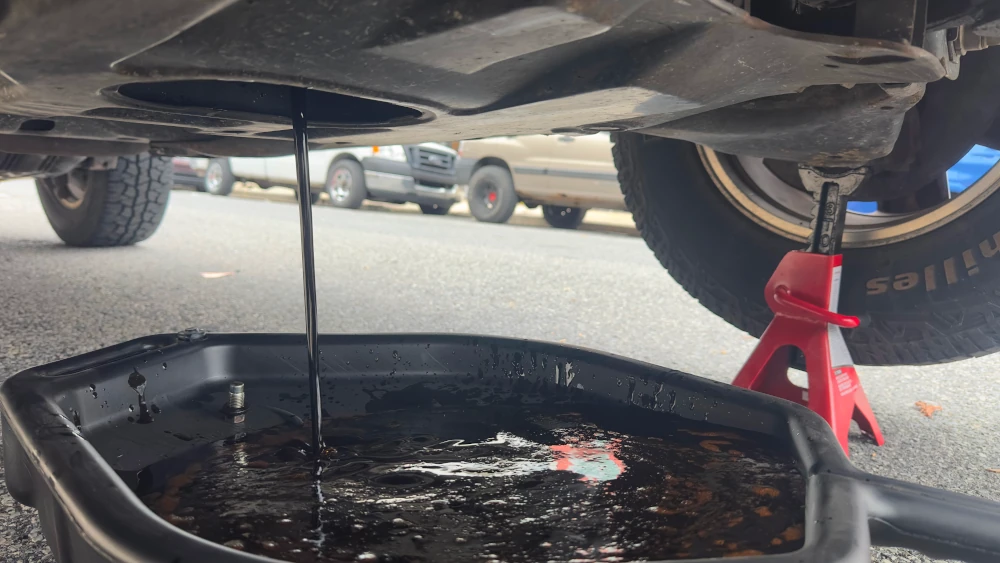
Two months, 5,000 worry-free miles, time for the first FJ Cruiser oil change. Warm it up, drop the plug, swap the filter, fresh crush washer; nothing that earns a merit badge.
The only surprises were the honest ones: two torn inner CV boots and the reminder that trucks tell the truth long before the sales brochures.
FJ Cruiser Oil Change: Kneeling at the 5,000 Mile Altar
The drain stream looked like strong coffee and the filter surrendered like it had somewhere else to be. Top up with fresh 5W‑30, check for leaks, done.
Somewhere between the drain plug and the dipstick I spotted CV grease flung like confetti.
Add it to the list, but the next few Saturdays are spoken for.
Old trucks are simple that way: feed them boring maintenance and they repay you with more interesting miles than you have any right to.
What oil weight?
Toyota recommends SAE 5W-30 for the 1GR-FE
Five Quarts and a Quiet History Lesson
It’s good yet.
As I lay there on my back, staring at the Cruiser’s underbelly, the grease, oil, and hot engine smells brought me back.
I grew up behind GM parts counters; my dad worked for GM for 20+ years during the now infamous “malaise era.” The Buy American chorus trumpeted from every terrestrial radio station and between every prime-time TV show.
I knew bone deep: trucks with bow-tie emblems were the best.
Later I learned those opinions ship with hidden dealer costs: a tariff with a barnyard nickname pecking at truck choices since the ’60s, “voluntary” limits on car imports from Japan in the ’80s, and ad men who deftly disguised consumerism as patriotism.
None of it is scandal; it’s stagecraft. You’re just part of the planned suburban furniture until you bring a different rig to the show.
The FJ is that different rig. It doesn’t argue. It just starts, shrugs at mileage, and behaves with better manners than man’s best friend… sorry, Hugo.
How much oil do I need for my FJ Cruiser oil change?
Have 6 quarts on the bench; you’ll use about 5.5 quarts with a new filter.
Slogans sell trucks. Loyalty is earned in miles, not marketing.
What the FJ Cruiser Oil Change Actually Told Me
Nope, not good.
Post‑oil change crawl around: bushings with tasteful crow’s‑feet, hardware where Toyota left it, CV boots officially on the to‑do list.
The message was simple: keep up the mundane maintenance and I’ll handle the adventurous bits. Fair trade.
One curiosity from the crawl around: the previous owner fitted drilled and slotted rotors up front. They stop fine, but they’re not my forever plan.
That rant gets its own post; for now, call them temporary tattoos on the front hubs.
From 0-60 to 4-Low
I used to memorize 0-60 times and horsepower numbers. I drooled over Motown metal from the 50’s and 60’s and imagined building my own sleeper project.
These days I prefer the quiet satisfaction of picking a line, letting the truck do its clever little traction trick, and showing up for Monday morning school drop-off like nothing happened.
The FJ excels at that kind of competence. It asks for oil on schedule and patience for aging rubber. In return, reliability becomes a personality trait.
How tight should I make the lugs after rotating the tires?
Toyota recommends 85 ft-lb or 113 N-m
Why Toyota?
No conversion therapy, no celeb-studded ad campaign. Just a machine that rewards attention.
If there’s a moral, it’s this: maintain the truck you have, doubt the stories you inherited, and let experience pick your team. The rest is shop towels, torque specs, and flashing MAINT REQD lights.
Be Part of the Conversation
If you defected from one badge to another, tell me what converted you. Or share what runs through your mind while you’re turning wrenches.
Until next time, I’ll be under the truck plotting a CV reboot and pretending drilled rotors add horsepower.
Spin-on Toyota 99015-YZZD3 [*Affiliate Link] (OE).
Maintenance reminder reset
Odometer showing -> key to ACC/LOCK – hold trip reset -> key to ON while holding -> bars count down to “000000” -> release; light goes off.
Wheel lug nut torque
85 ft-lb (113 N-m) (handy if you rotate tires).
TRD front skid-plate bolts
22 ft-lb (30 N-m) (if you have one of those)
*If you click a link on this page and make a purchase, we may earn a commission. As an Amazon Associate, we earn from qualifying purchases. We only recommend gear we use or trust—never paywalls, never pay-to-say-nice-things.
Step-by-Step
Warm it up. Three to five minutes brings the oil from maple syrup to pour-over. Shut it down.
Open the stage. Drop the little service door or the front skid (Mine doesn’t have the service door) if you want elbow room (re-torque to spec on the way back).
Catch ready. Pan under the plug; crack the 14 mm drain bolt and let it ride. Admire the coffee-dark honesty.
Filter off. Spin the old filter free. If it’s stubborn, clean the base and use a proper cap wrench.
New gasket, not new muscles. Oil the new filter’s gasket, spin on hand-tight plus ¾ turn.
New crush washer. Refit the drain plug with a fresh washer; torque to 30 ft-lb (40 N·m).
Fill. Add ~5.5 qt (5.2 L) of 5W-30, cap on, and fire it up.
Leak check. Idle 30–60 seconds, peek under—dry is the right answer.
Level set. Shut down, wait a couple minutes, dipstick check, top off as needed. (The manual says ~1.6 qt between “low” and “full.”)
Reset MAINT REQD. With the odometer showing, key to ACC/LOCK → press & hold trip → key to ON while holding → bars count down to 000000 → release. Light out.
Bonus 5K scan. Quick look at pads/rotors, belts, ball joints/dust covers, CV boots (mine scared me), and fluids. Rotate tires and hit the prop-shaft grease.
Recycle. Used oil and filters go to a parts store or municipal drop-off. Ducks everywhere thank you.
A Note on Safety & Sanity
I’m sharing what I do on my own truck. Use your judgment, follow your service manual, torque to spec, recycle your oil, and know your limits. If something feels sketchy, get a pro.
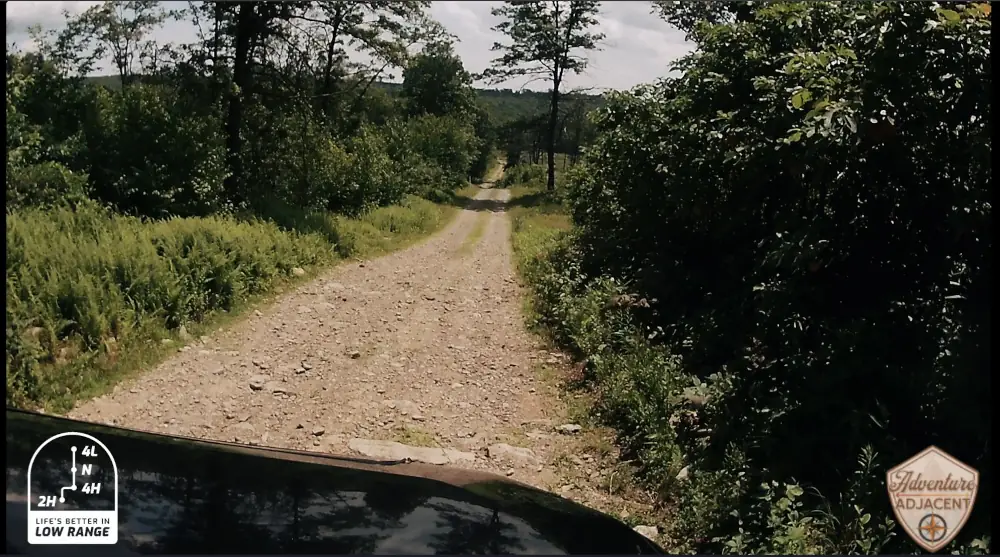
Berry Mountain – Weiser State Forest — Greenland Tract, Central Pennsylvania Date/Time on Trail: July 22, 2025, roughly 2–4 p.m.
I pointed the FJ at the spine of Berry Mountain and did the slow climb that my task list keeps trying to talk me out of.
The ridge runs above the Wiconisco Valley, a long, stony shrug of earth with rattlers, a few steep pitches, and the kind of views that make you forget about the rat race.
I wasn’t blazing new trails. I was spending quality time with the kids and learning a lesson in forest management. My gear list doesn’t need to expand as much as my mind does.
A short way into the mostly groomed gravel forest road a deer gave us a few frames of natural beauty before disappearing into the foliage. White tail on full display as she bounded back into the thickets. It was a good reminder that in working forests, we’re loud guests on four tires.
Where We Are: Berry Mountain
Berry Mountain sits in the Weiser State Forest’s Greenland Tract, in the northeast of Dauphin County, with access via Radar Road and Berry Mountain Road. Those are the two names you’ll see on DCNR maps and campsite listings for this tract.
It’s classic ridge-and-valley country: rocky, narrow in spots, and worth every careful foot of elevation you earn.
If you’re used to State Parks, which are all manicured and laden with trail markers, state forests might surprise you. These are working woods under the Pennsylvania Department of Conservation and Natural Resources (DCNR).
They’re managed for many things at once: clean water, habitat, timber, and places like this where you and I crawl along a ridge in low gear for no reason that makes sense on paper.
A Forest with Two Seals
Pennsylvania’s 2.2-million-acre state forest system is dual certified. Audited to both FSC (Forest Stewardship Council) and SFI (Sustainable Forestry Initiative) standards.
That’s not a PR line; it means outside experts look at how these forests are managed and publish their findings.
FSC emphasizes things like independent audits and chain-of-custody. That meanstracking wood from forest to mill to product.
SFI leans heavily on on-the-ground safeguards like water quality, biodiversity, and conservation values.
Pennsylvania carries both seals, and Weiser is part of that system.
In plain language: when you see a timber sale in a state forest, it’s not a free-for-all. There are plans, buffers, and oversight. And if an audit finds gaps, corrective actions follow.
The Commonwealth’s publicly posted 2024 audit summaries exist for exactly this reason: so the public can check the checker.
I think about that when I pass a culvert that’s actually built right, or when a trail stays a trail and doesn’t dissolve into a trench.
Someone planned, paid for, and inspected that. That’s what dual certification is purchasing for us.
Berry Mountain: The Name on the Map
This state forest is named for Conrad Weiser, and if you grew up anywhere near Berks or Dauphin County, his name is on signs you’ve driven past a hundred times.
Weiser was an 18th-century German immigrant who served as an interpreter and diplomatic go-between during decades when Pennsylvania’s future was being negotiated, sometimes literally, in council houses and courtrooms.
The PHMC (Pennsylvania Historical & Museum Commission) and DCNR both summarize him the same way: a bridge-builder who helped shape Pennsylvania’s Indian policy.
As a teenager, Weiser spent the winter of 1712–1713 among the Mohawk tribe, learning language, protocol, and the careful cadence of council. Skills that made him indispensable later.
By the 1720s he’d settled near present-day Womelsdorf in the Tulpehocken Valley. You can still visit the Conrad Weiser Homestead to get a sense of his home ground.
If you’ve heard of the Treaty of Lancaster (1744), you’ve seen Weiser’s name in the minutes as interpreter—standing at the hinge between colonial officials and Haudenosaunee leaders.
The minutes read like a slow-burn play: greetings, speeches heavy with metaphor, long pauses, and the crucial work of getting words right so war doesn’t start by accident.
It’s fitting that an entire state forest bears the name of someone whose primary tool was listening.
The Ridge, Today
My window for this ride was a hot Tuesday afternoon, July 22, 2025.
I did what you do here: I aired down modestly, eased into the grades, and picked lines that prioritized traction and sight lines over drama.
Ridge roads are honest: they don’t reward speed so much as careful thought.
The FJ, 18 years into its tour of duty, did what old tools do: worked without fanfare and reminded me that confidence at five miles an hour beats panic at fifteen.
There’s more than one section on this trail that tilts you left or right at an angle that has you make eye contact with your passengers. Today, those passengers were my kids, so I played that “Dad has this one” smile in the rearview.
Then after we leveled out, I said “Phew, were you as nervous as I was back there?!”
Stewardship, On Purpose
This forest feels like it’s being cared for, because it is.
I don’t love everything the DCNR does, but their model is pragmatic: harvest where it makes sense, protect where it matters, and keep the whole system healthy enough to handle droughts, pests, and people like us who believe a good day can be measured by dust and engaged lockers.
Pennsylvania emphasizes exactly those values in its materials, and the dual-certification framework is one of the ways the Bureau of Forestry holds itself to them.
It’s not perfect, nothing involving budgets and humans is, but transparency and third-party oversight beat hand-waving.
That brings me to the uncomfortable part: these roads, gates, bridges, culverts, maps, and audits don’t fund themselves.
We already know this, but it’s worth saying out loud. If we use the forest, we owe the forest. Sometimes that’s a purchase: a permit, a donation to a local conservancy, buying certified wood because it helps keep this entire accountability apparatus solvent. Sometimes it’s time: volunteering on a trail day, packing out more than you brought in, or writing a polite email when you see a washed-out section that needs attention instead of foraging your own bypass.
The grand old idea, that public goods are actually good and belong to the public, starts on days like this, on ridge roads with deer that won’t pick a lane.
A Thin Thread to the Past
Driving Berry Mountain with co-signed by Conrad Weiser, it’s hard not to think about translation:
Weiser translated words; the DCNR translates policy into lanes that hold after a storm.
The audits translate promises into documented outcomes.
The dual-certified labels are a kind of translation for the rest of us: proof that somebody checked the math.
The fact that we can move through this landscape, quietly, slowly, imperfectly, owes a lot to people whose work you don’t notice when it’s done right.
I didn’t see another truck for most of the afternoon. Just the deer, some birds singing their sultry songs, and a blue sky dotted with fluffy white clouds.
I took a last look at the valley as we climbed back from our turn around mid-way through the tough stuff and rolled back down the ridge, trying to make as little noise as an old off-road truck can make.
If You Go
Location: Berry Mountain, Weiser State Forest Greenland Tract (access via Radar Road and Berry Mountain Road). Check DCNR maps before you go; access can be variable by season and condition.
Land Manager: Pennsylvania DCNR Bureau of Forestry — part of the 2.2-million-acre, FSC + SFI dual-certified state forest system.
Good Steward Tips: Tread Lightly principles:
Stay on designated roads
Respect seasonal closures
Pack it out
Consider donating to local stewardship groups
History Stops: Conrad Weiser Homestead (Womelsdorf) for context and perspective before or after your ride. It’s hard to be careless in the woods after you’ve spent an hour with the story of a man who built peace out of paragraphs.
Sources & Further Reading
Weiser State Forest overview and dual-certification note (2.2M acres; FSC + SFI). Pennsylvania Government
Greenland Tract map and Weiser maps index; access via Radar Road / Berry Mountain Road reflected in campsite directions.
If I thought I was going to die tomorrow, I should plant a tree, nevertheless to-day.
Stephen Girard
Who Was Stephen Girard?
Girard is a Pennsylvania-sized paradox.
He stayed in Philadelphia during the 1793 yellow fever outbreak and helped run the Bush Hill hospital with Peter Helm. (Clio, Hidden City Philadelphia)
Direct action before the term existed. No committee, just work that needed doing.
Thousands died, but the place functioned because neighbors chose duty over comfort.
Two decades later he did something only a handful of humans could do.
He underwrote as much as 95 percent of a crucial federal loan when U.S. credit collapsed during the War of 1812. (Encyclopedia Britannica, Girard College)
If you ever wondered whether one person can change the arc of a story, there is your answer in ledgers and loan payments.
Trader. Slaver.
Girard slave pens, Louisiana, 1894. Exterior of stone holding cells linked to Philadelphia financier Stephen Girard. Photograph by W. N. Jennings. Courtesy of the Library Company of Philadelphia.
But his story isn’t clean.
Girard’s fortune was built inside systems that exploited people. He owned enslaved people in Pennsylvania and Louisiana. The Library Company preserves an 1894 photograph labeled ‘Girard Slave Pens’ from a Louisiana property. (Teachers Institute of Philadelphia, Library Company of Philadelphia)
Grim architecture that outlived him.
Legacies are forests. Some trees give shade. Many grew from poisoned soil.
His will created Girard College. That’s a residential school endowed for “poor, white, male orphans”; desegregated in 1968 after prolonged legal fights; girls admitted in 1984.
It took years of organizing and multiple court battles before the color line fell, and girls were admitted much later. (National Archives, Girard College)
A public gift with locks on the door that Philadelphians spent generations battering down.
Where Do We Go From Here?
So… what do we do with a legacy like that?
Off-roaders inherit our own contradictions.
We love wild places. We also drive to them.
We celebrate freedom, then post a trail that cannot survive fame.
The answer isn’t guilt. It’s responsibility. Horizontal habits don’t need committees.
Stewardship in Practice
Consent and care are key.
Pack a spare trash bag and a shovel because strangers will need both. Bury what needs burying the right way or pack it out.
If a gate is closed, the conversation ends. The commons is only common if we act like we share it.
Invest in collective capabilities. Teach a friend to air down and air up. Show your kid how to spot a line without shouting. Lend the cross wrench and show them how it’s done.
The point of competence is not superiority. It is liberation for the next person who learns it.
Define Your Dash
Family history folks have a phrase I love: “Define your dash.” (FamilySearch)
Everything between the dates is yours to write, and the time between is so much more limited than we can possibly realize.
Maybe your dash will never buy a bank or endow a school. Good.
You have Tuesday nights in the garage and parking lots where somebody needs a jump.
You have small creeks that need one more bag of trash packed out.
You have a voice at the land use meeting when a place you love risks being priced, paved, or parceled out of public use.
Spreadsheets Can’t Define Your Dash
If tomorrow were your last, plant something today.
A sapling in your yard. A habit in your crew. A path of least damage across a wet section you could have chopped to pieces.
History says legacies are mixed, even for people with statues. Our job is to stack the deck.
Leave more shade than exhaust.
Leave more skills than stories.
Leave places and people better than we found them. That’s how we define our dash and earn whatever future parks its wheels in our ruts.
Trail Code
Air down before dirt; skip waterlogged segments that will rut the trail.
Yield to uphill traffic; keep speeds down near camps and overlooks.
Pack out more than you packed in; bring a contractor bag on every trip.
No geotags for fragile spots; share locations responsibly, person-to-person.
Camp on durable ground; kill generators at quiet hours.
Volunteer days > hot takes; sign up for a trail workday each season.
Help the wheels keep rolling, and show your love of affordable adventure with clothing designed by yours truly!