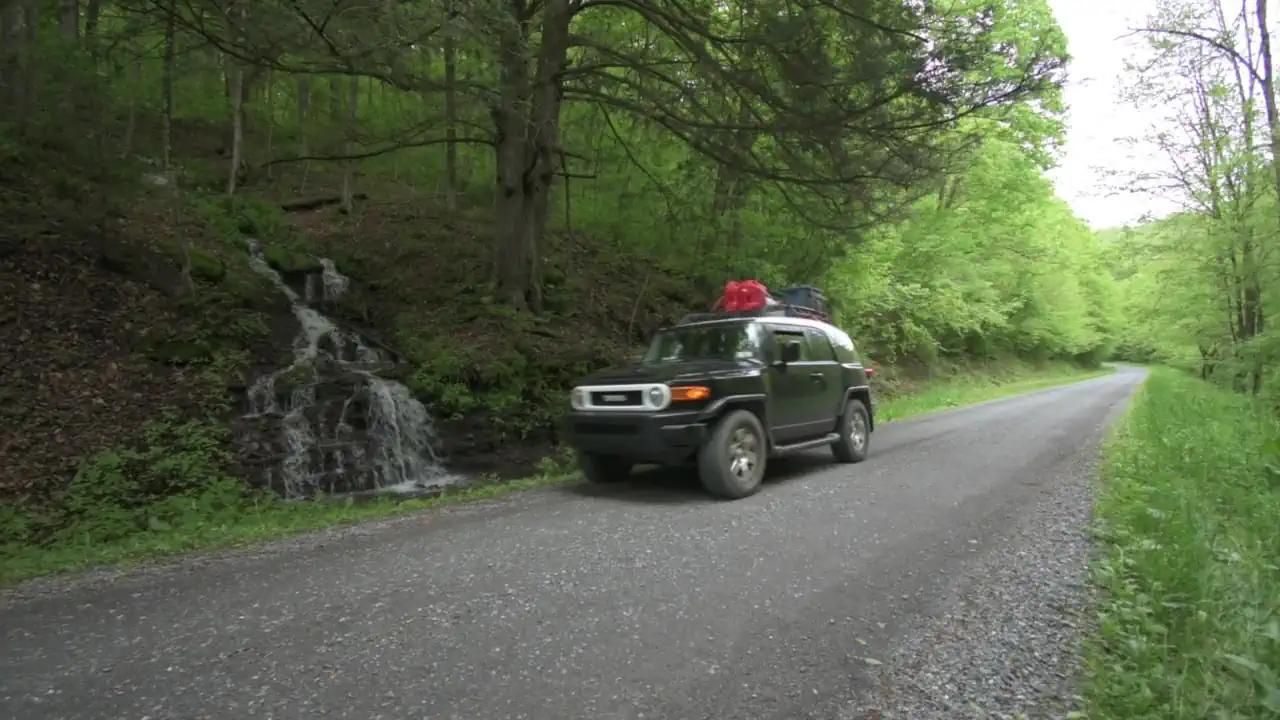
I’ve added battery hold downs to my list of regular checks, because a few days after I flushed the power steering, I pulled into a gas station and did my little ritual:
Pop the hood. Fluids. Belts. Anything leaking? Smoking?
Anything that looks like it is about to become an unplanned story on this site?
That’s when I saw it.
Battery Hold Downs: Fantastic Failures, Shocking Surprises
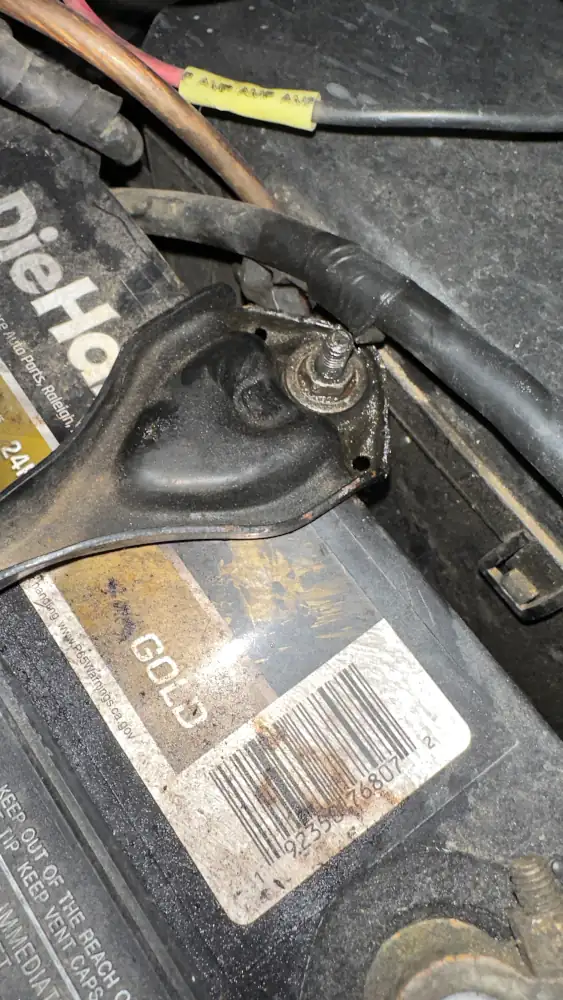
My battery was tipped off its tray. I caught it kissing the radiator. Only the positive and negative cables were keeping it in the engine bay.
Not dramatic enough to strand me. Just… wrong.
I stared at it for a second, doing the mental math of how long it might have been like that. The power steering flush was January 11. This gas stop was January 20. Somewhere in that window, the battery hold downs got loose enough for gravity and my… spirited driving to start writing its own version of the maintenance log.
What broke?
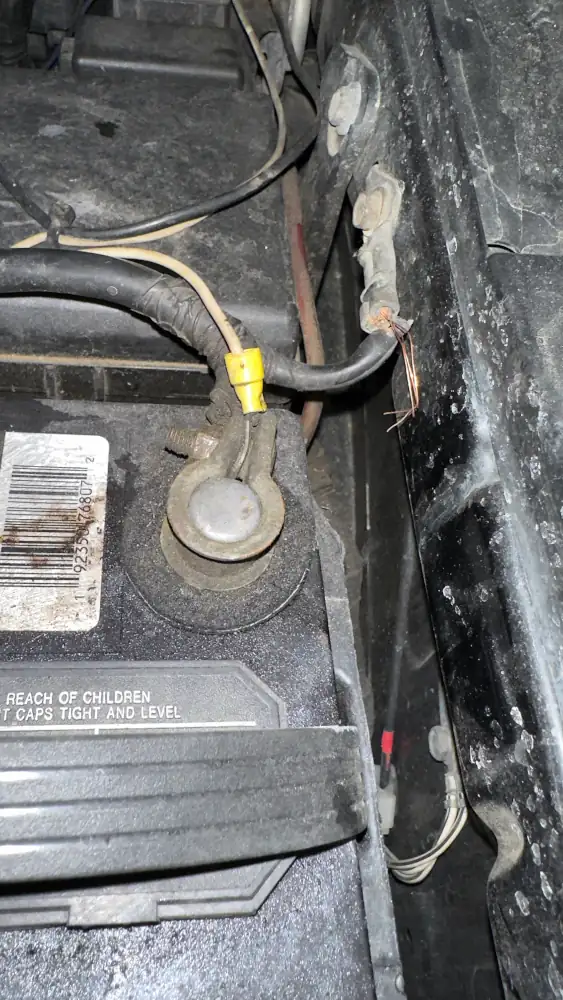
The only obvious casualty was a thick ground wire that ran to the fender. Snapped right at the lug, copper strands splayed like a bad haircut.
Everything else looked intact. No sparks, smoke, or melted insulation. Most surprising of all: No warning lights, weird idle, or glitchy radio.
The Cruiser had been quietly tolerating my neglect.
Here’s the part that’s uncomfortable to admit: I try to be the guy who does maintenance. I carry tools. I write how-to posts because I’m trying to be more intentional in the future.
And I still missed a basic, boring, foundational thing: making sure the battery was actually secured.
A loose battery is not just a nuisance. As you can see, it can tug on cables, damage connections, and in the worst cases, battery movement can create a short circuit that can cause a fire. Especially if the positive terminal ends up contacting something it shouldn’t.
So, yeah, I got lucky.
How I fixed the Battery Hold Downs
I was really fortunate. None of the hardware got scattered. I just grabbed the battery, put it back on its tray, and tightened everything down.
Took some photos, made a plan to repair the ground properly, and then I did the thing I always do after a close call: I replayed it in my head. Not to spiral, but to find the lesson.
I’ve had to learn the hard way that “be perfect next time,” isn’t a lesson. That’s a fantasy.
The real lesson was mindfulness. Not the incense kind. The under-the-hood kind.
Mindfulness is being present to notice the boring stuff before it becomes expensive stuff.
It’s doing the 30-second check because you respect what the machine is doing for you. Toyota used the same designs on FJ as the 4Runner for almost twenty years.
“Old” doesn’t mean “bad.” Sometimes old means:
Forgiving
Reliable
Overbuilt
Old means it will keep running even when you accidentally sabotage it a little. But forgiveness isn’t permission for neglect.
There’s also a quieter, more human angle to this: the world trains us to rush. To skip checks. To treat maintenance as optional until something breaks, and then to blame ourselves for not having more time, more money, more energy.
Just more everything.
I’m trying to do the opposite. Not perfectly. Just consistently.
So if you want the practical takeaway, here it is: Add quiet, thoughtful moments to your routine. Even if it’s 30 seconds of skipped scrolling while you pump.
Mindfulness makes everything better. A quick wiggle on your battery hold downs while you wait for the DinoJuice™ is a smart habit. And it’s the kind of habit that prevents dumb problems from multiplying.
The 60-second battery hold downs check
Grab the battery and try to move it. If it shifts, your battery hold downs aren’t doing their job.
Look at the cables. If the battery moved, the cables took the stress.
Scan for rubbing and pinch points. Vibration plus time equals mystery failures.
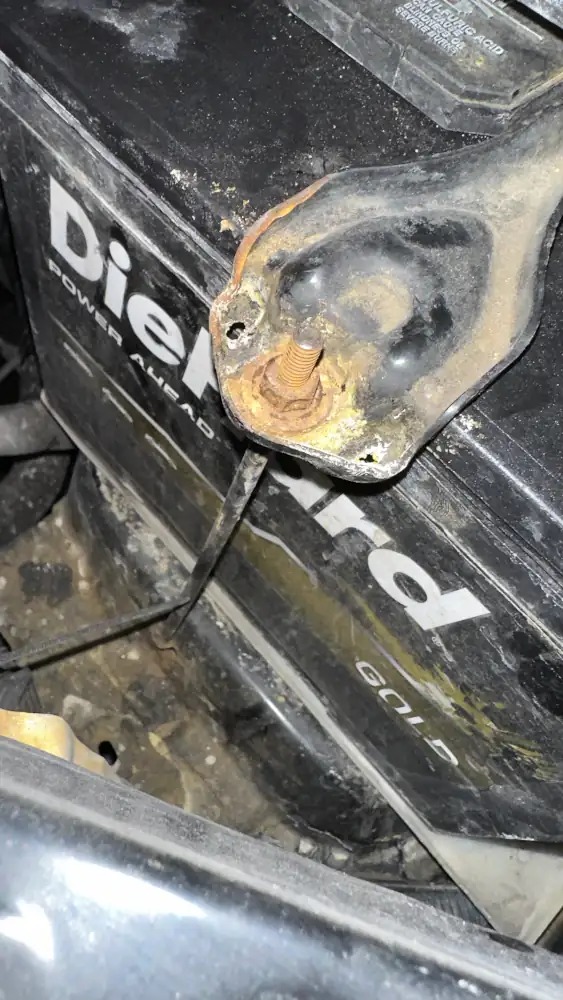
Check the battery hold downs hardware. Rust, missing pieces, stripped threads, all of it matters.
Do not “temporary fix” this with bungees. Hold downs exist for a reason.
I didn’t catch this one in my garage. I caught it under fluorescent lights, standing at a pump, heart thudding and blood pressure spiking in public. Which is, honestly, a pretty classic way for lessons to play out.
Anyway, check your battery, stay grounded.
Help the wheels keep rolling, and show your love of affordable adventure with clothing designed by yours truly!
Most days, the FJ sits in the driveway eagerly waiting for more miles while I try to make my task list shrink. The trail apps glare at me from my phone. The passenger side door speaker still cuts out, the next trail weekend isn’t scheduled, and the alternator-swap video footage is still sitting on a hard drive, untouched. But the part of my brain that wants a road does not care about my calendar. That’s where the live streams fit.
So I do what I can: fire up Euro Truck Simulator 2 or American Truck Simulator, make coffee, flip the “Starting Soon” scene, and roll a digital rig out onto a digital highway while chat slowly fills in with familiar names.
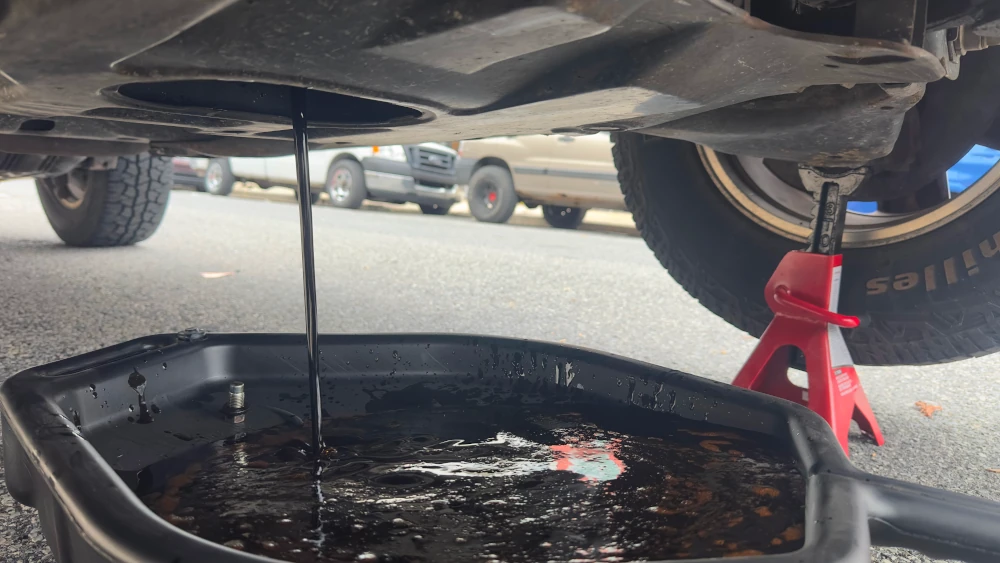
On paper that looks like “just” gaming. In practice it lives in the same mental neighborhood as kneeling under the Cruiser for an oil change, or threading along Fishing Creek on ice, or picking a line up Berry Mountain.
The streams are not a detour from Adventure Adjacent. They’re one of the many places the “adjacent” part does its best work.
Live Streams: Too cold to wrench, too busy to roam
There’s a seasonality to real-world adventure that no amount of optimism overrules.
Some days it’s literally too cold to wrench. Steel, concrete, and fingers all have temperature limits, and I’ve finally admitted that mine arrive sooner than the FJ’s. Other weeks I’m too busy to schedule trips or edit off-road videos. Client fires, family obligations, and the tasks required to keep this website, shop, and my little corner of the internet online all crowd the calendar.
But that itch for the road still shows up.
When the body cannot realistically go, the brain will accept a proxy.
Gaming became that proxy by accident. I started streaming American Truck Simulator, hauling freight across flyover states, because I wanted an excuse to hang out with people in the mornings and learn someplace new. Before long, those sessions turned into a very specific kind of self-care: a road my nervous system recognizes as rest.
There is a rhythm to it:
Pick up a load.
Merge.
Settle into a lane.
Talk to chat and my co-driver.
Try not to T-bone a harvester or collide with an ambulance at a flashing yellow.
Fail. Laugh. Keep going.
It’s not escapism in the “ignore everything” sense. It is time-boxed focus. Two or three hours where the only problems I have to solve are lane position, route choice, and “can I make this delivery before my fictional customer gets mad.”
After a week of real-world logistics, eBay and Shopify headaches, CSV psychosis, and code refactoring… fake logistics feel surprisingly medicinal.
Learning WHILE doing
The live streams are not just relaxation; they are the most consistent learning while doing practice I have.
I don’t mean that in a productivity-hustle way. I mean it literally: we learn things in real time while we drive.
When the in-game GPS sends us past Gothenburg, I ask my co-driver (hi, Miles) what the real Gothenburg is actually like. We end up talking about port cities, shipbuilding, and how many people live there, or about how Scandinavian countries treat public land and working forests differently than we do in Pennsylvania.
A stretch of Swedish E-road turns into a sidebar about why roundabouts work, how freight moves through a country, or what long-haul life looks like for real drivers who do this in all weather, without a pause button.
The games have a strange magic trick: they disguise geography, civics, and infrastructure as an excuse to listen to lo-fi music and make left turns.
The hunting streams work the same way. On my “Thanks for the Fowl” morning in theHunter: Call of the Wild, I started out chasing turkeys in Mississippi Acres and New England and end up talking about real turkey habitat, migratory patterns, public vs private lands, and the history of conservation in North America.
That conversation follows us back into how we behave on real trails and in real state forests when we finally get there.
Learning by doing is my default. Trying new joinery techniques or welding a driver’s seat mount back together can’t be learned without hands-on time. But sometimes my body needs to do one thing while my mind wanders.
The same muscles, different road
The more I live stream, the more I notice the overlap between “virtual miles” and “actual trail days.”
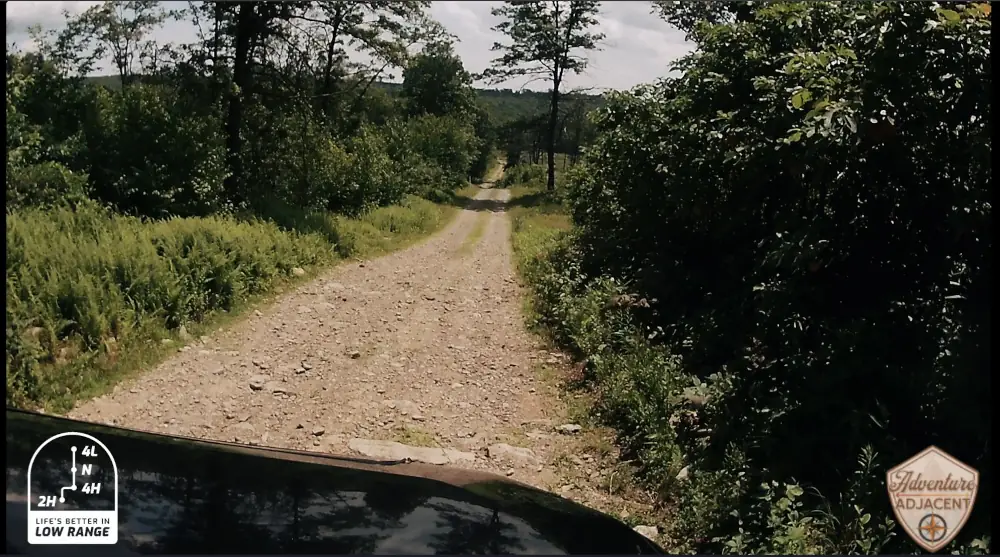
Real off-road trips taught me that capability needs to be wrapped in good judgment. That was the lesson when I turned around at the second icy creek crossing instead of pushing into rushing water. At night. On a trail with no cell-service, two days after buying the Cruiser.
Trucking streams rehearse that same muscle at lower stakes. Yeah, sometimes I make mistakes, but I’m not hurting anyone banging pixels together.
When fatigue (mine, not the avatar’s) sets in, I end the stream instead of pushing for “one more delivery” because I know that on real highways, that pushing for more fun turns self care into self harm. If the streams stop being fun, then what’s the point?
The patience that keeps me picking lines over Berry Mountain at two miles an hour instead of bashing diffs at ten is the same patience that keeps me under the truck chasing an electrical gremlin instead of chucking parts at a problem.
Patient diagnosis always wins over the parts cannon.
Self-care that still leaves tracks
I’ve shifted from doom-scrolling, arguing with strangers, and shouting into the void to streaming for this reason:
When we live stream, we build something, even if it’s small.
A few people get a cozy place to hang out before work.
Somebody learns about why civics and political science education matters (okay, it’s me, I’m somebody).
Someone else is comforted to hear that yes, it’s okay to be “too cold to wrench” and “too busy to schedule trips or edit off-road videos,” and they are not failing at being outdoorsy; they are just living in an economy that eats time for breakfast.
Streaming gives me something similar to that “small problem, solved together” feeling.
I try to foster the chat into being an emotional mutual aid. Folks can drop tips about keybindings, real trucker life, road etiquette, or just “hey, don’t forget to drink water.” They remind me to service the truck before it strands us. I talk through why I pick one route over another. Or why I back off the AI traffic that is clearly plotting my demise.
It’s a tiny commons of skills and care. One that spills over into the real world when we talk about changing tires, carrying first-aid kits, or the etiquette of helping on the side of the road.
Self-care, in this case, looks like scheduled time where the only expectation is that we show up, pay attention, and leave each other slightly better resourced than we were when we logged in.
Adventure. Adjacent and otherwise.
Adventure Adjacent has always been about more than the highlight reel.
Another essay wandered through a museum plaque and William Penn’s words about paying attention to your own life and surroundings. That one argued that you don’t need a plane ticket to widen your world. A back street, a mossy log, or a forgotten corner of your own zip code will do.
How live streams fit in here
The live streams are that same experiment, just routed through a server and a game engine.
Instead of a back road, we take a B-road in Scotland; rather than a Pennsylvania logging road, we haul lumber out of a digital Lapland; Instead of sitting quietly by a creek, we sit quietly in a virtual tree stand while I ramble about making change to leave legacies.
The technology stack that runs this site, that lets me post these field notes and schedule live streams, is another part of the same story. Somewhere between the virtual machine, the plugins, and the DNS records lives a very practical commitment: keep the lights on so these conversations have a place to land.
Adventure Adjacent is the Cruiser, the trails, the parking lot recoveries, the server maintenance, the essays, and the live streams.
Some days we are up to our elbows in real grease.
Some days we are up to our eyeballs in virtual snow on an E-road outside Oslo.
The through line is the same: curiosity, competence, and a quiet belief that we can leave people and places better than we found them, even if “place” today is a Twitch chat instead of a trailhead.
So if you see “Nordic Horizons” or turkeys in Mississippi on the schedule and think, “Wait, I thought this was an off-road channel, not a channel for live streams” know this:
The truck is still here. The trails are still waiting. The toolbox is still in the back.
We are just taking the long way around, keeping our skills warm and our communities close, until the weather, the workload, and the world lets us point our rigs at the horizon again.