
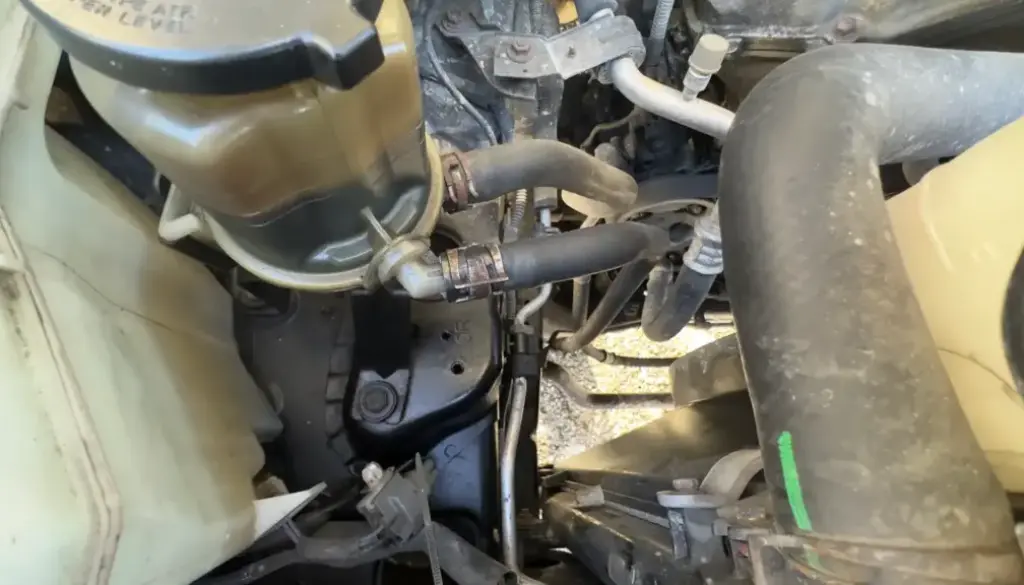
Toyota FJ Cruiser Power Steering Fluid Flush: How To
Power Steering Fluid Flush: Anybody can do it.
I’ve never done this before. But a power steering fluid flush is an easy maintenance item that can save big dollars down the road.
Honestly, I had no idea how old the power steering fluid was when I came home with the Cruiser. When I was checking fluids during one fuel up, someone leaned in and told me it smelled gross. One of the many drawbacks of not being able to smell.
I got a rare warm day in January a couple weeks ago. I decided to take care of a slightly past due oil change and tire rotation, and tackle this new task at the same time.
It was easy. Right up until I realized I did not have the one dumb thing that makes this job clean: a little spare tubing or a cap for the return port on the reservoir.
Cue the spill.
Into the catch pan.
I scrambled, stuck my finger over the hole, and cursed myself for not having the little things.
Then I discovered the most accidental tool in Toyota engineering: the dipstick attached to the reservoir cap is almost the perfect size to plug the return opening. It is not elegant, but neither is mopping ATF off your sway bar and skid plate.
Is Doing a Power Steering Fluid Flush Worth it?
Old, cooked ATF stops being a nice slippery hydraulic helper and starts acting like a tired, gritty pulp fiction detective, finding every potential weak spot in your power steering system and trying to exploit it.
If you never do a power steering fluid flush, this is what it could cost you:
| Power Steering Hose Replacement | About $800 |
| Power Steering Pump Replacement | $500-$800 |
| Steering Rack Replacement | About $2,000 |
What I learned (besides “buy spare hose and keep it in the bin”)
- You can do a clean return-line flush with basic tools, but the difference between “clean” and “crime scene” is one cheap cap or a short length of scrap hose, plugged. Even an old screw in the end of the hose is better than nothing.
- Having a new return line and fresh clamps on hand is smart. Mine survived and is holding tight, but I would rather replace aging rubber on my schedule than on the shoulder.
- Turning the steering wheel engine-off moves fluid through the rack, but it does not spin the pump. I started the engine for short 2 to 3 second bursts to cycle the pump without running the reservoir too low.
- Two quarts of fresh fluid was enough to get the old stuff out.
A Note on Safety and Sanity When Doing a Power Steering Fluid Flush
I’m sharing what I did on my own truck. Use your judgment, follow your service manual, and know your limits. Keep hands and tools away from belts and fans, support the vehicle safely if you lift it, and do not let the pump run dry.
If you see foaming, whining, or the fluid turning into a strawberry milkshake situation, stop and bleed the system properly before you call it “done.”
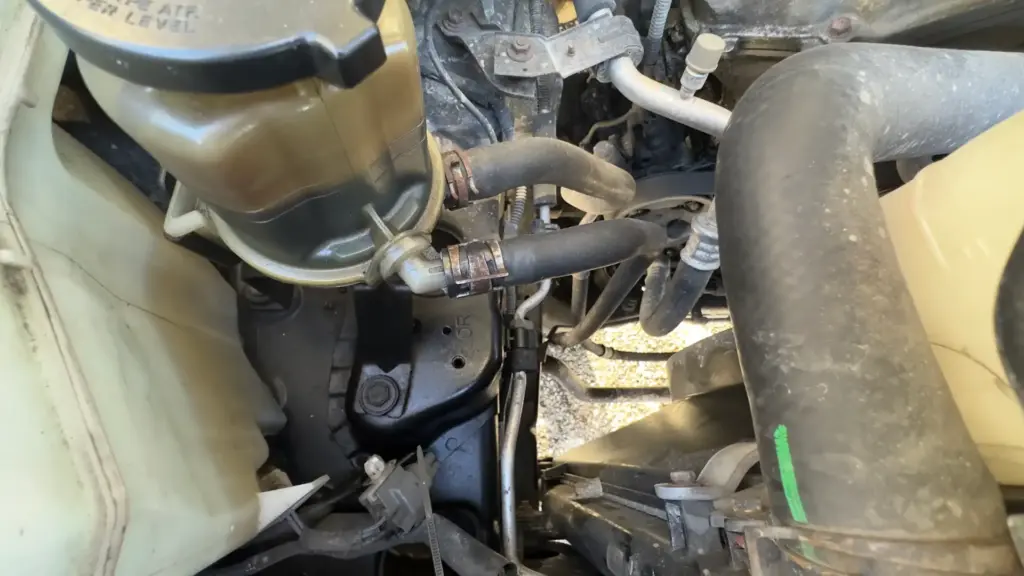
Just the Specs – Power Steering Fluid Flush
| Item | Spec |
|---|---|
| Vehicle | 2007 Toyota FJ Cruiser |
| Toyota spec for power steering fluid | Automatic transmission fluid (ATF) DEXRON II or III |
| What I used | Valvoline DEX/MERC ATF (DEXRON III / MERCON), about 2 quarts total for the flush, I had a third on-hand, just in case |
| What “normal” looks like after | No foam, no groan, smooth assist, level in the HOT or COLD range depending on temp |
Step-by-Step: Power Steering Fluid Flush (the driveway version)
Tools and supplies
- Catch bottle or drain jug (clear is best)
- Rags, gloves, funnel
- Pliers for hose clamps
- A short length of hose to extend the return line into your jug (helpful, but not necessary)
- Something to plug the reservoir return port (a proper cap, a spare hose with a bolt in it, or in my case, the reservoir cap dipstick hack)
1) Get set up
- Park level, set the parking brake, and chock a rear wheel.
- If you can, lift the front end so the tires are off the ground. Turning lock-to-lock is easier and you’re not grinding the tread across your driveway.
2) Identify the return line
- On the power steering reservoir, remove the return hose and aim it into your catch jug. If you need to extend it, slip on a length of clear hose and clamp it.
- Plug the open return port on the reservoir so it does not spit fluid everywhere while you work.
3) Start flushing
- Fill the reservoir with fresh ATF.
- With the engine off, turn the steering wheel slowly from lock to lock a few times. Keep an eye on the reservoir level and keep topping it up.
- Top it ALL the way up, particularly for the next step, because that pump works QUICKLY.
4) Cycle the pump carefully
- Once I wanted to move fluid through the pump itself, I started the engine for short 2 to 3 second bursts, then shut it off and topped the reservoir again.
- When I say 2-3 second bursts, I mean I started it and shut it down before the idle settled.
- Repeat until the fluid coming out of the return line looks consistently clean.
5) Button it back up
- Reattach the return hose to the reservoir with the clamp seated correctly.
- Fill to the appropriate range on the dipstick/reservoir for fluid temperature.

6) Bleed and verify
- With the engine idling, turn the wheel to just shy of full lock and hold for 2 to 3 seconds, then go to the other side and hold for 2 to 3 seconds. Repeat several times.
- Check for foaming or emulsification, and recheck level after a few minutes.
- If you get foaming, don’t freak out.
- As long as the pump isn’t whining, you’re okay.
- Walk away for 10-15 minutes with the cap off, then repeat the process above.
7) Clean up like your dog is gonna be licking the pavement
- Dispose of used ATF properly at a recycling center or auto parts store that accepts waste fluids.
Cavitation Caveat
What is pump cavitation? When the pump sucks air instead of fluid, it complains loudly and turns your “quick job” into foam and regret. Don’t let the pump run dry when you’re doing a power steering fluid flush.
How to avoid cavitation
- Don’t run the reservoir dry.
- DON’T RUN THE RESERVOIR DRY.
How to correct cavitation
Okay, so you ran it dry.
If you hear whining or see a ton of foam in the reservoir, stop the engine ASAP.
- Top off the reservoir (engine off).
- If it’s not already, jack it up, put it on stands.
- Engine OFF: slowly turn the wheels lock to lock several times.
- Do this slow and steady. It helps push the air up toward the reservoir.
- Lower the vehicle. Put the return hose back on.
- Start the engine and let it idle for a few minutes.
- Engine IDLING: turn to full lock and hold 2-3 seconds, then go to the other full lock and hold 2-3 seconds.
- Repeat this several times. Keep the holds short.
- Shut it down and check the reservoir.
- Look for foaming or emulsification. If it’s still foamy, repeat the bleed steps.
- If you have to bleed it twice because it keeps foaming, stop and inspect for leaks.
- Toyota specifically calls out checking for fluid leakage if you’re stuck doing multiple bleeds due to foaming. Loose clamps on the return line are the usual suspect after a flush.
If it still whines after all that
Stop and troubleshoot before you cook the pump.
- Recheck fluid level.
- Look for seepage at the return hose connection and clamps.
- Make sure the hose isn’t cracked or collapsing.
- If it keeps pulling air, it will keep making foam, and you’ll keep chasing your tail.
A power steering fluid flush isn’t rocket science. Follow these steps, be cautious, and you can save yourself hundreds or thousands of dollars in repairs.
Help the wheels keep rolling, and show your love of affordable adventure with clothing designed by yours truly!
Support the Adventure

Adventure Adjacent Dad Hat | Low-Profile Cotton Twill
$16.50
Adventure Adjacent Hoodie | Compass & Arrow Sleeves
Price range: $48.50 through $53.00
Adventure Adjacent Logo T-Shirt
Price range: $16.00 through $21.00
Adventure Adjacent Zip Hoodie | Compass & Arrow Chest, Large Back Logo
Price range: $39.50 through $44.50